

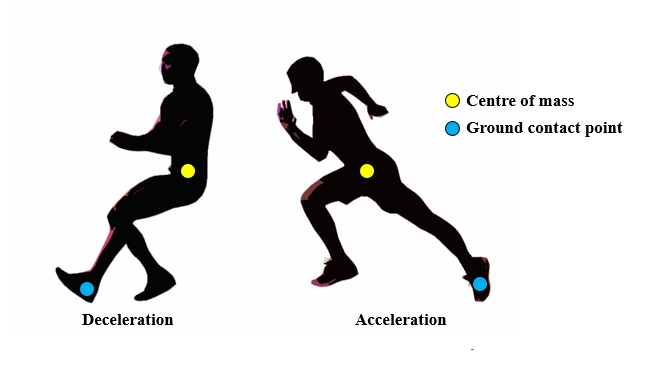
Deceleration is one of the most important but misunderstood qualities in sport.
Athletes decelerate more often and at higher intensities than they accelerate in team sports. It underpins cutting, stopping, and reacting
Yet most testing ignores the context of how fast the athlete was moving before braking. This study addresses a simple but critical issue:
Are we actually measuring deceleration ability… or just the consequence of how fast someone was running?
What they did
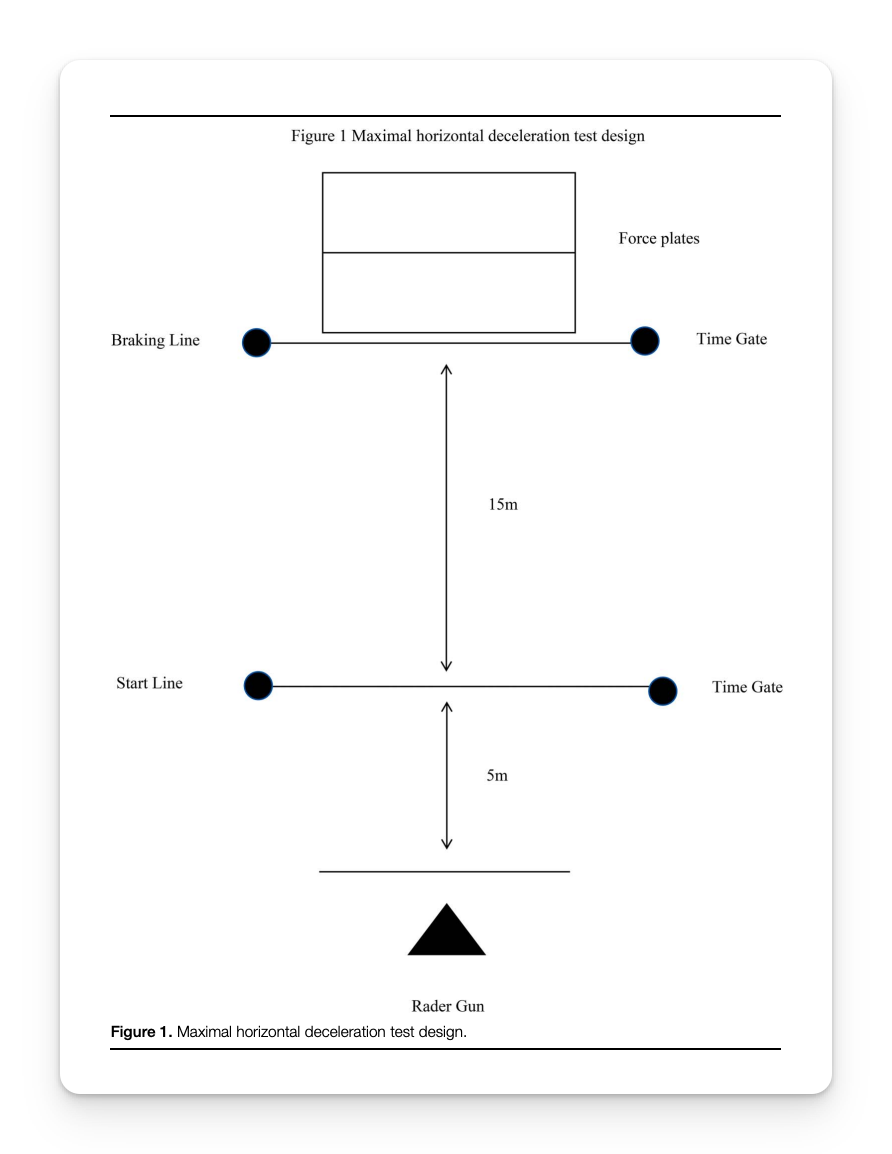
80 trained team sport athletes performed a deceleration task by sprinting 15m and then stopping as fast as possible.
Researchers measured:
- Mean & peak deceleration
- Time and distance to stop
- Approach velocity
- Body mass
What they found
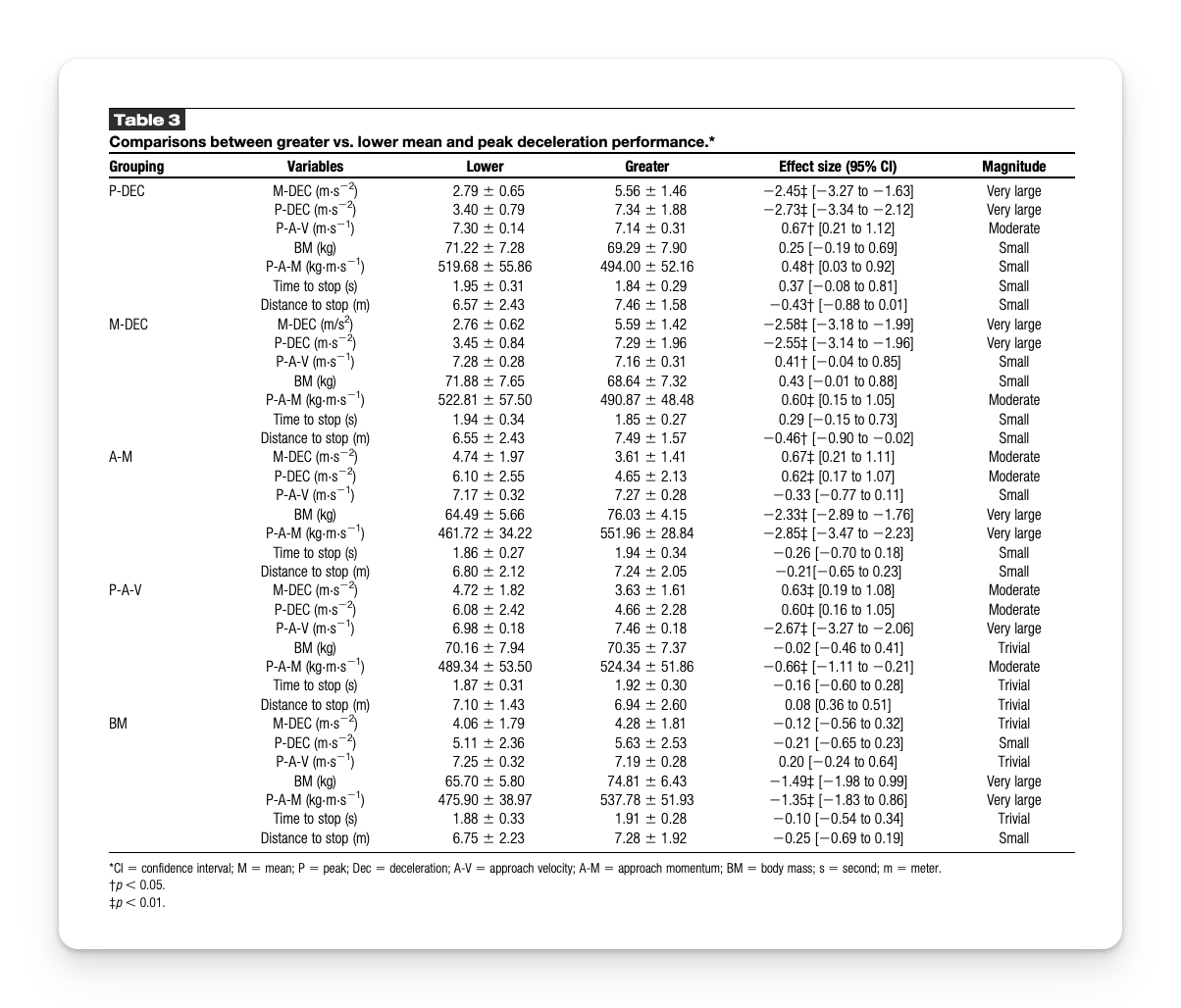
- More momentum = worse deceleration scores
- Faster athletes looked worse at decelerating
- Heavier athletes looked worse at decelerating
But, time to stop and distance to stop was similar.
Why this happens
Deceleration was measured as rate of slowing down, and not total time or total distance.
- Faster/heavier athletes enter with more momentum
- They can’t “spike” braking as aggressively
- They spread braking over more steps
This leads to lower deceleration values and the same overall stopping outcome.
Coach’s Takeaway
- You cannot interpret deceleration without context
- Faster athletes are not worse decelerators, they have more momentum to manage
- Always account for body mass and approach velocity when testing
As coaches, we can't treat think of deceleration in isolation, and have to consider the momentum leading up to the deceleration.
I hope this helps,
Ramsey
Reference:
Lin J., Dos’Santos T., Xu X., Li W., Turner A. (2026). The deceleration paradox: The faster you run the slower you stop. Journal of Strength and Conditioning Research.


