

In-season training is a struggle we all deal with. Matches, travel, fatigue, and recovery always take priority, and the weight-room often takes a backseat.
Most coaches accept that strength and power will either plateau or decline during the season. This study challenges that idea.
Can you improve strength and power during the season, without increasing training load?

What Did the Researchers Do?
Study Details
- 23 elite professional soccer players (Brazilian 1st division with ~5–6+ years of resistance training experience)
- 7 months (full competitive season) with 28 monitored training sessions
Training Model
- Power-oriented training (optimum power zone)
- 2–3 resistance sessions per week; one weekly “control session”
- Loads adjusted weekly based on performance; used bar velocity and power data to adjust loads
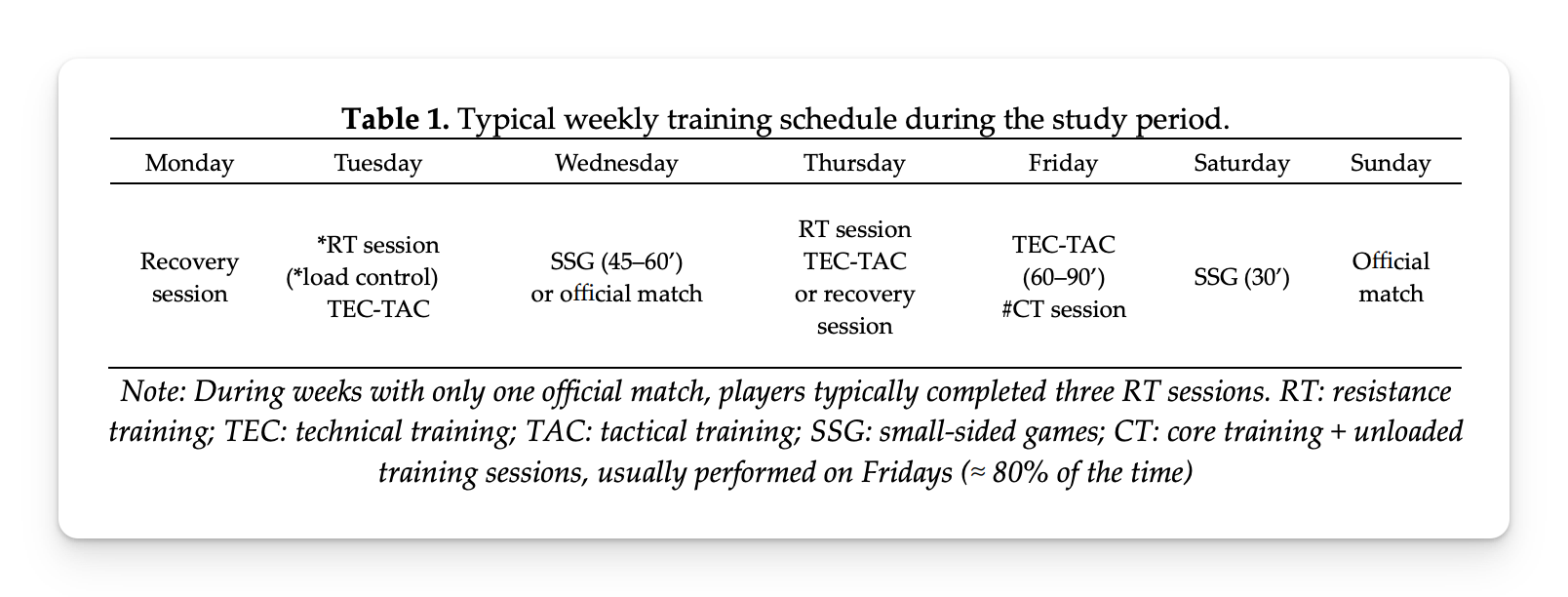
Testing and Training Loads
- Players were tested on the half-squat (performed on a Smith machine) with a linear velocity transducer capturing bar metrics.
- Loads based on maximum power output (optimum power zone)
- Weekly adjustments made using ±5% changes in peak power
Main Variables Measured
- Relative Power (RP)
- Relative Strength (RS)
- Estimated 1RM
- Peak Power (via bar velocity)
Researchers analyzed 4-week rolling averages as well as pre vs mid vs post season comparisons.
What Were the Results?
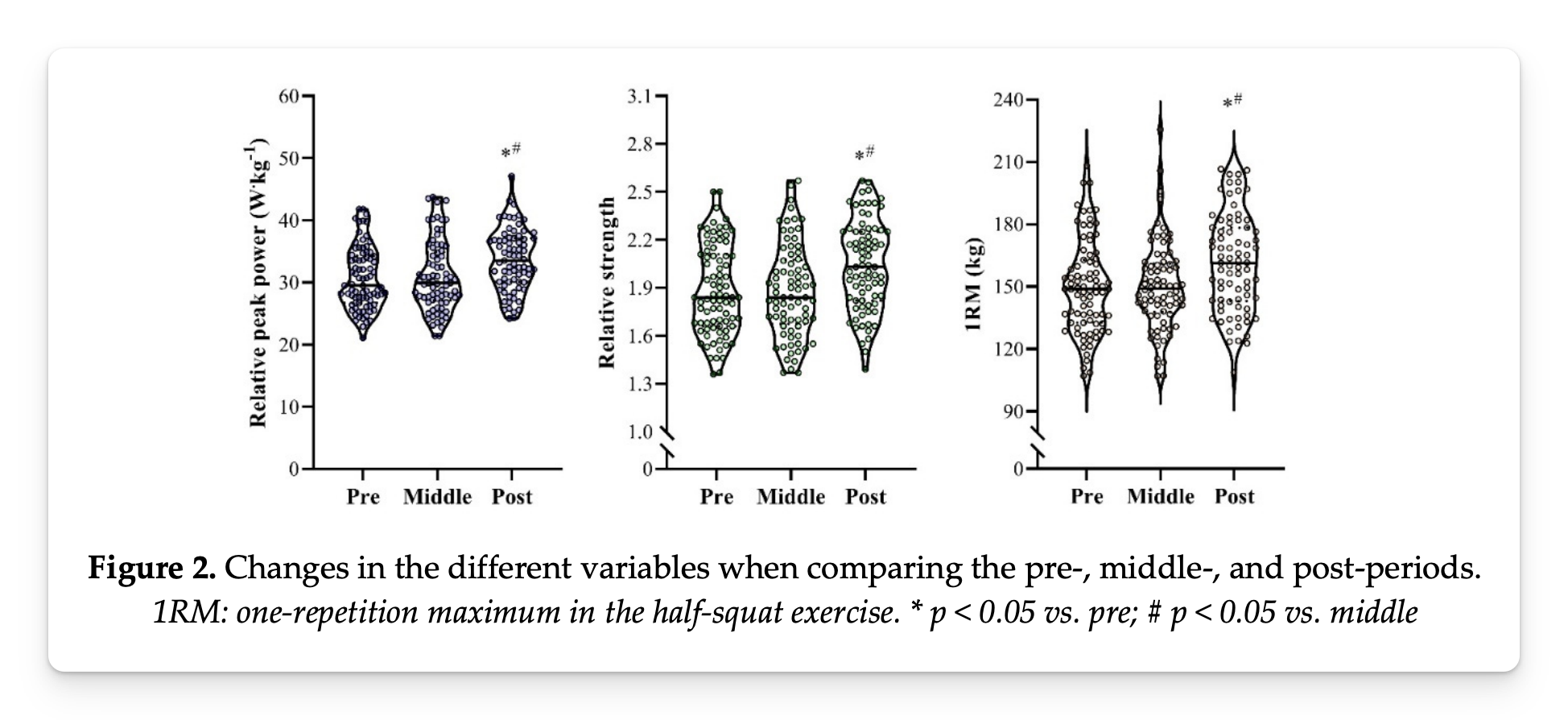
Gradual Improvements Across Season
- RP, RS, and 1RM all showed consistent upward trends
- No major spikes, just steady progression
Significant Gains by End of Season
- All key variables improved from pre → post (p < 0.05)
- Moderate effect sizes (~0.5 range)
No Increase in Training Load
- Absolute loads stayed relatively stable
- ~5% increase in performance without heavier training
Week-to-Week Changes Were Small
- Most sessions did NOT show “meaningful” jumps
- Adaptations were slow and cumulative
What Does This Mean?
- You can improve strength in-season without increasing loads
- Progress is slow and steady, so don’t expect big week-to-week changes (think long-term accumulation)
- Monitoring drives adaptation ⮕ Adjusting loads based on performance to get better output
Limitations
What makes this study valuable is that it was done in-season with a real team. At the same time, that comes with trade-offs, including no control group and limited control over real-world factors like injuries, player rotation, and scheduling.
Coach’s Takeaway
- Train for power, not fatigue, and adjust loads based on performance
- Expect slow gains but play the long game and you'll see improvements
- You don’t need more load, you need better output and consistency
I hope this helps,
Ramsey
Reference
Nunes RFH et al. (2026). Strength and Power Responses to a Power-Oriented Resistance Training Model across an Entire Soccer Competitive Season. Journal of Human Kinetics.


