

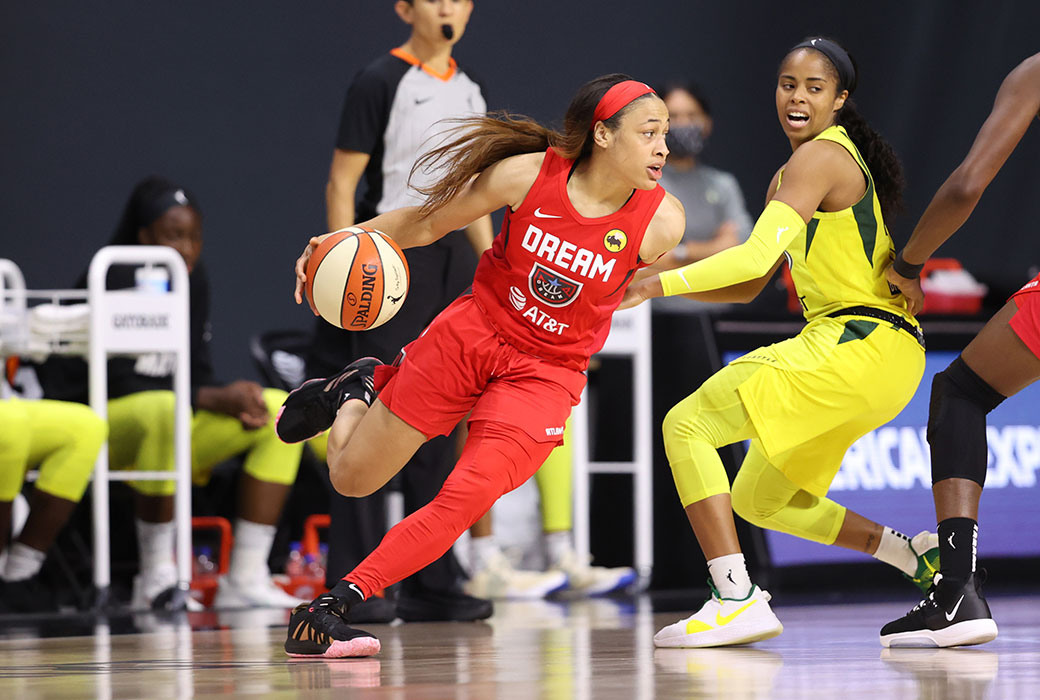
Change of direction (COD) is one of the most important qualities in basketball performance, especially for defense, space creation, and transition play.
Most research looks at total time in COD tests, but that gets confounded by sprint speed. This study looked at something more specific, the forces at the plant foot, which is where COD actually happens.
What physical qualities actually drive an athlete’s ability to brake, plant, and re-accelerate during a cut or turn?
What Did the Researchers Do?
Testing Battery
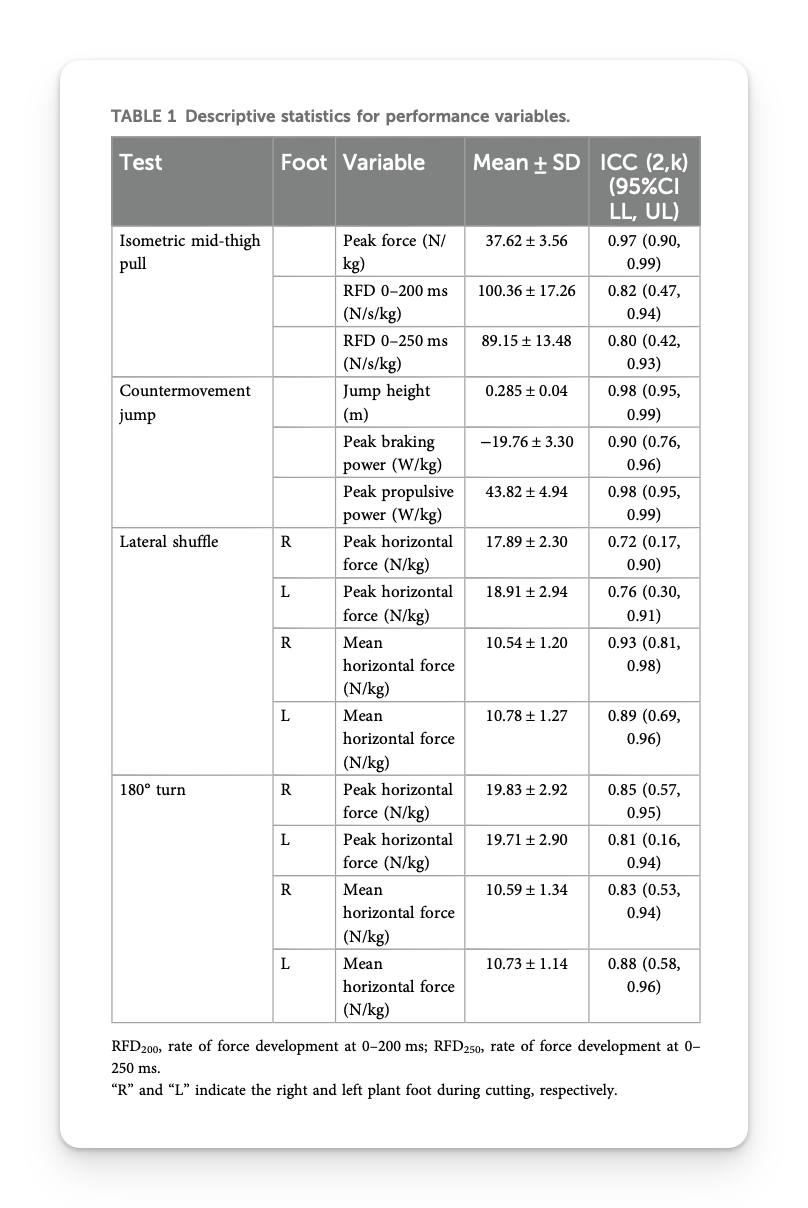
16 elite female (National team level) basketball players were tested on:
- IMTP → Peak force + RFD (0–200 ms, 0–250 ms)
- CMJ → Jump height + braking and propulsive power
- COD → Lateral shuffle + 180° turn
Key Measurement
- Horizontal ground reaction force (GRF) at the plant foot
- Both peak and mean GRF were analyzed
COD distances were individualized based on athlete height and all variables normalized to body mass.
What were the results?
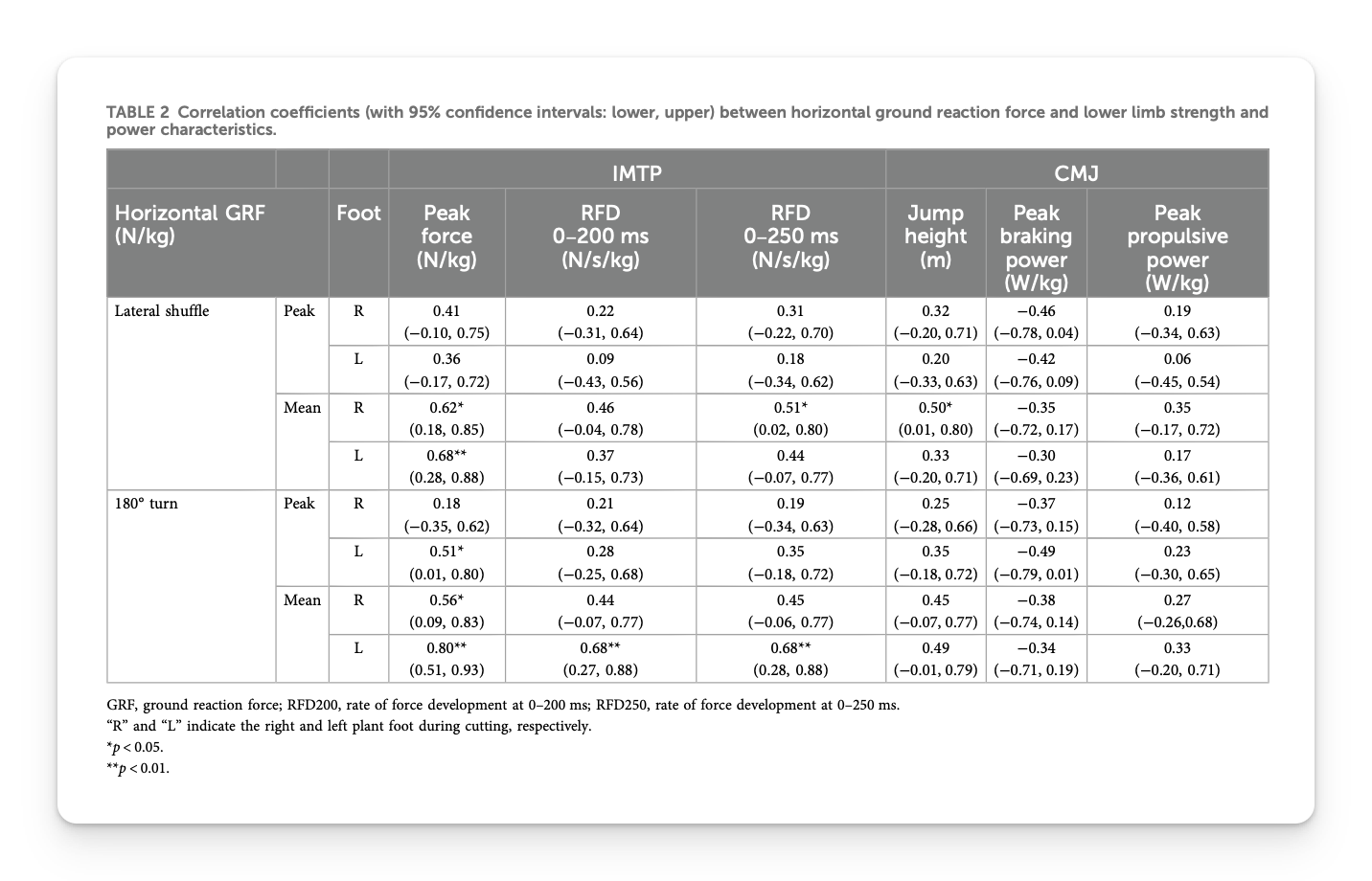
Max strength (IMTP peak force) was the clear winner
- Strong correlations with mean horizontal GRF
- r = 0.56–0.80 across tasks
RFD had limited and inconsistent relationships
- Only showed significance in select conditions
- Not a consistent driver of COD force production
CMJ performance had weak relationships
- Jump height only correlated in one condition
- Braking and propulsive power showed no meaningful relationships
Mean GRF mattered more than peak GRF
- Peak GRF showed minimal relationships
- Mean GRF consistently linked to performance qualities
What Does This Mean?
- Max strength drives COD force production → Stronger athletes can produce more horizontal force at the plant foot
- COD is not just about explosiveness → RFD and jump power did not explain much
- Task specificity matters → Bilateral vertical jumps do not reflect unilateral horizontal demands
- Mean force is more meaningful than peak force → COD is about force over time, not just a spike
Limitations
- Small sample size (n = 16), elite but limited generalizability
- Cross-sectional design, cannot prove causation
- Only bilateral tests used, no unilateral or reactive measures
- No measurement of approach velocity, which influences COD
Coach's Takeaway
- Max strength sets the foundation for change of direction, if your athletes are weak, they’re limited in how well they can brake and redirect.
- CMJ is still useful, but it doesn’t tell you much about cutting ability.
- Prioritize building strength and training athletes to apply force in the direction of movement.
The Simplest and Fastest Way to Learn Jump Analysis with Force Plates
I hope this helps,
Ramsey
Reference:
Ogata H, Yamashita D, Nishikawa N, Yokozawa T, Hoshikawa M (2026). Lower-limb strength and power characteristics in relation to 180° change of direction ability in elite female basketball players. Frontiers in Sports and Active Living.


