

Sprinting contributes to some of the most important moments in field sports, but the word "speed" can be too broad to be useful.
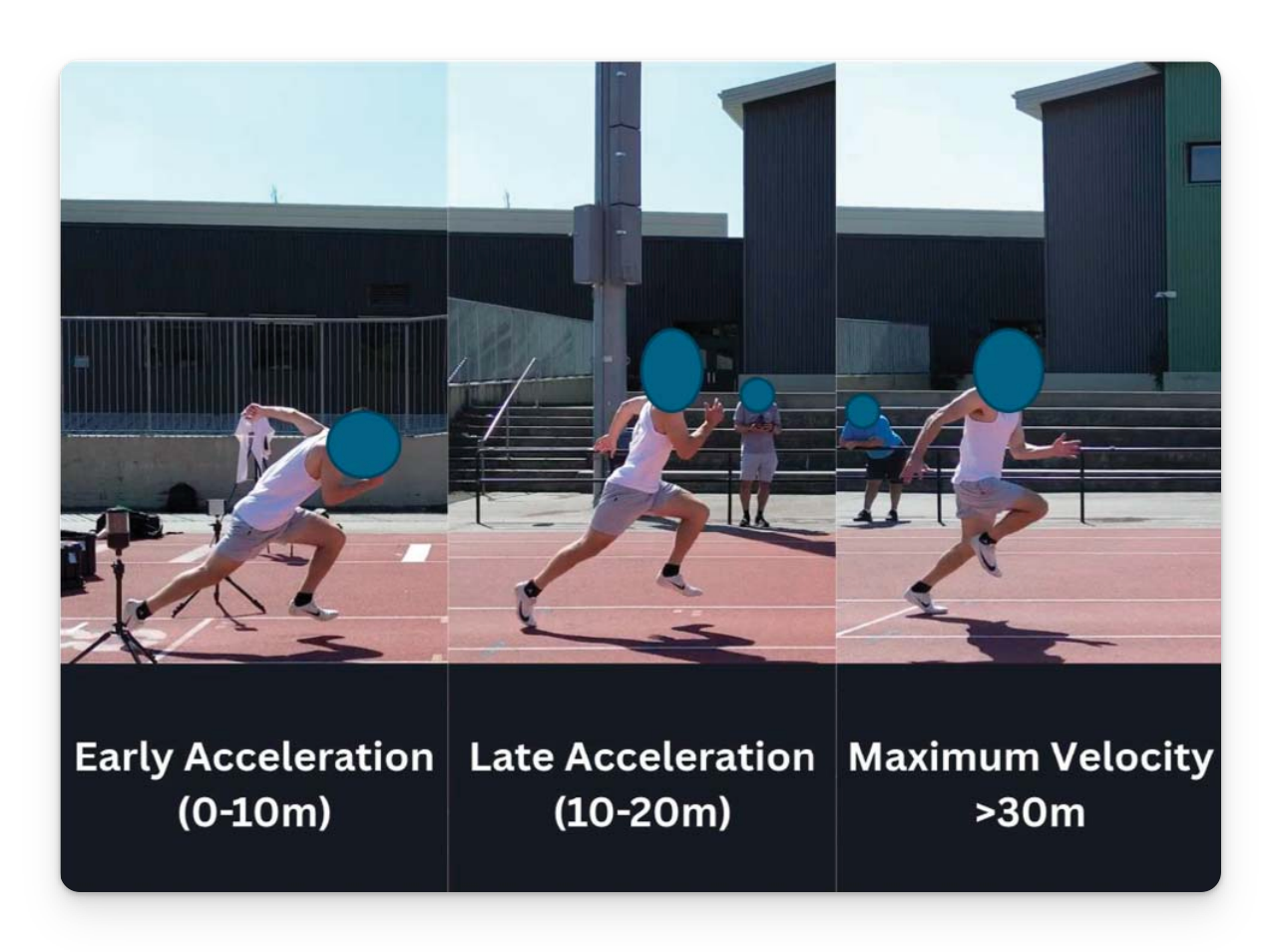
Accelerating for 5 meters, reaching maximum velocity, and repeating short sprints are different tasks.
This new review brings together research on sprint biomechanics, sport demands, testing, training, physiology, and injury.
Lets break it down.
What does sprinting actually demand from team-sport athletes, and how should we measure and train it?
What Did the Researchers Do?
The authors pulled together research from soccer, rugby union, field hockey, Australian football, Gaelic football, and American football.
They looked at sprint biomechanics, match demands, measurement technology, high-speed running and injury, sprint training, and repeated sprint physiology.
Worth noting, studies use different thresholds to define "high-speed running" and "sprinting," which makes direct comparisons between sports and studies challenging.
What Were the Results?
This review was comprehensive but to summarize:
- Most team-sport sprints are short, often <20 m, placing a premium on acceleration and effective horizontal force application.
- Sprint demands vary by sport, position, sex, and competitive level, so training should reflect the athlete’s actual competitive demands.
- Sprint performance can be developed through sprinting, resisted sprinting, strength and power training, and high-speed exposure.
- Repeated sprinting becomes a conditioning problem as fatigue accumulates and aerobic contribution increases.
- Measurement matters. GPS, timing gates, and radar each have different strengths and limitations.

The Performance Academy: Gain access to the best performance and rehab minds in the world through premium masterclasses, live and recorded events, plus a network of coaches and therapist around the world. Education, community, and networking under one roof, all at your fingertips.
What Does This Mean?
For coaches, the main message is that we need to be more specific when we talk about "speed."
Start by asking what the athlete actually needs:
- Early acceleration?
- Longer acceleration?
- Maximum velocity?
- Repeated sprint ability?
- More exposure to high-speed running?
Then build the program around that problem.
High-speed running also needs to be progressively introduced rather than avoided. Athletes eventually have to tolerate the velocities that competition will ask them to reach.
Limitations
- This is a narrative review, so the literature was not selected or synthesized using the standardized methods of a systematic review or meta-analysis.
- Studies vary considerably in sprint thresholds, technology, protocols, populations, and sports, making direct comparisons difficult. Female athletes are also underrepresented in parts of the literature.
Coach's Takeaway
- Acceleration matters ⮕ Most team-sport sprint efforts occur over relatively short distances.
- Maximum velocity still needs attention ⮕ Athletes should progressively experience the speeds that competition may eventually demand.
- Chooses parameters that target your goals ⮕ A 5 m acceleration, 30 m sprint, and repeated 10 m effort are different training stimuli.
- Use strength, power, and resisted sprinting to support sprint development, but don't forget to sprint.
I hope this helps,
Ramsey
Reference: Mc Laughlin R, Faulkner M, Connolly J, Doherty R. (2026). Quantifying Sprinting in Team Field Sports: A Narrative Review of Biomechanical Insights, Performance Demands, and Physical Development Strategies. Strength and Conditioning Journal.


