

A couple weeks back broke down the Max Speed Single Leg Bridge exercise.
Now, a new study compares the maximum-speed bridge directly with the Nordic hamstring exercise.
This time around, the researchers asked:
How does the MS-SLB differ from the Nordic exercise?
What Did the Researchers Do?
Seventeen healthy male recreational athletes, averaging approximately 21 years old, performed both tasks.
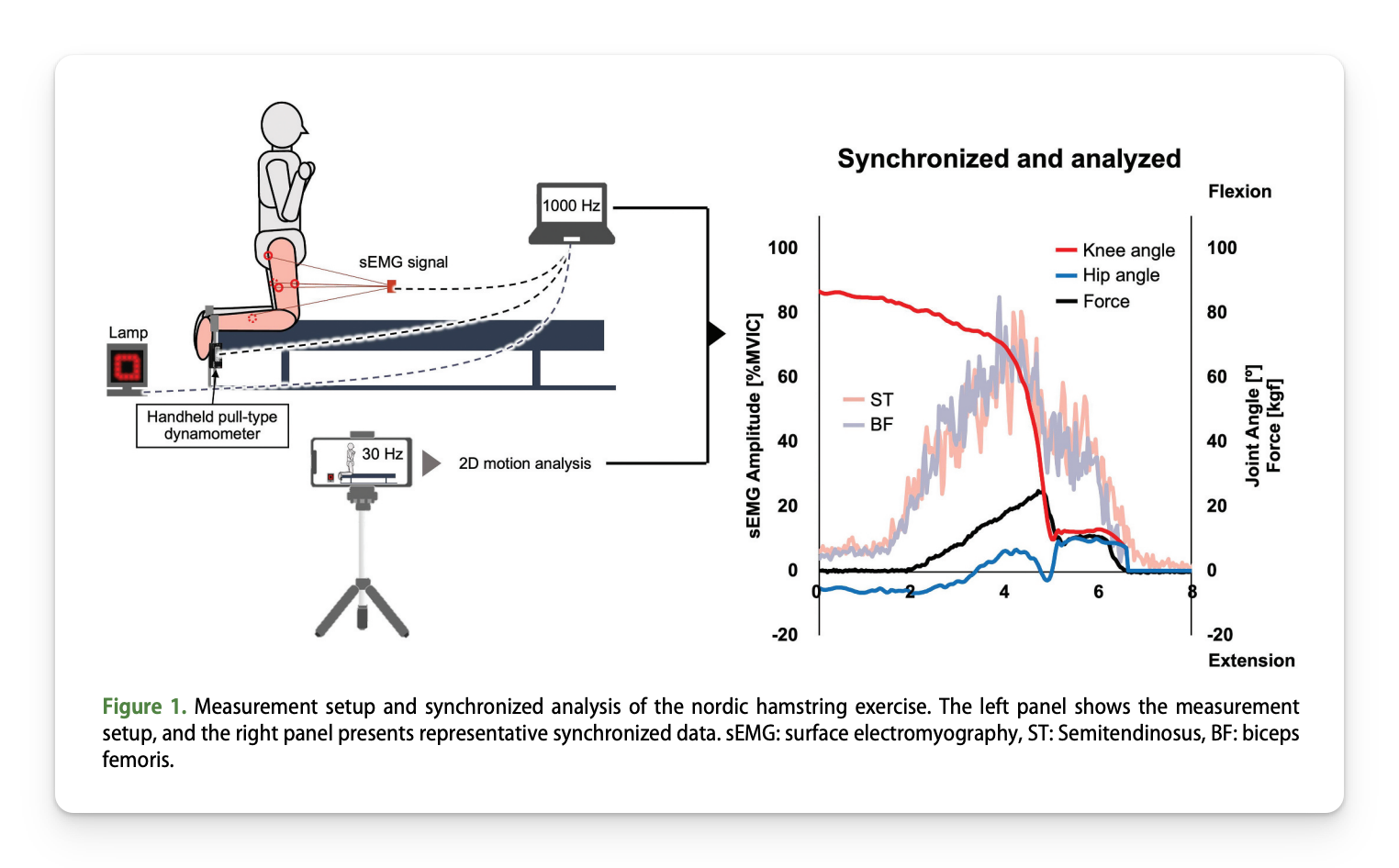
- Nordic: Participants lowered forward as slowly as possible from a kneeling position while maintaining their initial hip position.
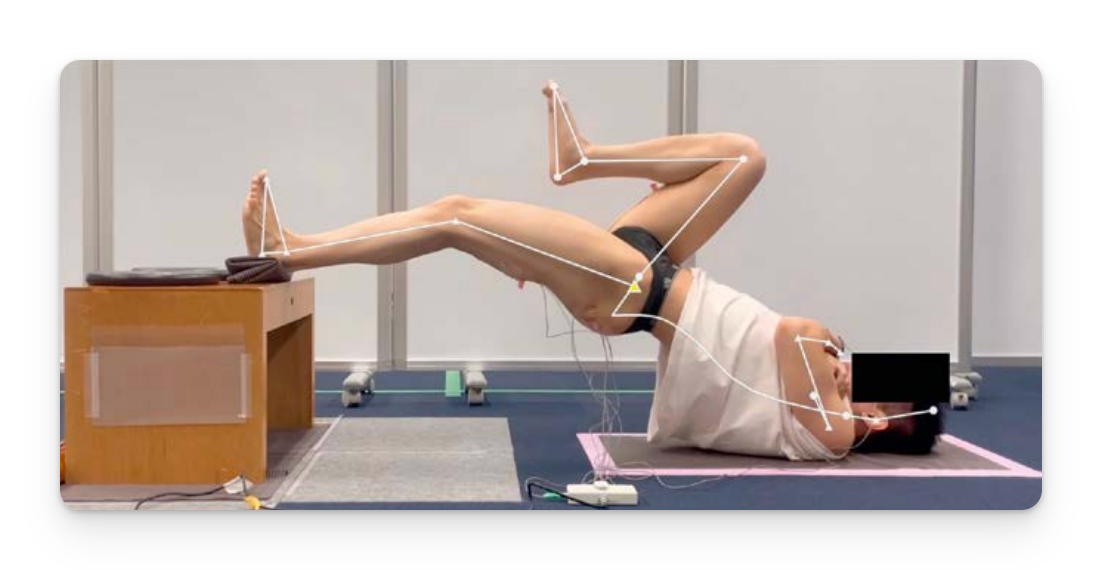
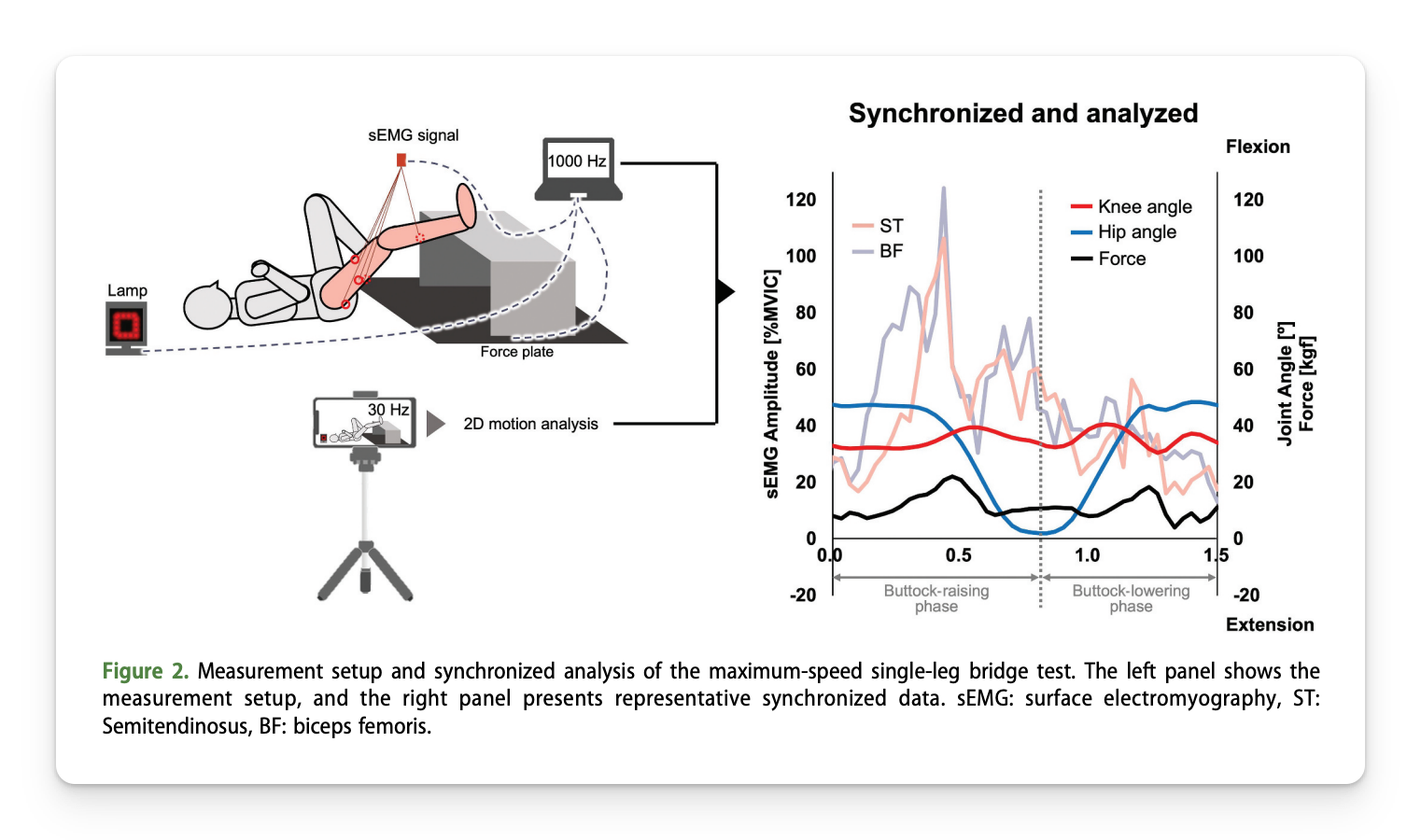
- Maximum-speed bridge: Participants placed one heel on a 40-cm platform, starting with approximately 30° of knee flexion, then raised their hips as fast and high as possible.
Researchers measured muscle activation using surface electromyography, external force, and hip and knee motion. They also estimated hamstring muscle-tendon unit lengths from joint angles.
What Were the Results?
Peak Hamstring Activation
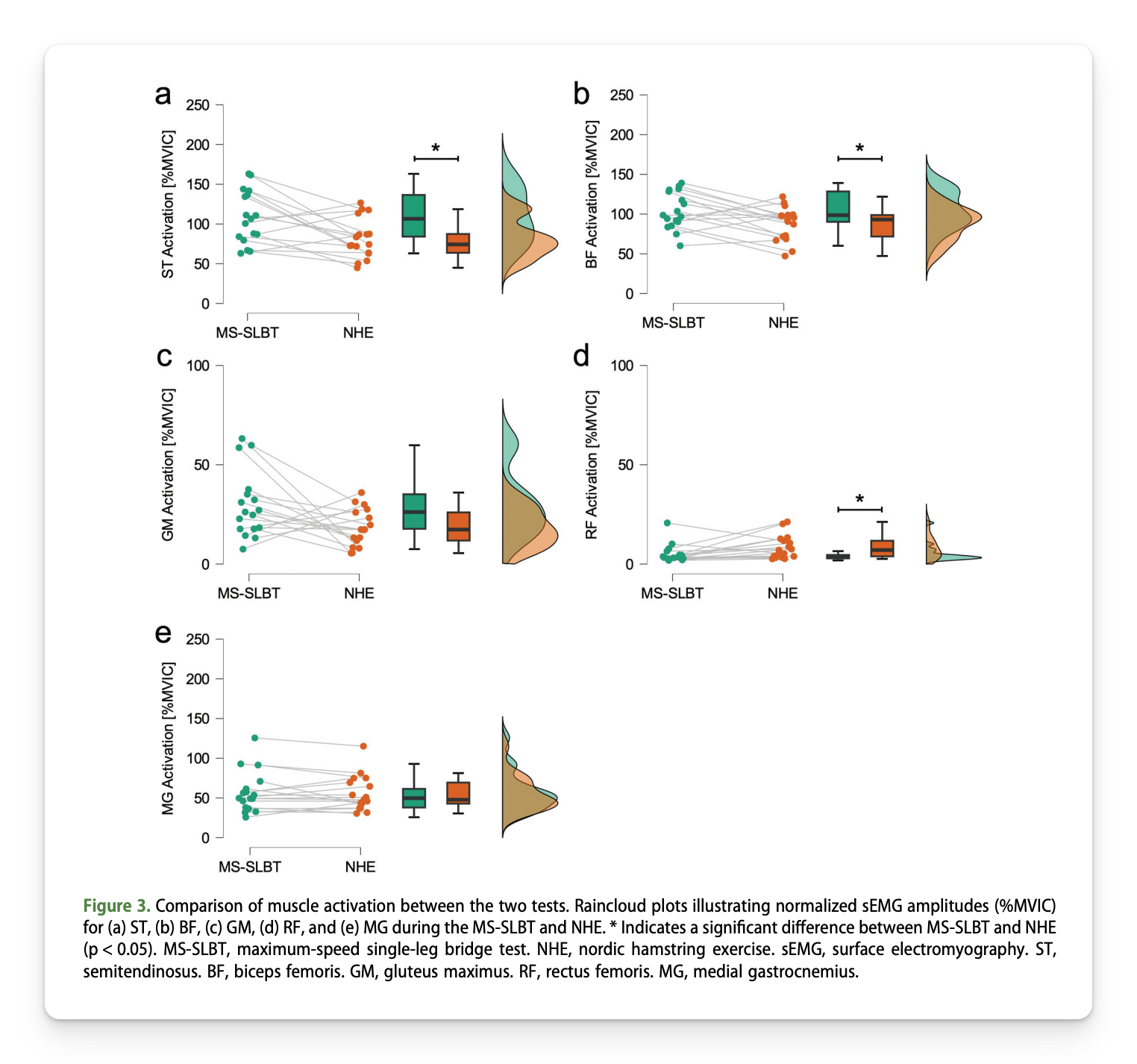
The maximum-speed bridge produced greater peak hamstring activation than the Nordic in both measured hamstring muscles.
- Semitendinosus: 108.5% MVIC during the bridge versus 81.7% during the Nordic.
- Biceps femoris: 104.4% MVIC during the bridge versus 87.5% during the Nordic.
Both differences were statistically significant. These values describe electrical activity relative to a reference isometric contraction, rather than muscle force.
Join Angles
During the bridge, peak hamstring activation occurred at approximately:
- 38–43° of hip flexion
- 34–35° of knee flexion
During the Nordic, corresponding positions were approximately:
- 15–17° of hip flexion
- 49–53° of knee flexion
The bridge positions more closely resembled published late-swing sprinting positions.
What Does This Mean?
The bridge combines rapid hip extension with knee-flexor demands, with peak activation occurring at longer estimated muscle-tendon lengths. The Nordic emphasizes controlled forward lowering with comparatively little hip movement.
- The bridge may provide complementary assessment information. Greater activation does not establish greater muscle force, a stronger training stimulus, or better results. Eccentric actions can produce substantial force with relatively lower electrical activity.
- The bridge only partly resembles sprinting. Joint positions more closely resembled late swing, but sprinting was not measured in these participants, and bridge hip velocities remained substantially below published sprinting values.
- Movement direction also differs. At peak activation, the knee moved toward flexion during the bridge, whereas late swing involves knee extension.
Joint positions, movement speed, movement direction, and muscle-tendon behavior all matter when comparing an assessment with sporting demands.
Limitations That Matter
- Seventeen healthy young men cannot represent every athlete or rehabilitation setting.
- The study did not establish injury prediction, injury reduction, sprint improvement, or return-to-sport readiness.
Coach’s Takeaway
- Coaches should select exercises that fit their needs and desired stimulus.
- Controlled lowering and rapid hip extension challenge different aspects of hamstring function. Select assessments accordingly.
- The bridge may provide complementary information alongside a Nordic.
I hope this helps,
Ramsey
Reference: Sano, Y., et al. (2026). Differential muscle activation patterns and kinematics during the nordic hamstring exercise and the maximum-speed single-leg bridge test. Journal of Sports Sciences.

The Performance Academy: Gain access to the best performance and rehab minds in the world through premium masterclasses, live and recorded events, plus a network of coaches and therapist around the world. Education, community, and networking under one roof, all at your fingertips.


