

Many endurance runners spend almost all of their training time accumulating mileage.
Yet only 15-47% of runners regularly perform plyometric training, despite decades of research demonstrating meaningful improvements in running economy and performance.
In this article, we will break down a new review that discusses:
- Why plyometrics improve endurance performance
- Which exercises to choose
- How much volume to prescribe
- How to progress athletes safely
- How to integrate plyometrics into an endurance program
How can plyometric training to improve running performance?
What Did the Researchers Do?
The author reviewed decades of research on plyometric training with a specific focus on endurance runners and translated the evidence into practical programming recommendations.
The review discusses:
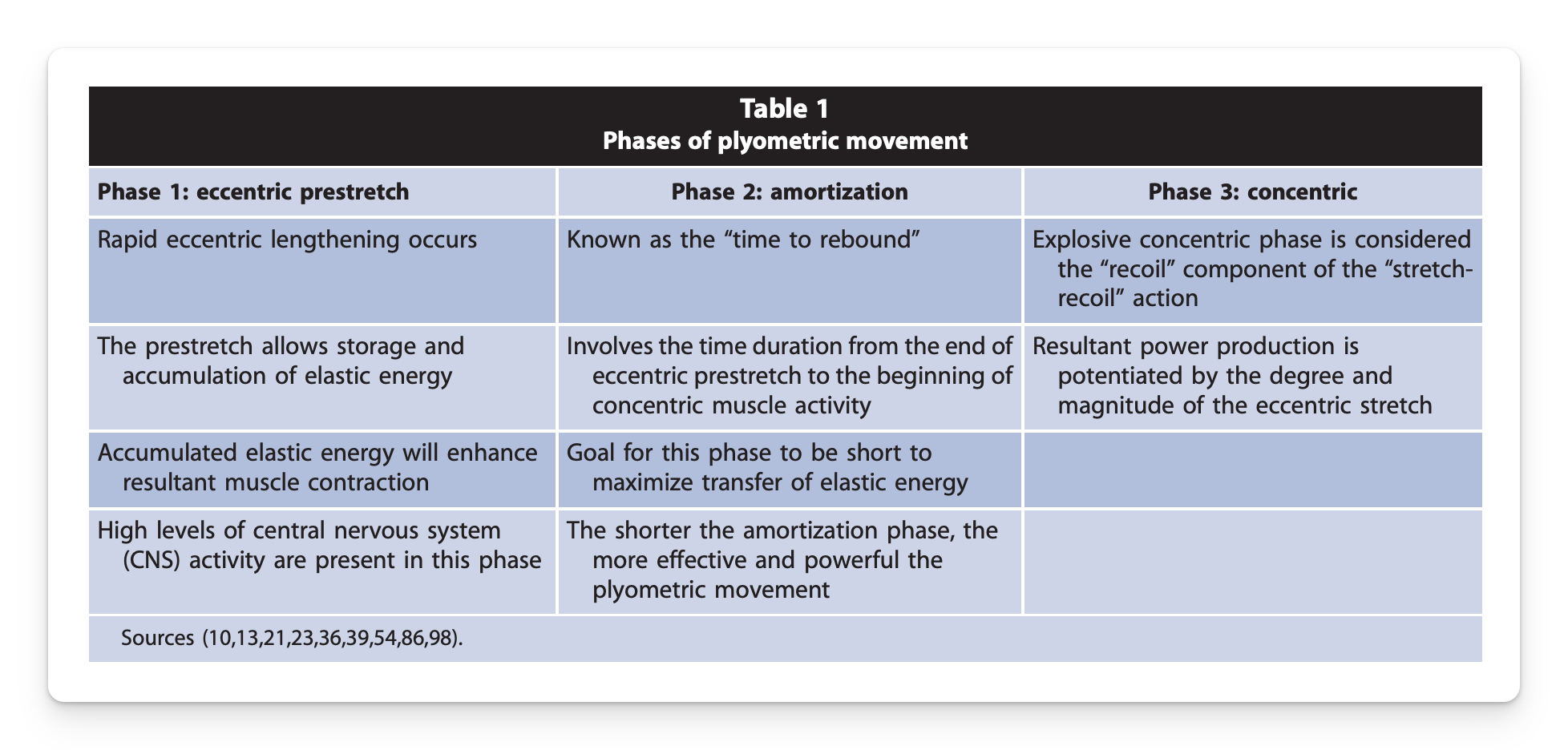
- Stretch-shortening cycle physiology
- Mechanisms behind improved running economy
- Published plyometric interventions
- Exercise selection
- Programming variables
- Screening considerations before beginning plyometrics
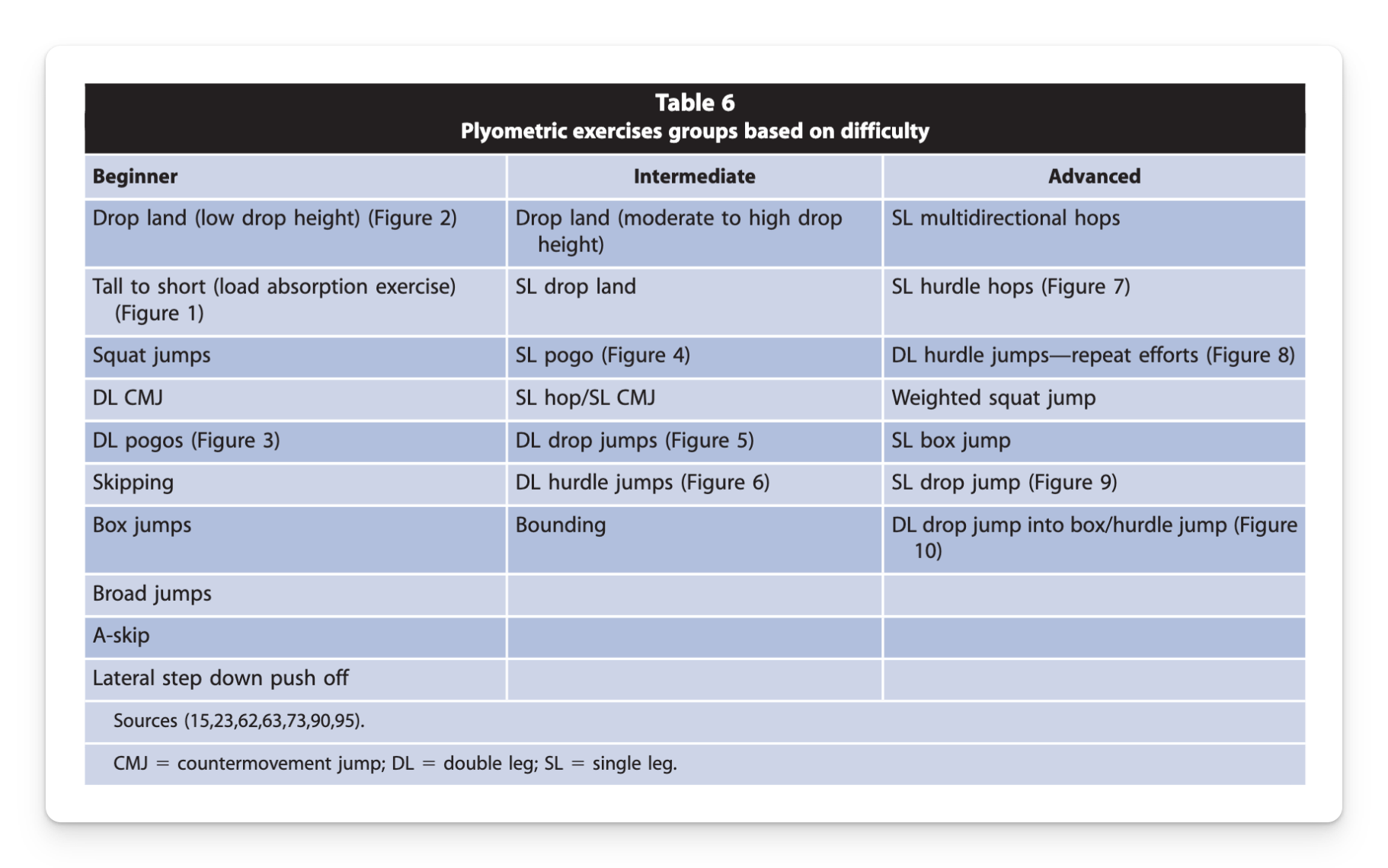
- Practical sample programs for beginner through advanced runners
One of the strengths of this paper is that it moves beyond simply stating "plyometrics work" and instead explains how to prescribe them.
What Were the Results?
The literature consistently shows meaningful improvements in endurance performance.
Running performance improves
Across multiple studies:
- Time trial performance improved 1.2 to 11.6%
- Sprint performance improved 1.3 to 3.7%
- Running economy improved 1.2 to 8.1%
Those are substantial improvements considering many endurance athletes are already highly trained.
Running economy appears to be the biggest win
The review emphasizes that plyometric training primarily improves performance through better running economy.
In simple terms, athletes require less oxygen at the same running speed.
Potential mechanisms include:
- Greater tendon stiffness
- Improved storage and return of elastic energy
- Reduced ground contact times
- Better neuromuscular coordination
- Improved motor unit recruitment
The exact mechanism is still debated, but improved running economy consistently appears across studies.
Plyometrics don't necessarily change running mechanics
Interestingly, most studies found improvements occurred without major changes in running kinematics.
Instead of changing technique, athletes simply became more efficient at producing and recycling force.
That suggests coaches may not need to completely overhaul running mechanics to see meaningful gains.
What Does This Mean?
Mileage isn't the only path to becoming a better runner
Many endurance athletes continue to chase performance by adding more volume. This review reminds us that improving how force is produced can be just as valuable as increasing aerobic capacity.
Moderate volumes appear sufficient
More isn't necessarily better. The review suggests that moderate contact volumes often perform just as well as very high volumes, especially when jump quality remains high.
For in-season athletes, some experienced coaches may prescribe as few as 30-40 contacts per session, far below some traditional recommendations.
This is a good reminder that quality beats quantity.
Exercise selection matters
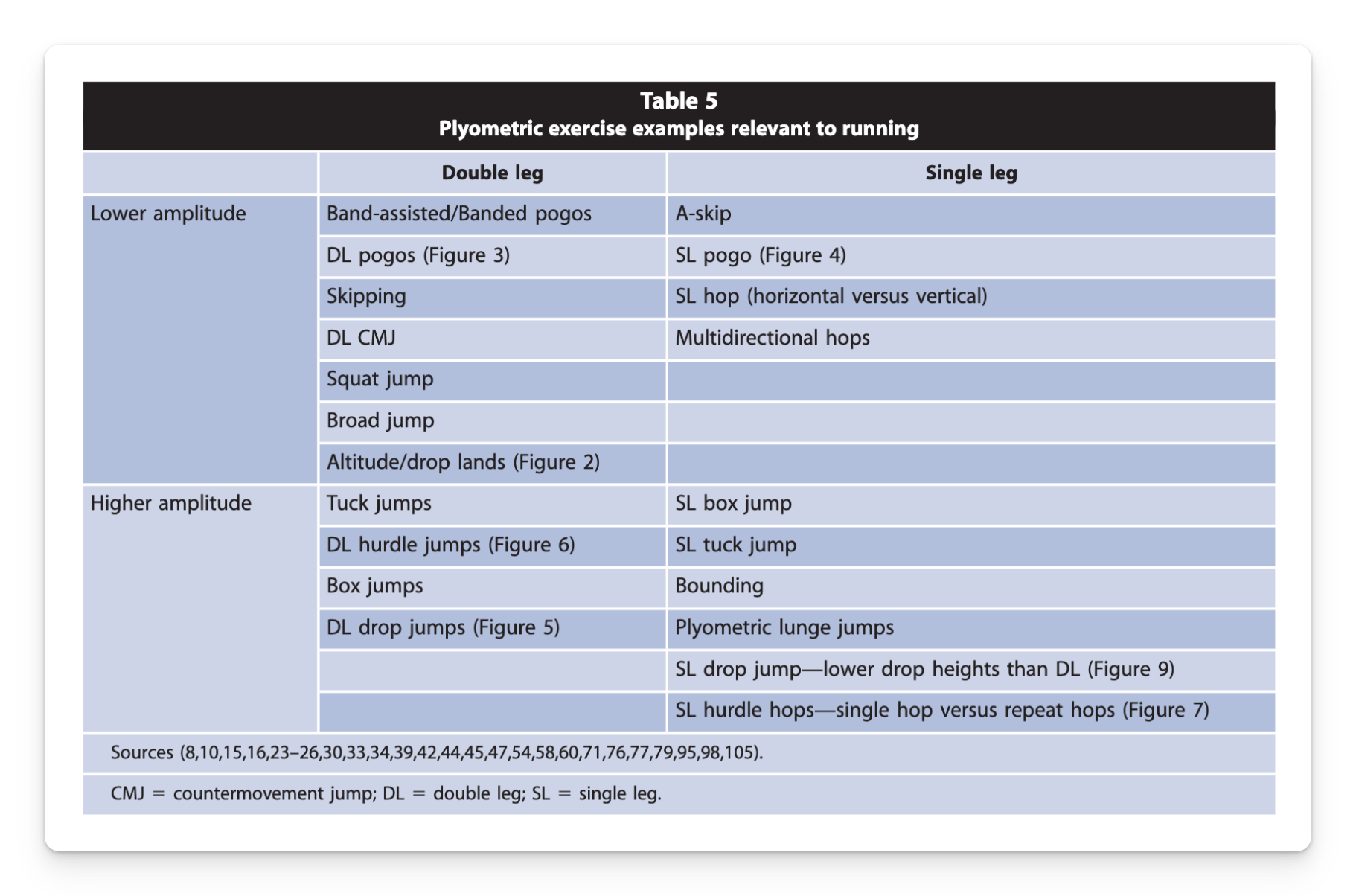
The review recommends prioritizing exercises that closely resemble running demands.
Examples include:
- Pogos
- Skipping
- Bounding
- Drop jumps
- Single-leg hops
Horizontal and unilateral exercises may offer particularly strong transfer to running performance.
Strength still comes first
If an athlete lacks adequate strength or movement competency, complete a strength block first before introducing higher intensity plyometrics.
And before progressing to more demanding plyometric work, its recommended to screen:
- Lower body strength
- Calf capacity
- Single-leg control
- Balance
- Landing mechanics
Limitations
Although the evidence supporting plyometrics is strong, several limitations remain:
- Plyometric programs varied substantially between studies in exercise selection, volume, duration, and intensity.
- Not every study demonstrated improvements in running economy or performance.
- Optimal dosage remains unclear.
- The relative effectiveness of "fast" versus "slow" plyometrics still requires further investigation.
- Many studies involved recreational rather than elite endurance runners, limiting generalizability to world-class athletes.
Coach's Takeaway
- Plyometric training consistently improves running economy, which likely explains much of the observed improvement in endurance performance.
- You don't need massive plyometric volumes. Well-executed, moderate doses performed consistently appear highly effective.
- Prioritize movement quality, appropriate progression, and exercises that closely resemble the demands of running before chasing more contacts or higher boxes.
I hope this helps,
Ramsey
Reference
Wynne K. (2026). Understanding and Prescribing Plyometrics for Endurance Runners: A Review. Strength & Conditioning Journal.


