

The CMJ is one of the most commonly used tools to monitor fatigue and readiness. However, most practitioners rely heavily on jump height alone. But jump height only tells you what happened, not how it happened
Are we missing important neuromuscular signals by focusing only on outcomes?
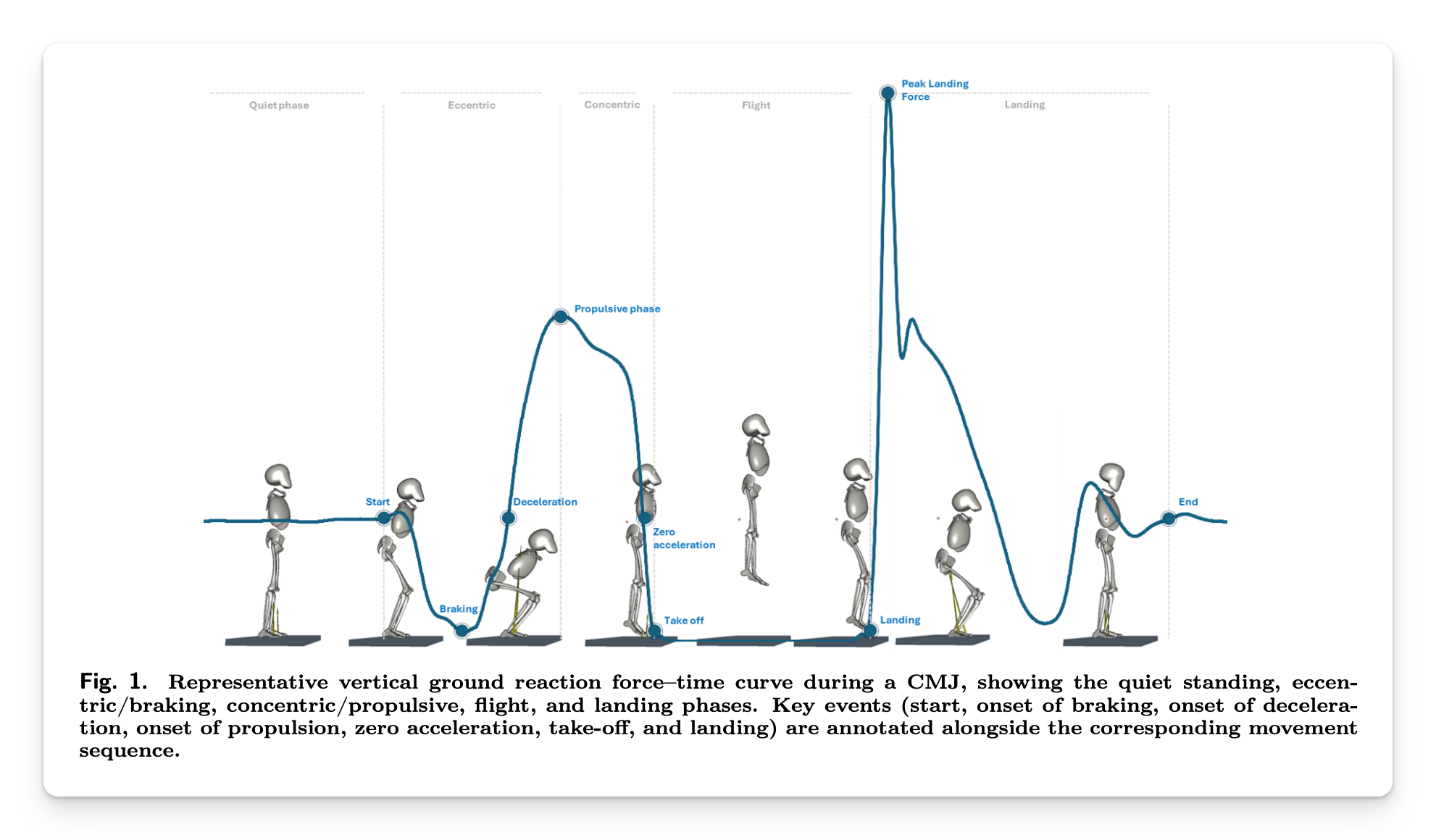
What Did the Researchers Do?
Population
- 20 elite professional football players
- Tested across an entire competitive season
Testing Setup
- CMJ performed on dual force plates (1000 Hz)
- Measured 48 hours post-match (D+2)
- Best jump used for analysis
External Load Data
- GPS metrics (sprint distance, high-speed running, etc.)
- Aggregated over rolling 7-day windows
Variables Measured:Outcome metric:Force-time metrics:
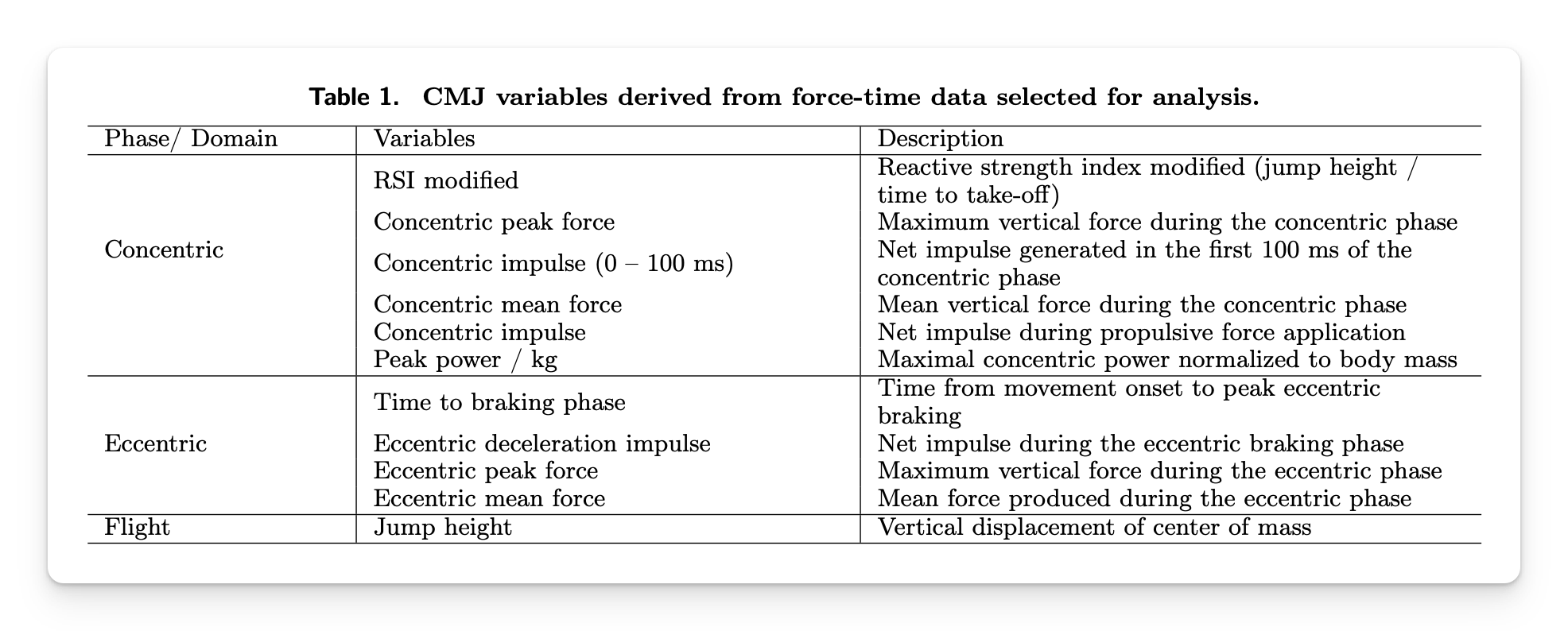
Researchers compared players based on match exposure in groups of 40–70 min and <40 min with linear mixed models used to track relationships.
What Were the Results?
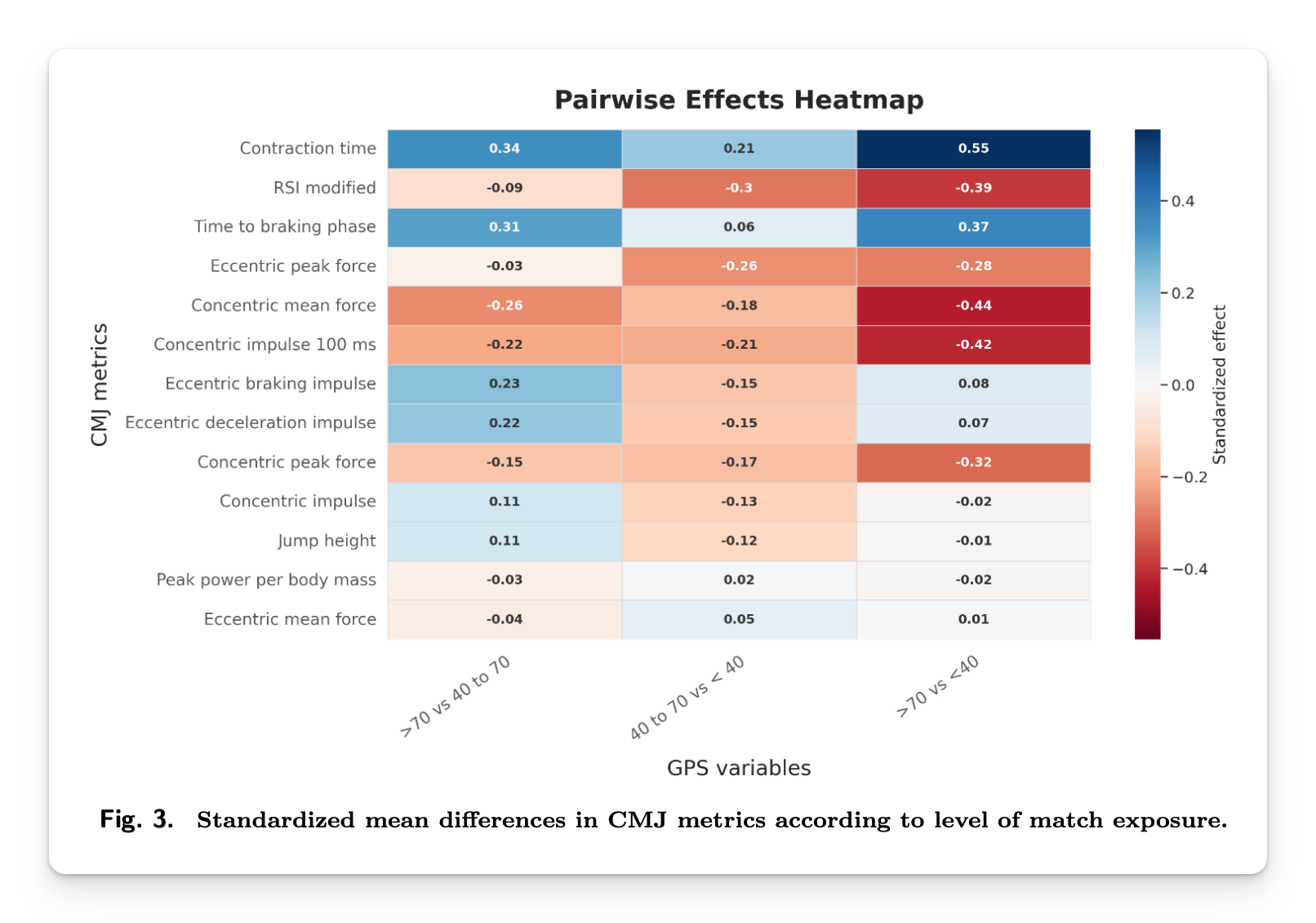
Match Exposure (Dose Response)
- More minutes = worse neuromuscular function
- Players >70 min showed increased contraction time (+0.55) and decreased RSI (-0.39), early impulse (-0.42), and concentric force (-0.32 to -0.44)
- However, jump height barely changed (-0.12 to +0.11)
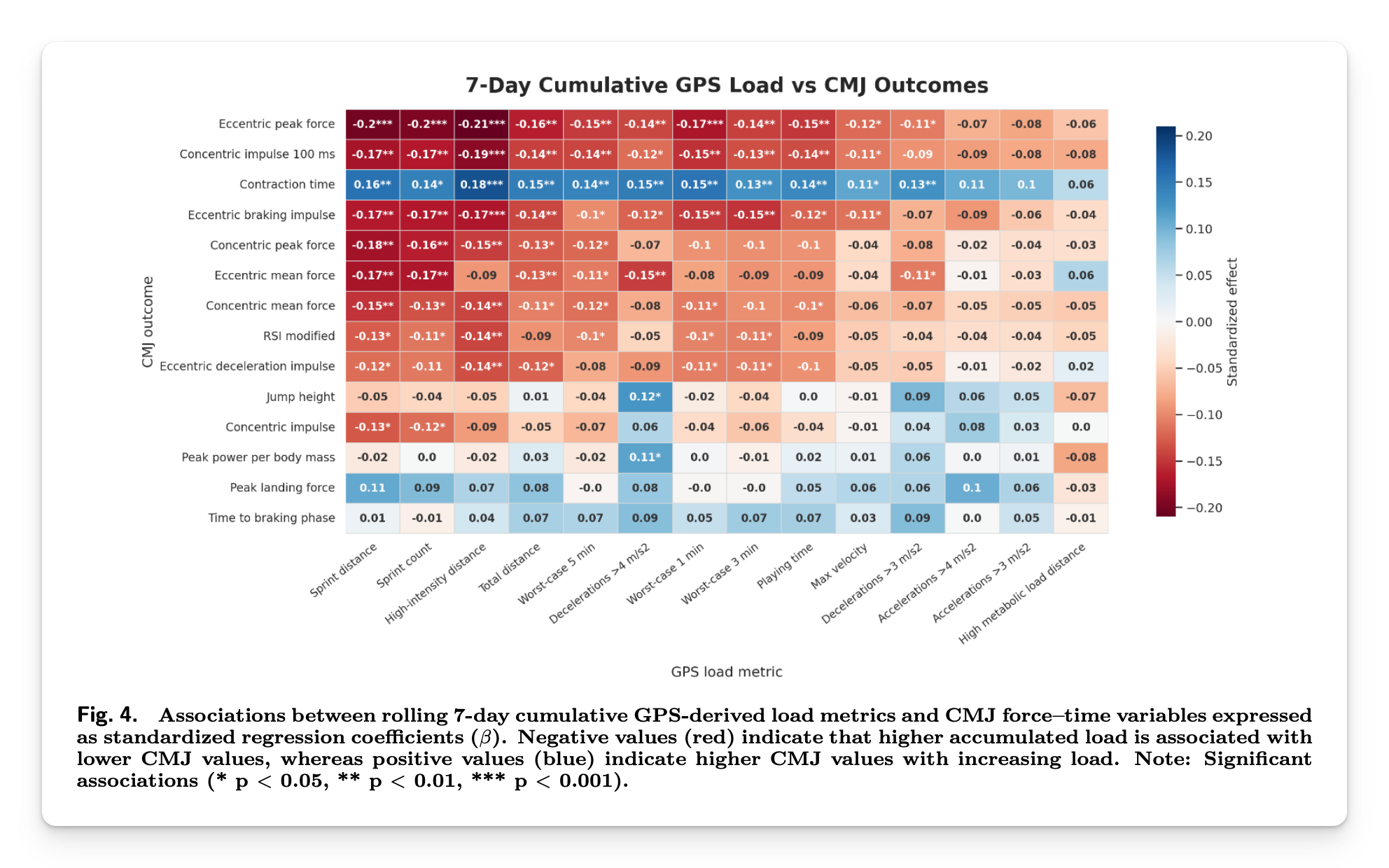
Rolling 7-Day Load
Higher load was related to worse force-time performance, with:
- Lower Eccentric peak force
- Lower Concentric impulse
- Lower Braking impulse
- Higher Contraction time (slower force production)
The strongest effects were tied to sprint distance and high-speed running, while jump height had trivial, inconsistent changes.
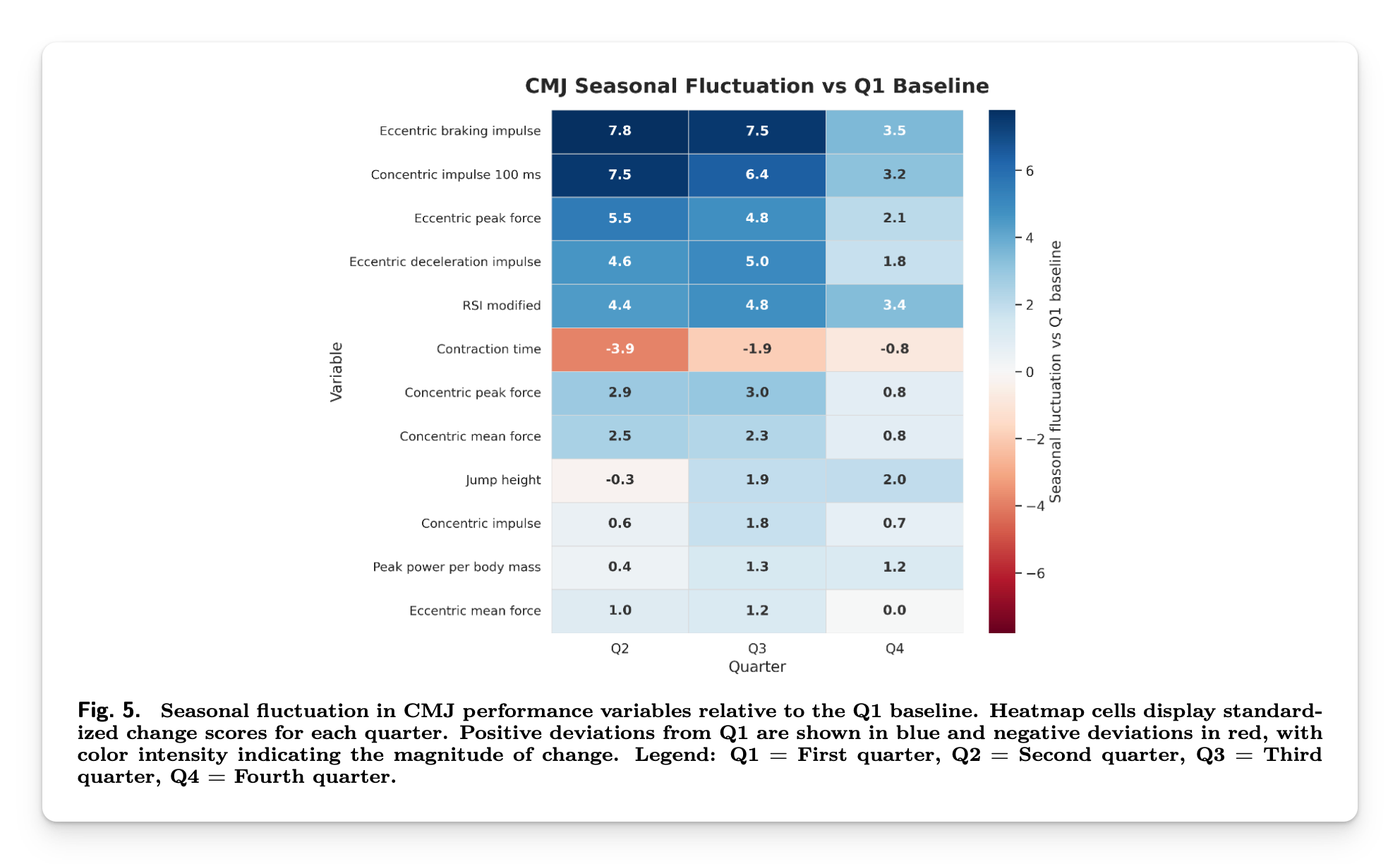
Seasonal Changes
Favorable adaptations were seen across the season for:
- Higher eccentric braking impulse (+7–8%)
- Higher early concentric impulse (+6–7%)
- Improved RSI (+4–5%)
- Decreased contraction time (faster)
However, jump height remained stable (-0.3% to +2%).
What Does This Mean?
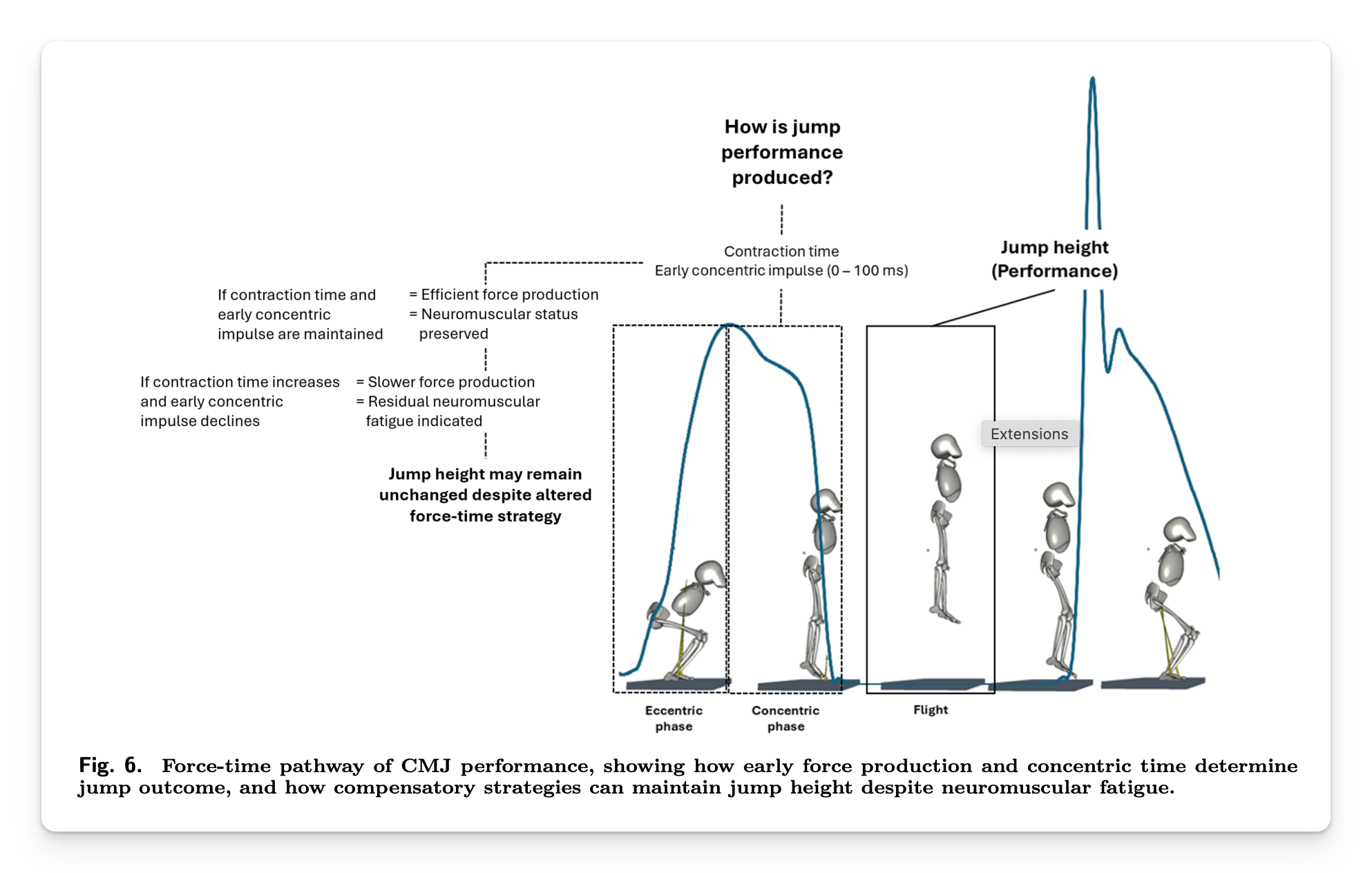
- Jump height is a poor indicator of neuromuscular fatigue
- Athletes can maintain jump height, while underlying neuromuscular function is impaired
- Similarly, jump height appears stable while strategy metrics captured neuromuscular adaptation across the season.
Limitations
- Small sample (n=20)
- Metric-specific sensitivity at the individual level
Coach’s Takeaway
- Jump height tells you what happened, while force-time data tells you how it happened
- Prioritize time and strategy metrics to monitor fatigue and adaptations
- When possible, integrate external load to better understand context of neuromuscular internal responses
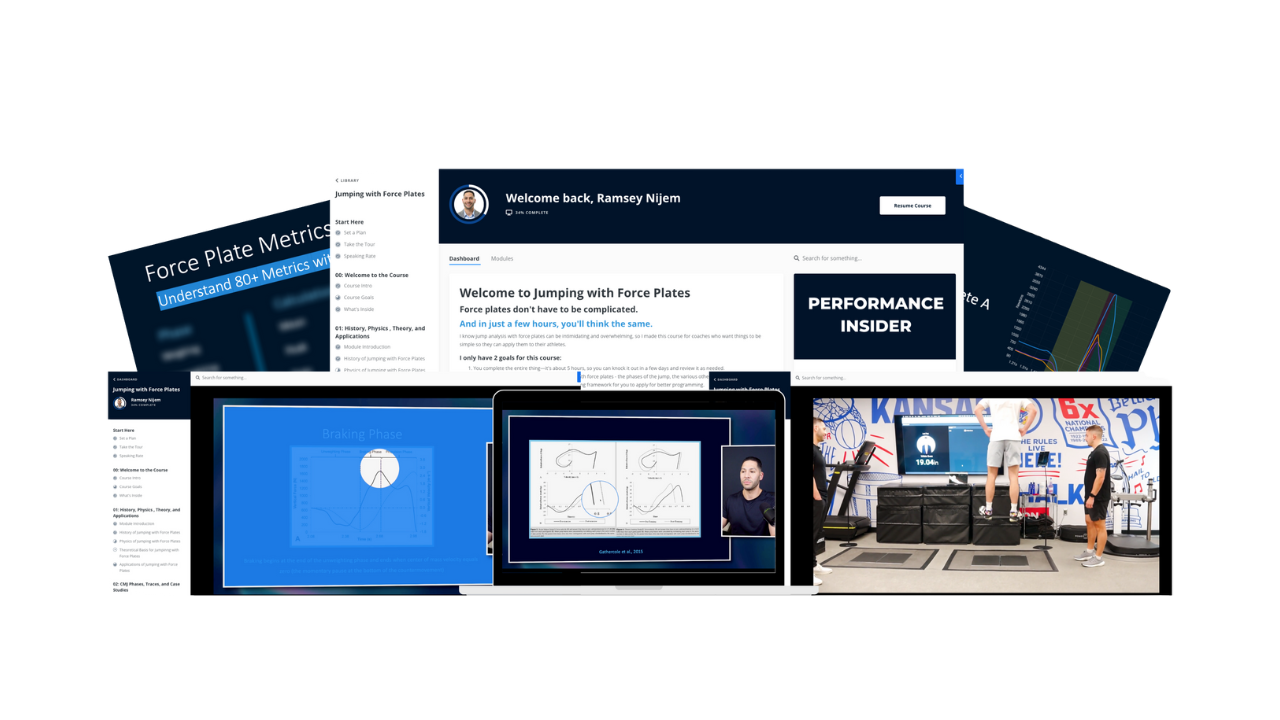
The Simplest and Fastest Way to Learn Jump Analysis with Force Plates
I hope this helps,
Ramsey
Reference
Marques JB, Sideris V, Rabelo F, et al. (2026). Jump Height Lies: Force–Time CMJ Metrics Reveal Hidden Neuromuscular Responses in Elite Football. Sport Performance & Science Reports.


