

Eccentric quasi-isometrics, or EQIs, have become increasingly popular in strength training and rehabilitation.
An EQI repetition begins by holding a load in a fixed position. Once the athlete can no longer maintain that position, they continue resisting as the load slowly forces them through the eccentric phase.
This creates prolonged mechanical tension at relatively low movement velocities.
However, little research has evaluated whether these unique characteristics produce superior long-term adaptations.
But a new study did just that. Lets beak it down.
Do EQIs produce greater improvements in muscle size, strength, endurance, power, or hormonal markers than traditional resistance training?

The Performance Academy: Gain access to the best performance and rehab minds in the world through premium masterclasses, live and recorded events, plus a network of coaches and therapist around the world. Education, community, and networking under one roof, all at your fingertips.
What Did the Researchers Do?
Training Groups
Thirty healthy, untrained men between 18 and 26 years old were randomized into three groups:
- EQI training
- Dynamic resistance training
- Non-training control
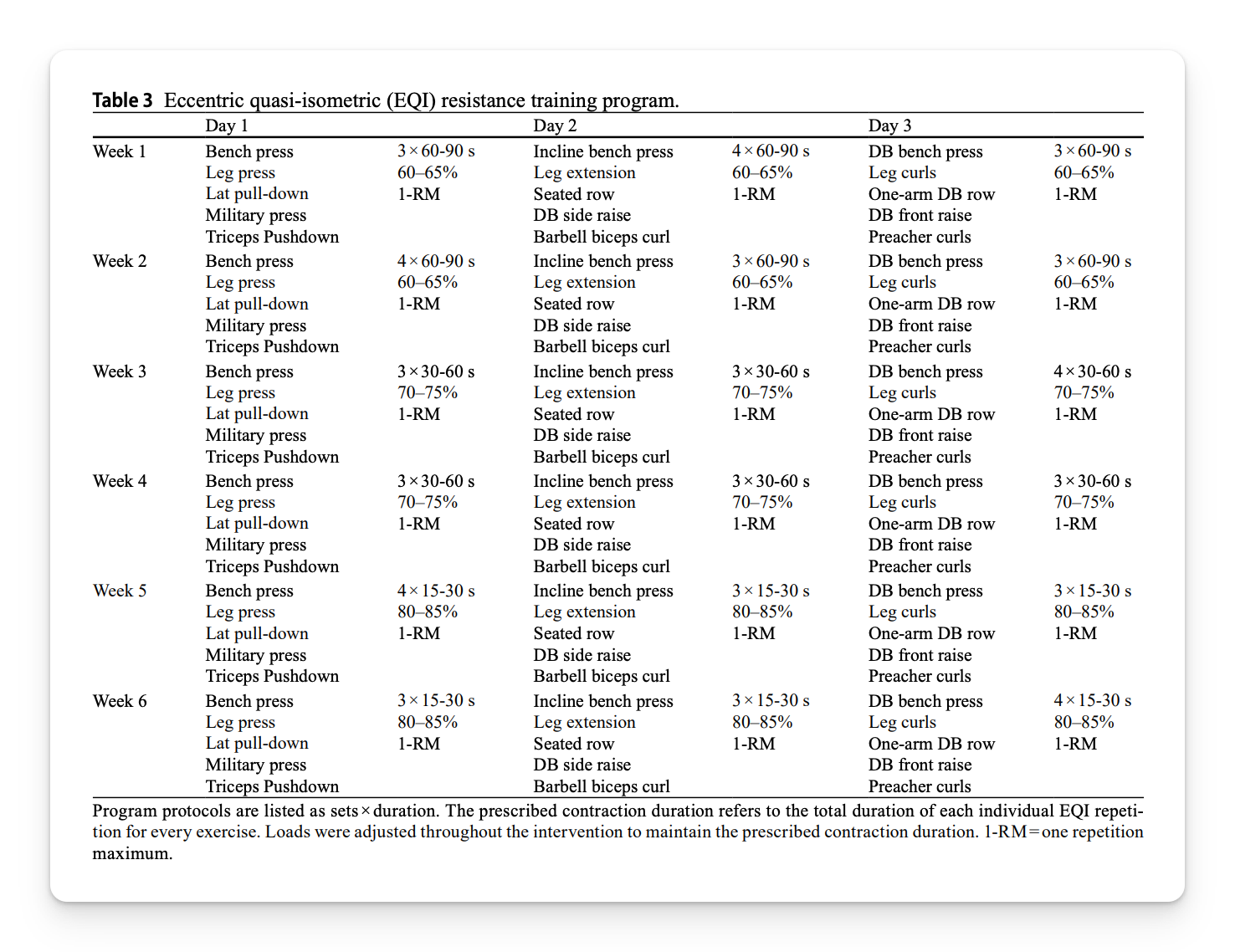
Both training groups completed three supervised full-body sessions per week for six weeks using similar exercise selections.
Repetition Performance
- The Dynamic group performed conventional concentric and eccentric repetitions.
- The EQI group began each repetition at approximately 30° of joint flexion, held until isometric failure, then maximally resisted through the remaining eccentric range.
- Each EQI repetition lasted 15–90 seconds, depending on the training week.
Measurements
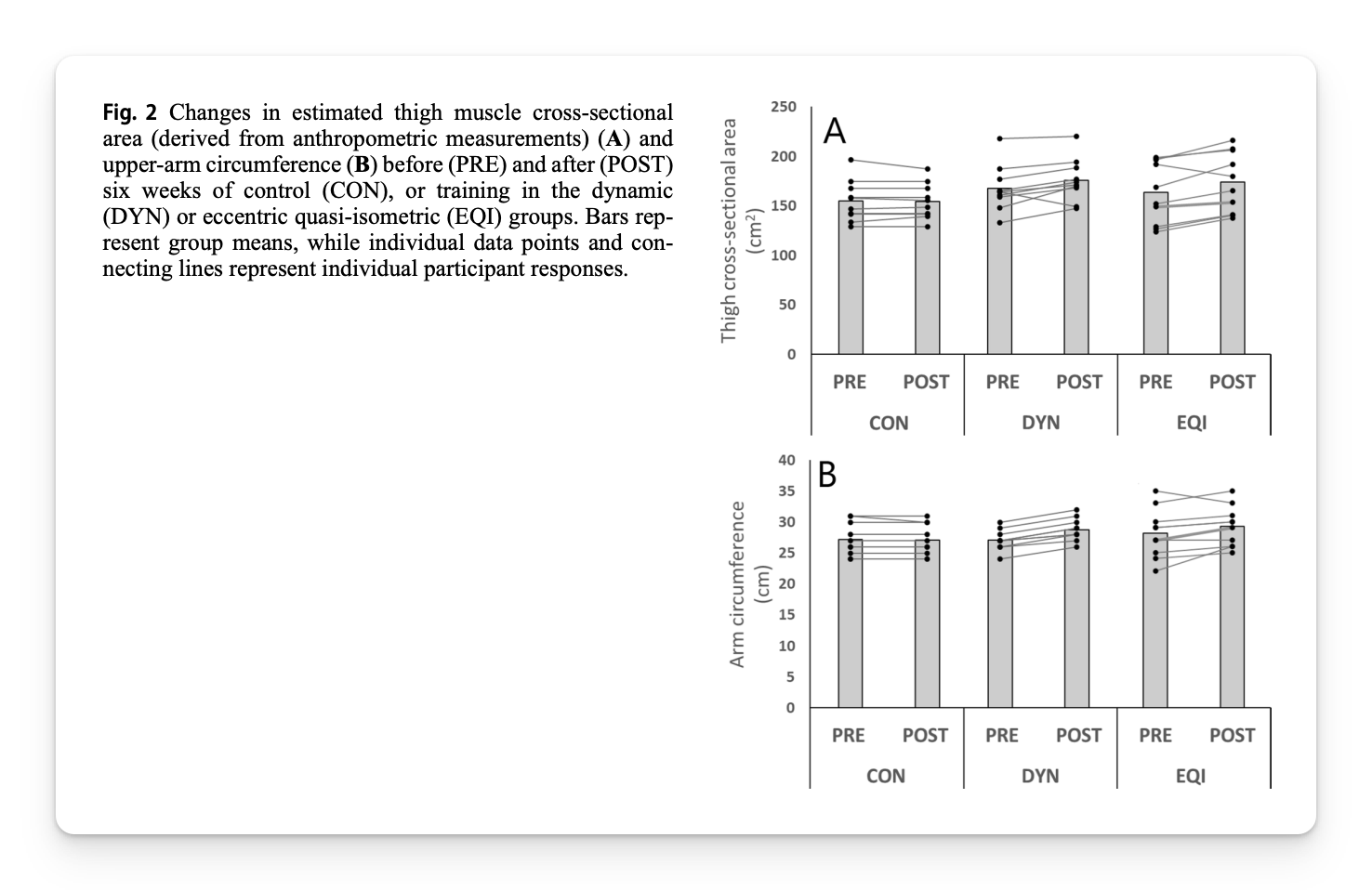
- Estimated thigh and upper-arm muscle size
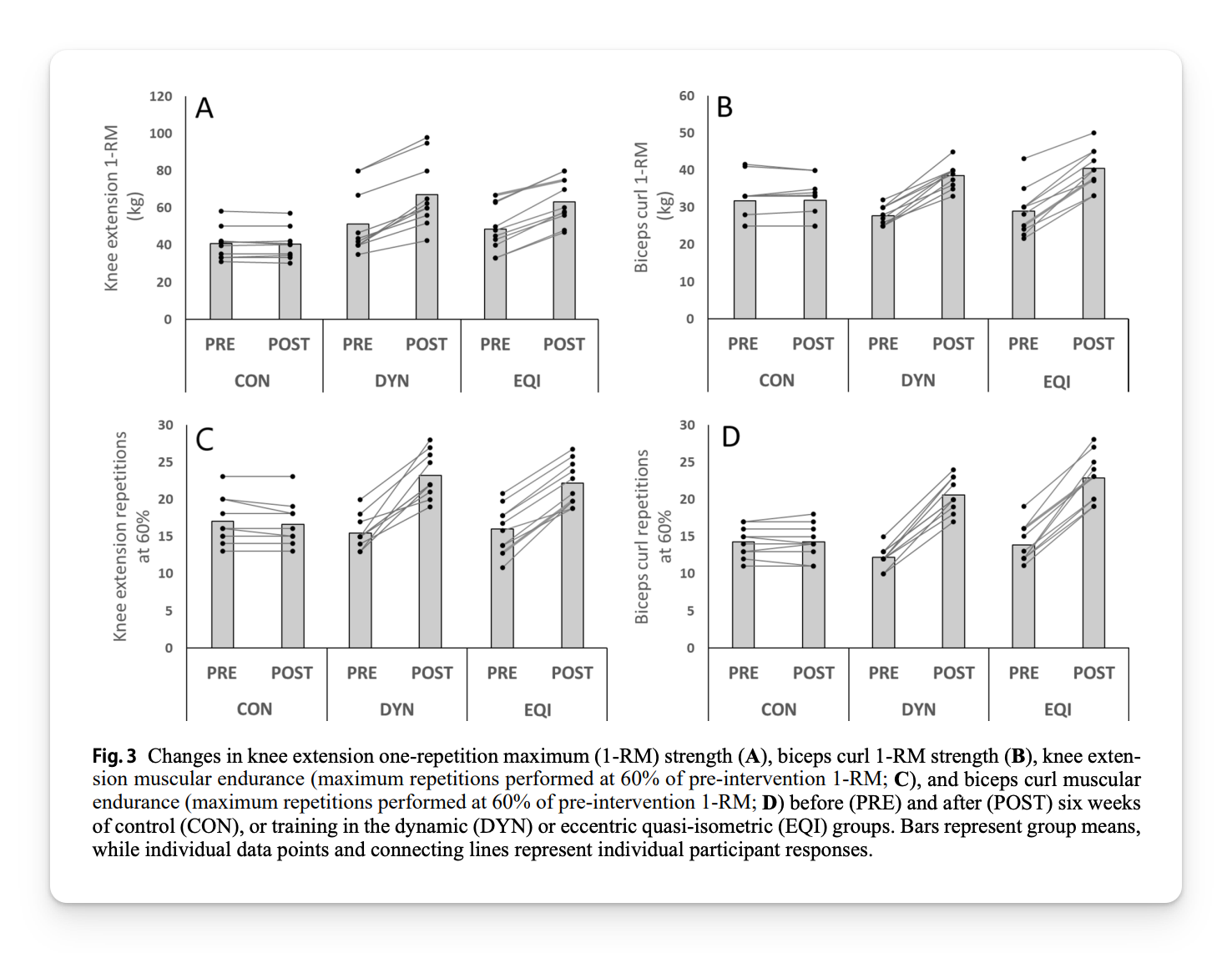
- Knee extension and biceps curl 1-RM
- Muscular endurance at 60% of baseline 1-RM
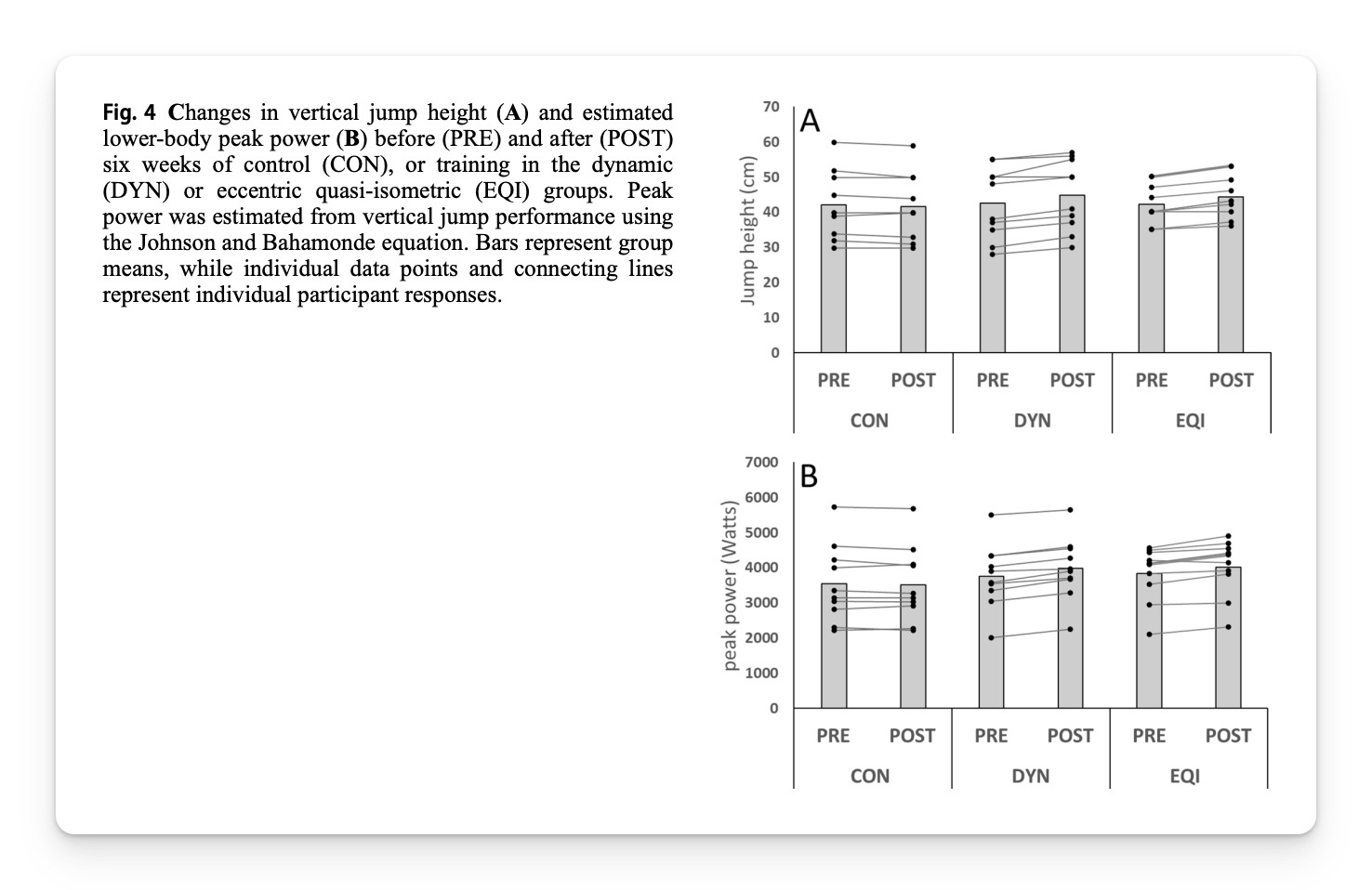
- Vertical jump height and estimated peak power
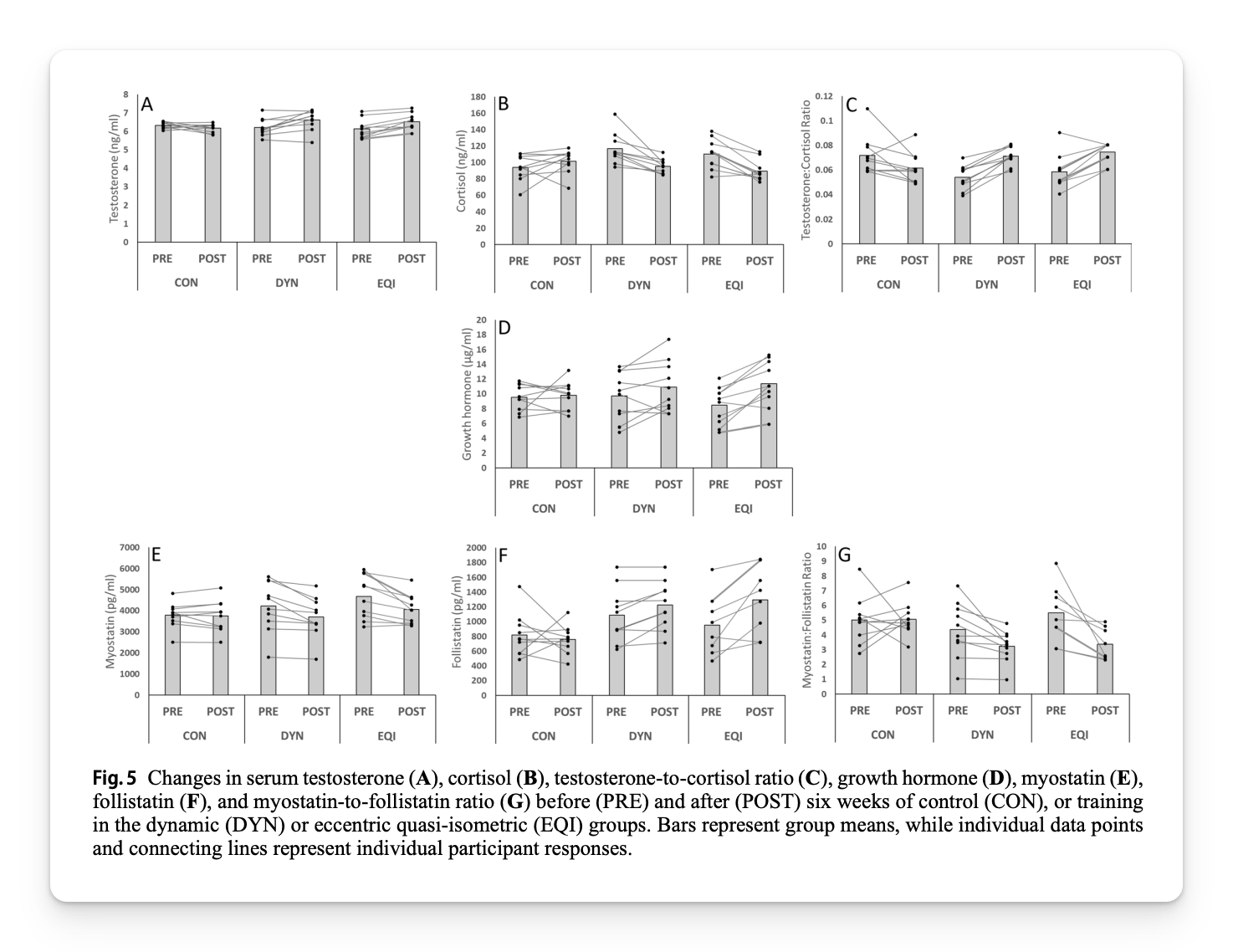
- Testosterone, cortisol, growth hormone, myostatin, and follistatin
What Were the Results?
Compared with the control group, EQI and dynamic training generally improved muscle size, maximal strength, muscular endurance, jump performance, and several hormonal markers.
Muscle Size
- Both groups increased estimated thigh cross-sectional area and arm circumference compared with control.
- No significant differences were found between EQI and dynamic training.
- Arm circumference changes numerically favored dynamic training.
Strength and Endurance
- Both groups improved knee extension and biceps curl 1-RM.
- Both groups improved repetitions to failure.
- No significant differences were found between the training groups.
- Knee extension endurance moderately favored dynamic training, while some upper-body outcomes slightly favored EQI.
Jump Performance
- Both groups improved vertical jump height and estimated peak power compared with control.
- No significant differences were found between EQI and dynamic training.
- Peak-power changes slightly favored dynamic training.
Hormonal Markers
- Both groups demonstrated generally favorable changes in testosterone, cortisol, and the testosterone-to-cortisol ratio.
- Circulating hormone concentrations do not necessarily reflect local signaling within muscle or connective tissue.
- Acute hormonal responses to exercise should not be confused with longitudinal hormonal adaptations.
What Does This Mean?
- EQIs can improve muscle size, strength, endurance, and jump performance in untrained men.
- The researchers detected no significant advantage over traditional dynamic resistance training.
- Dynamic training produced comparable benefits through a more familiar programming structure.
Limitations
- Only 10 participants completed each condition.
- All participants were healthy, untrained young men.
- Tendon adaptation, joint health, and rehabilitation outcomes were not assessed.
Coach’s Takeaway
- EQIs are a viable training option ⮕ They produced meaningful adaptations across several outcomes.
- EQIs were not superior to traditional training ⮕ The additional complexity did not translate into clearly better results.
- Context should drive exercise selection ⮕ EQIs may fit situations where prolonged tension or slow movement is desirable, although their proposed rehabilitation benefits still require direct research.
This study is a good reminder that more complex is not always better.
I hope this helps,
Ramsey
Reference: Nemati, R., Romian, T., Khodaei, K., Didani, M. Z., & Oranchuk, D. J. (2026). Comparing six weeks of full-body eccentric quasi-isometric and dynamic resistance training on muscular size, physical performance, and serum hormones in untrained men. Scientific Reports.


