

Recovery boots are widely used in sport to improve recovery between training sessions and competitions.
While popular, around here we like to look at the science.
And new study investigated whether intermittent sequential pneumatic compression (ISPC), or “recovery boots,” could improve recovery and subsequent endurance performance in trained triathletes.
Can recovery boots improve performance between two endurance sessions performed close together?

What Did the Researchers Do?
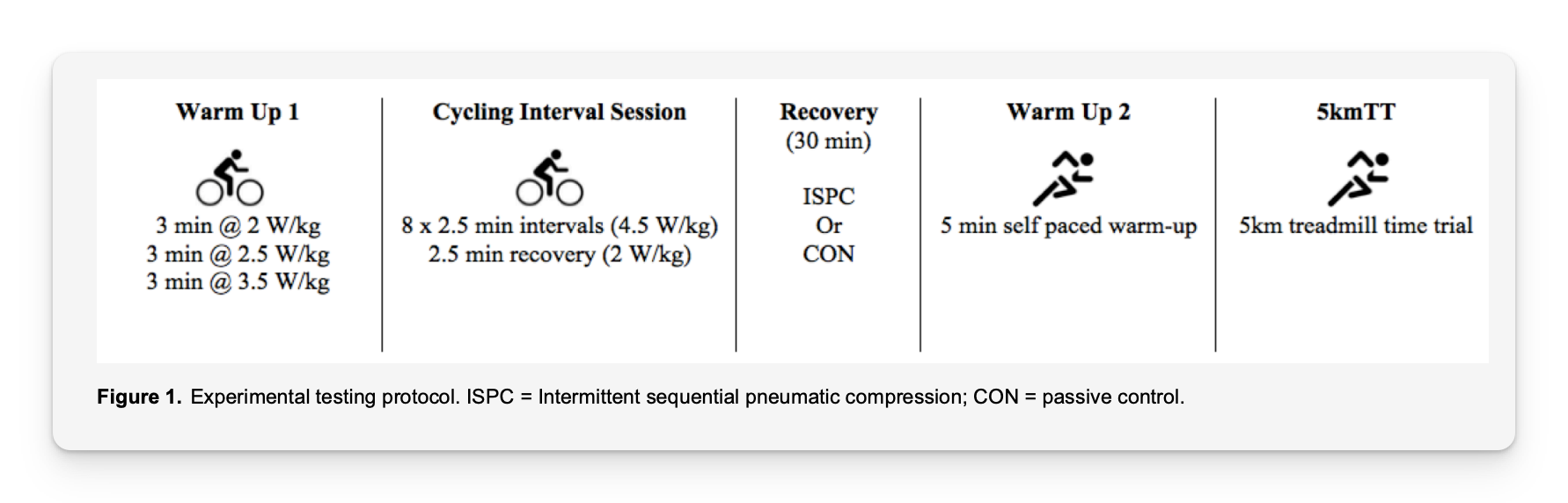
Protocol
Ten well-trained male triathletes (sub-20-minute 5km times) completed:
- High-intensity cycling intervals
- 30-minute recovery period:
- Passive rest (CON)
- Recovery boots (ISPC)
- 5km treadmill time trial
The recovery boots used:
- 80 mmHg compression
- Sequential distal-to-proximal inflation
- 30-minute duration
Variables Measured
- 5km performance time
- Blood lactate
- Perceived recovery (TQR)
What Were the Results?
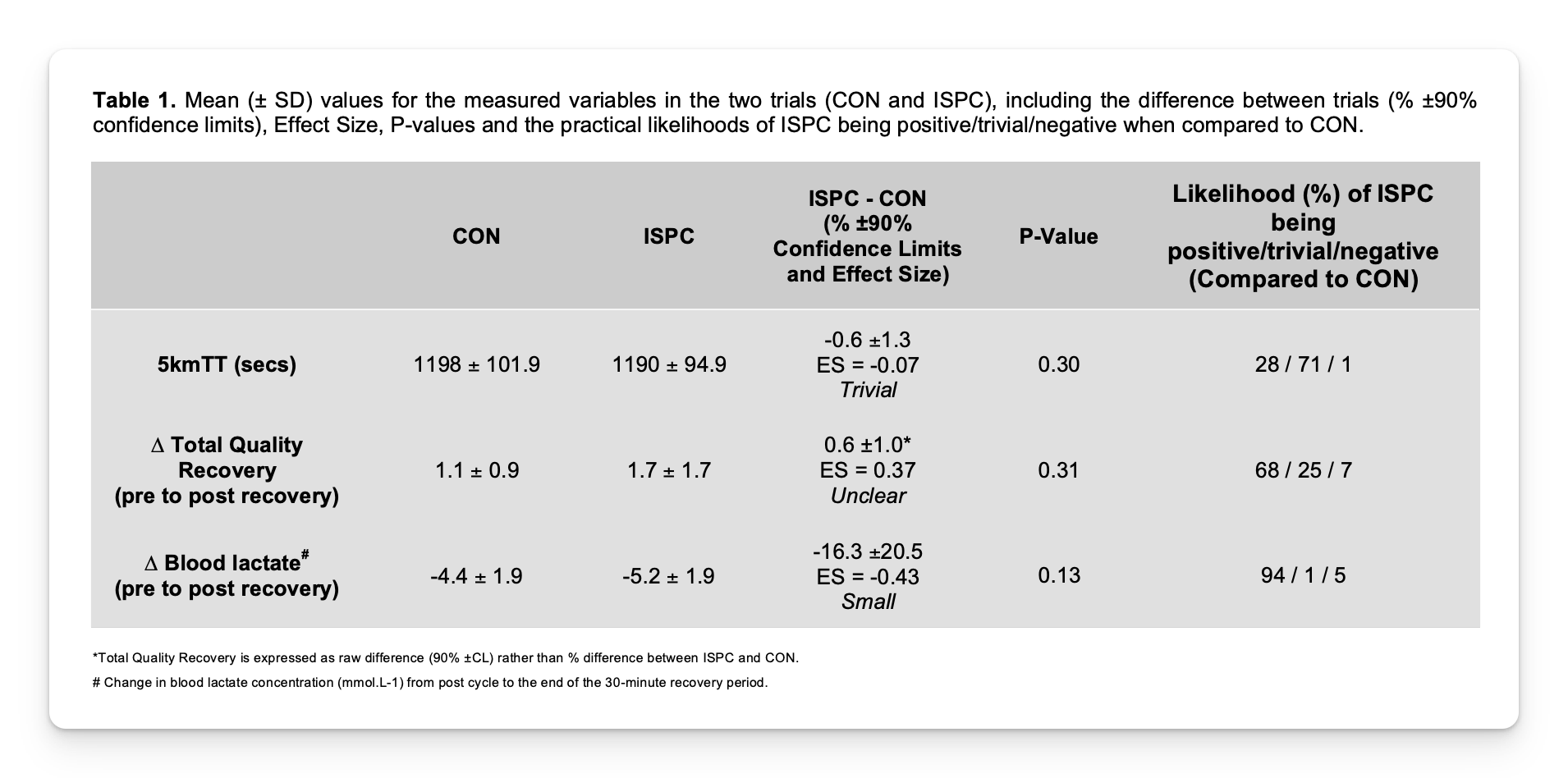
No Meaningful Improvement in Performance
- Recovery boots improved 5km time by only ~8 seconds
- Results were not statistically significant
- Effect size was trivial
Slight Improvement in Lactate Clearance
- Lactate decreased slightly more with recovery boots
- Suggests a small improvement in circulation/metabolite clearance
- Still did not improve performance
Perceived Recovery Slightly Improved
- Athletes felt somewhat more recovered
- Results were variable and unclear statistically
- Perception may still matter practically
What Does This Mean?
- Recovery boots did not meaningfully improve short-term endurance performance in trained athletes.
- They may slightly improve perceived recovery and lactate clearance.
- Highly trained athletes may already recover efficiently, limiting additional benefit from recovery tools.
- Recovery strategies may matter more during periods of extreme fatigue, dense competition, or travel.
Limitations
- Small sample size
- Only trained male triathletes
- Fatigue protocol may not have been demanding enough
- No placebo condition included
Coach’s Takeaway
- Recovery boots are likely not a major performance enhancer between sessions.
- They may still help athletes feel fresher and improve buy-in.
- Sleep, nutrition, hydration, and smart programming remain the biggest recovery drivers.
I hope this helps,
Ramsey
Reference
O’Donnell S, Driller MW. (2015). The effect of intermittent sequential pneumatic compression on recovery between exercise bouts in well-trained triathletes. Journal of Science and Cycling, 4(2), 24-28.


