
Testing
·
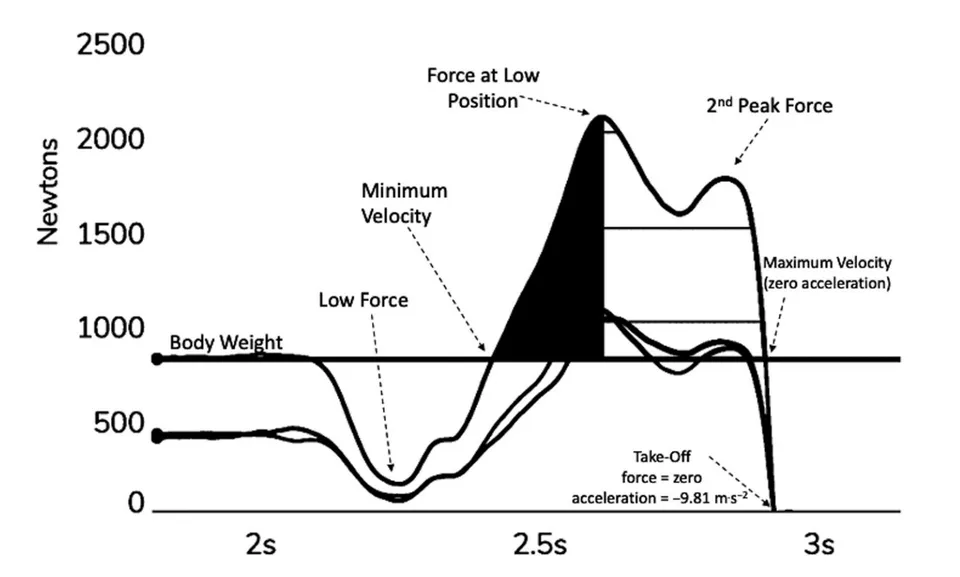
The 8 CMJ Force-Time Curves
Vertical ground reaction force (GRF) profiles from countermovement jumps (CMJs) provide insights into the athlete's jump strategy. Beyond
Science-Backed Training Articles to Strengthen Your Performance and Rehab Programming.
Vertical ground reaction force (GRF) profiles from countermovement jumps (CMJs) provide insights into the athlete's jump strategy. Beyond

Coaches often use verbal cues to drive movement changes, but more exploration is needed to understand how these cues impact

Coaches often examine countermovement jump height but overlook how the athlete jumps, specifically their force-time curve. This study explored whether

Traditional strength training guidelines recommend loads ≥70% of 1RM to maximize hypertrophy. However, low-load resistance exercise training (RET) to failure

Coaches often design programs that focus on muscle, but forget the tendon. Tendons adapt slower and differently than muscles, which

Tendon injuries are frustrating. They take time, don’t always follow a clear path, and often linger longer than expected.

In strength and conditioning, we often hear vague talk about “movement systems” or “training the body as one piece.” While

Landing after jumping is a primary source of lower limb injuries, especially in sports like basketball. Fatigue is known to

Velocity-based training (VBT) is effective but requires tech that many athletes don’t have. RPE (Rate of Perceived Exertion), particularly

Tendon Cell Biology: Effect of Mechanical Loading by Stańczak et al. (2024), provides a comprehensive review of how tendons respond

🚀If you want to level up your jump testing for training and rehab, check out the force plate course In

What Drives Clubhead Speed in Golf? A Look at the Physical Characteristics That Matter Clubhead speed is a key determinant