

One of the most common assumptions in sport performance is that stronger athletes should immediately become faster athletes.
But in reality, the transference of our training is not immediate and linear.
This study examined whether increases in strength qualities during a 9-week periodized training intervention were reflected in improved sprint acceleration performance in highly trained team sport athletes.
More importantly, this paper may help us understand the sequencing of adaptation:
- Capacity changes first
- Coordination reorganizes afterward
- Performance improves later
This sequencing is critical because a program may appear ineffective initially, athletes may feel slower during heavy training phases, and strength gains may not yet be fully expressed in movement.
Do athletes become faster immediately after they become stronger? or is there a lag between physical adaptation and sport performance expression?
What Did the Researchers Do?
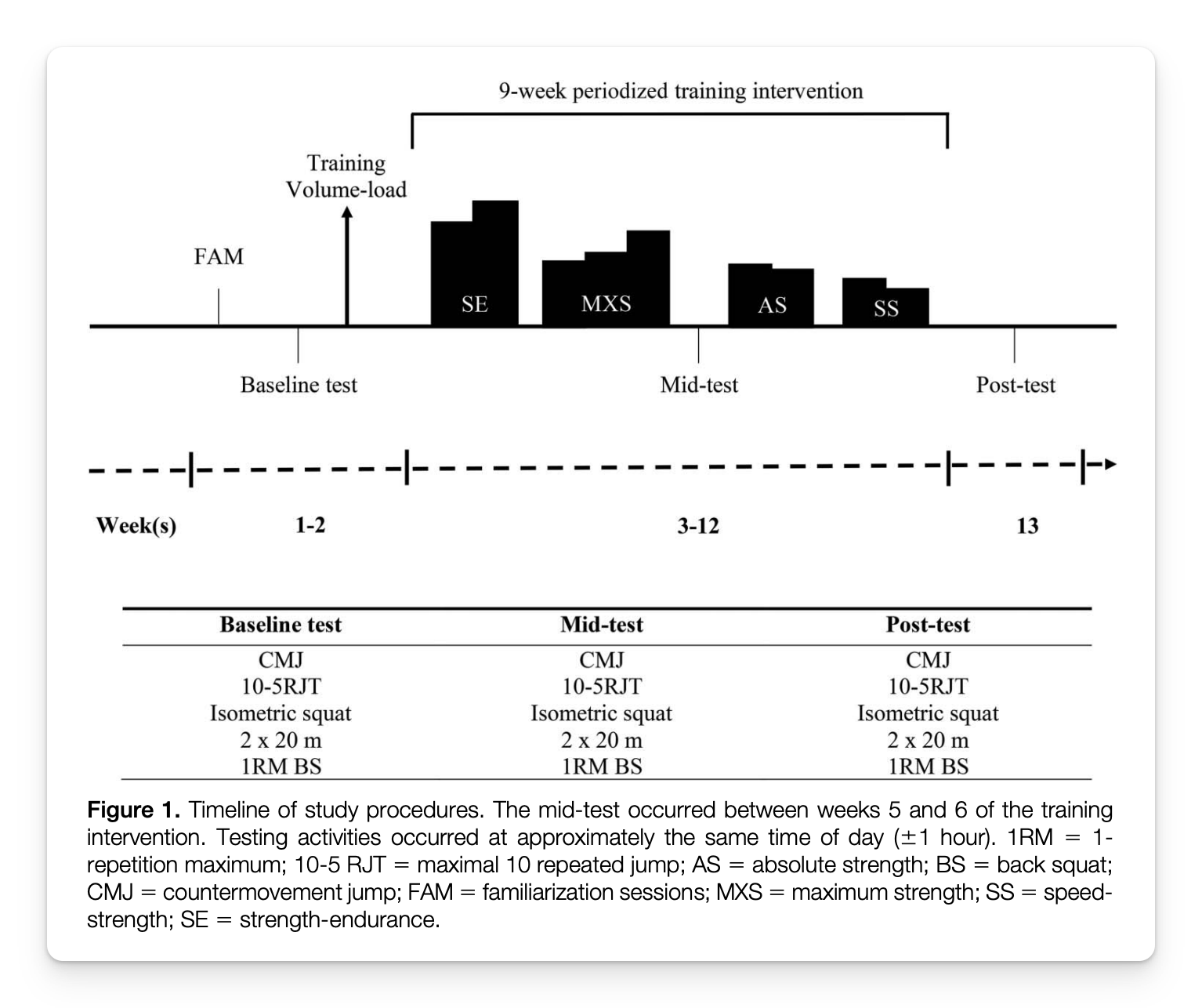
Researchers followed 19 highly trained male NCAA team sport athletes across a 9-week periodized training intervention.
Study Details
Testing Timelines
- Baseline
- Mid-test (week 5)
- Post-test (week 9)
Strength Testing
- 1RM back squat
- Isometric squat testing
- Countermovement jump (CMJ)
- Reactive strength index (RSI)
Sprint Testing
- 0–10m sprint
- 0–20m sprint
- 10–20m split
Training Program
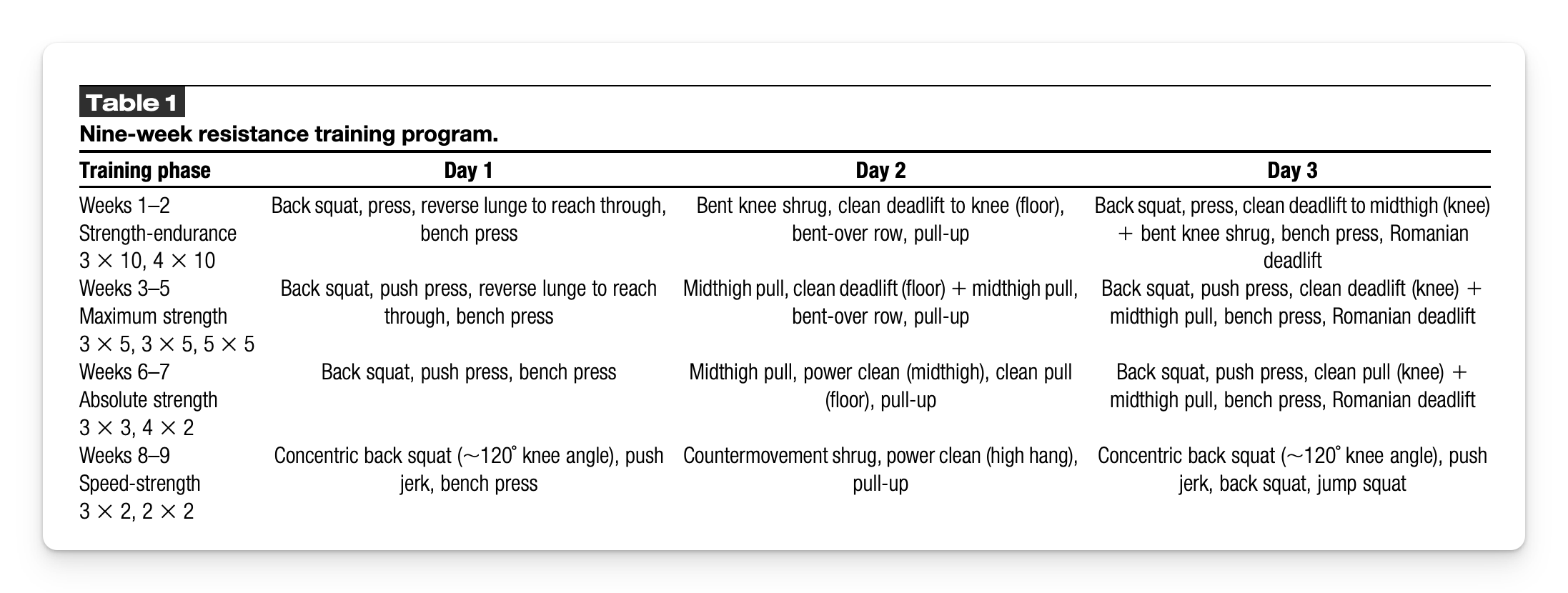
The training program was highly periodized and progressed through:
- Strength-endurance
- Maximum strength
- Absolute strength
- Speed-strength phases
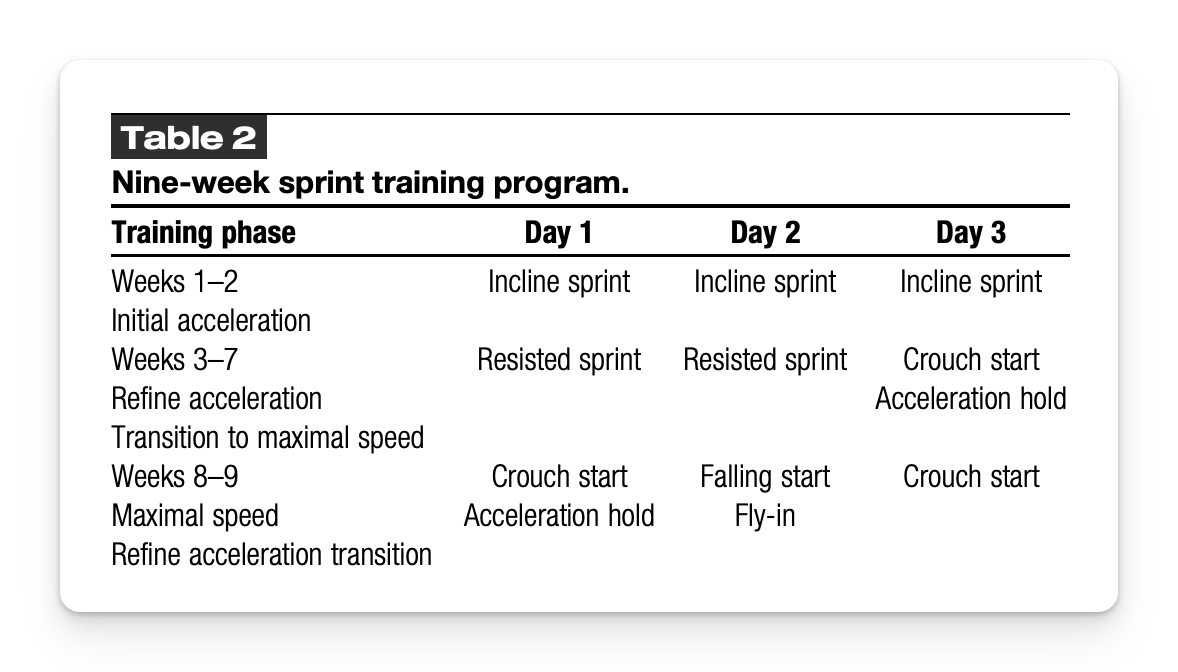
The sprint program also evolved progressively from incline and resisted acceleration work to to maximal speed sprinting and fly-in work.
What Were the Results?
Strength Improved Before Sprint Performance
The athletes significantly improved net peak force and squat strength by the mid-test period.
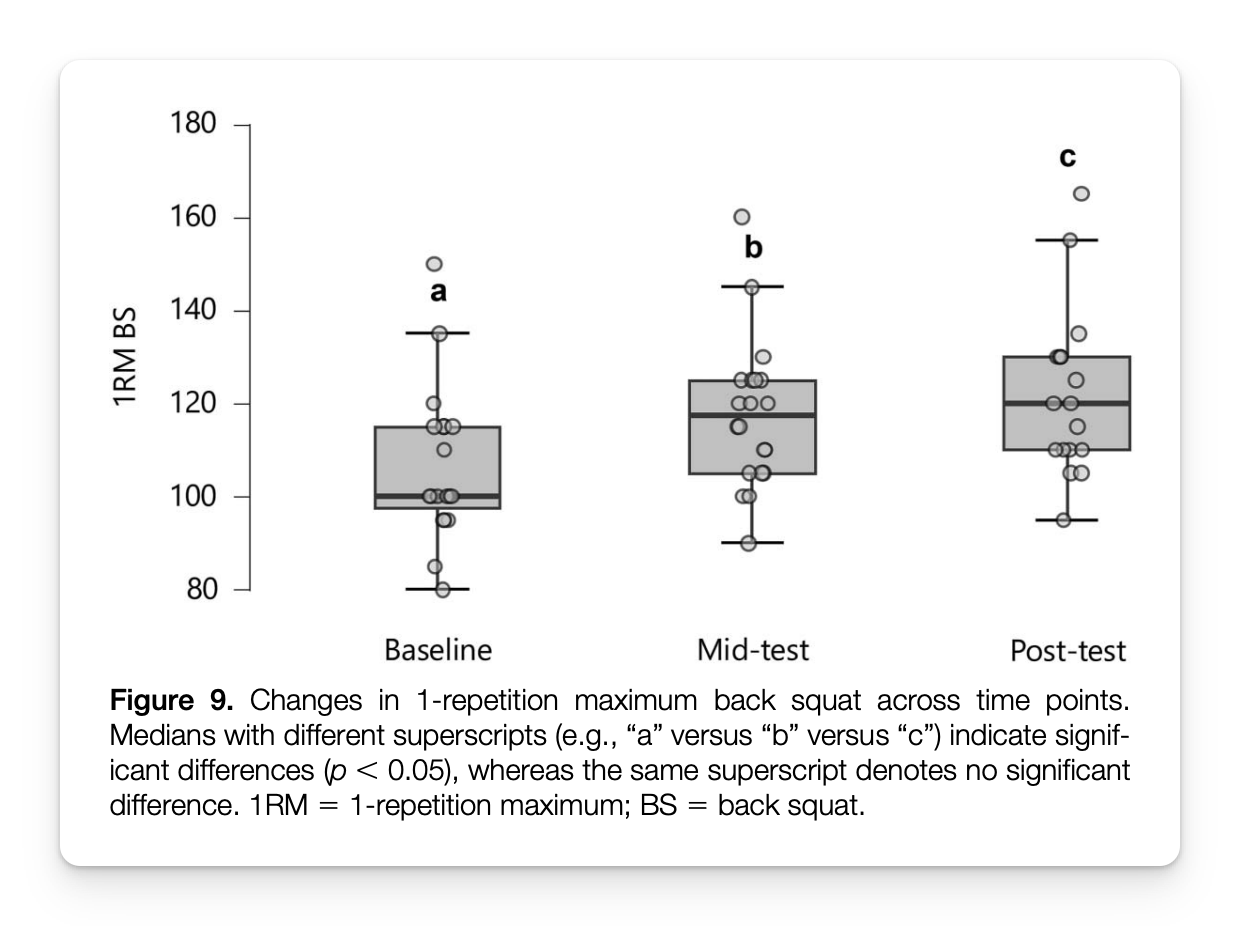
1RM back squat strength progressively improved across the entire intervention:
- Baseline: 100 kg median
- Mid-test: 115 kg median
- Post-test: 120 kg median
Sprint Performance Did NOT Improve Immediately
Despite early strength gains:
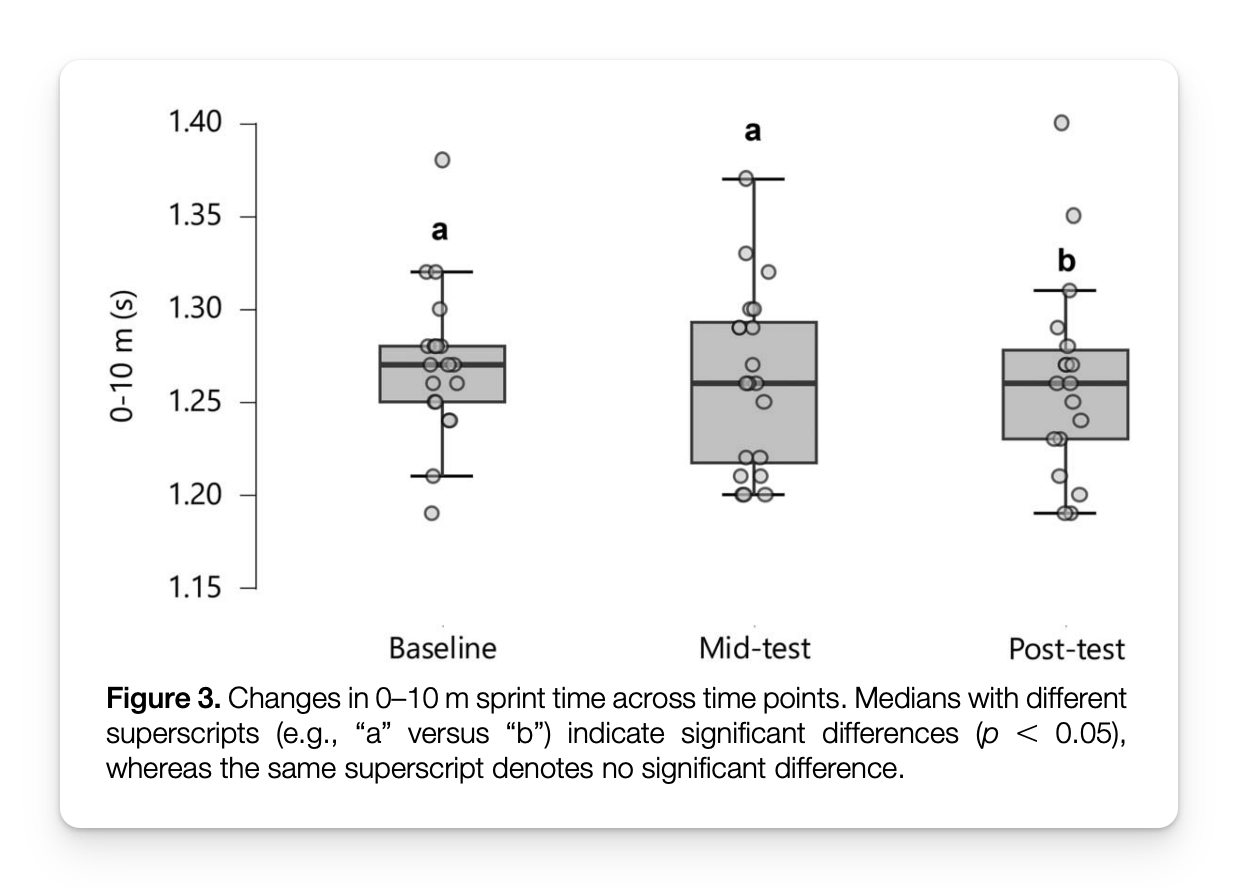
- 0–10m sprint time did not improve at mid-test
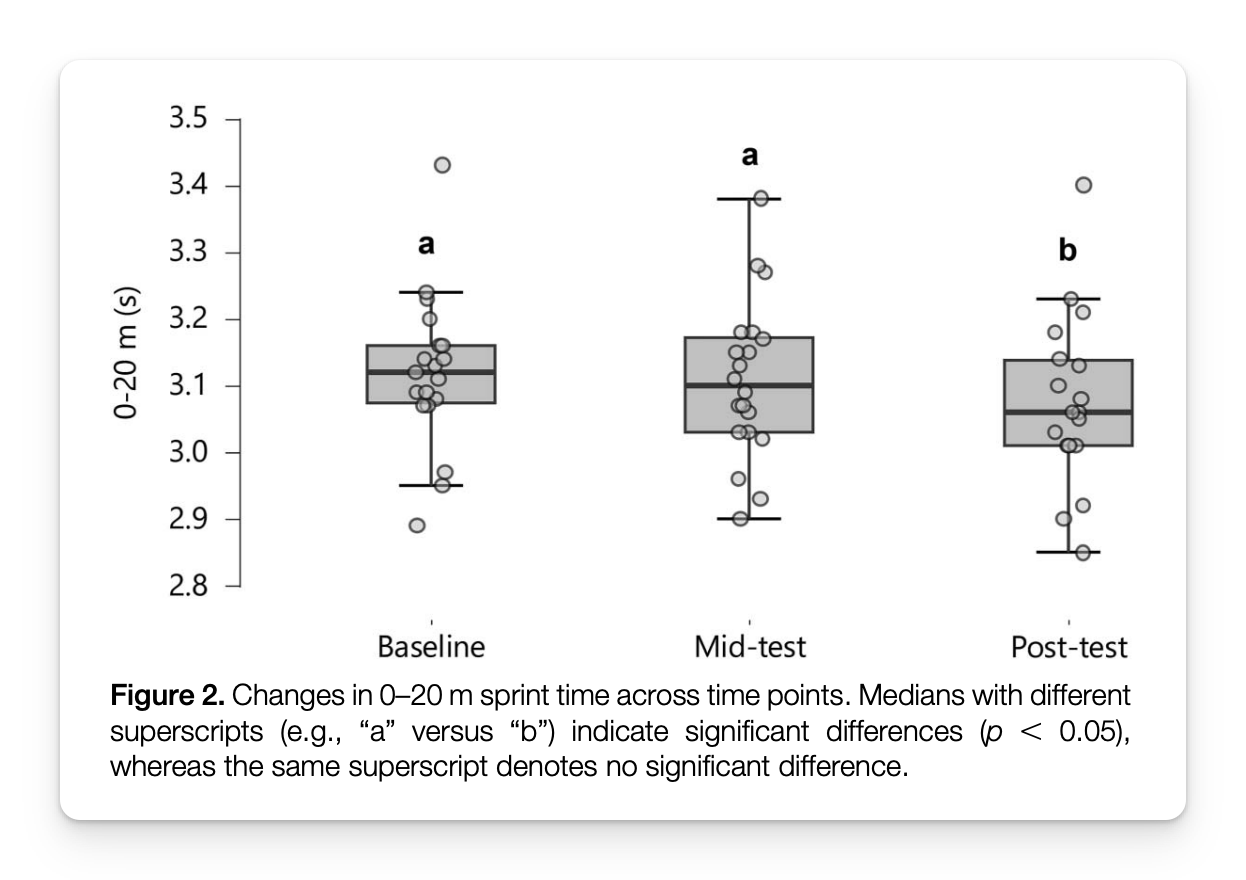
- 0–20m sprint time did not improve at mid-test
Sprint acceleration only improved at post-test.
This suggests a delayed performance effect.
CMJ Height and RSI Improved Later Alongside Sprinting
At post-test:
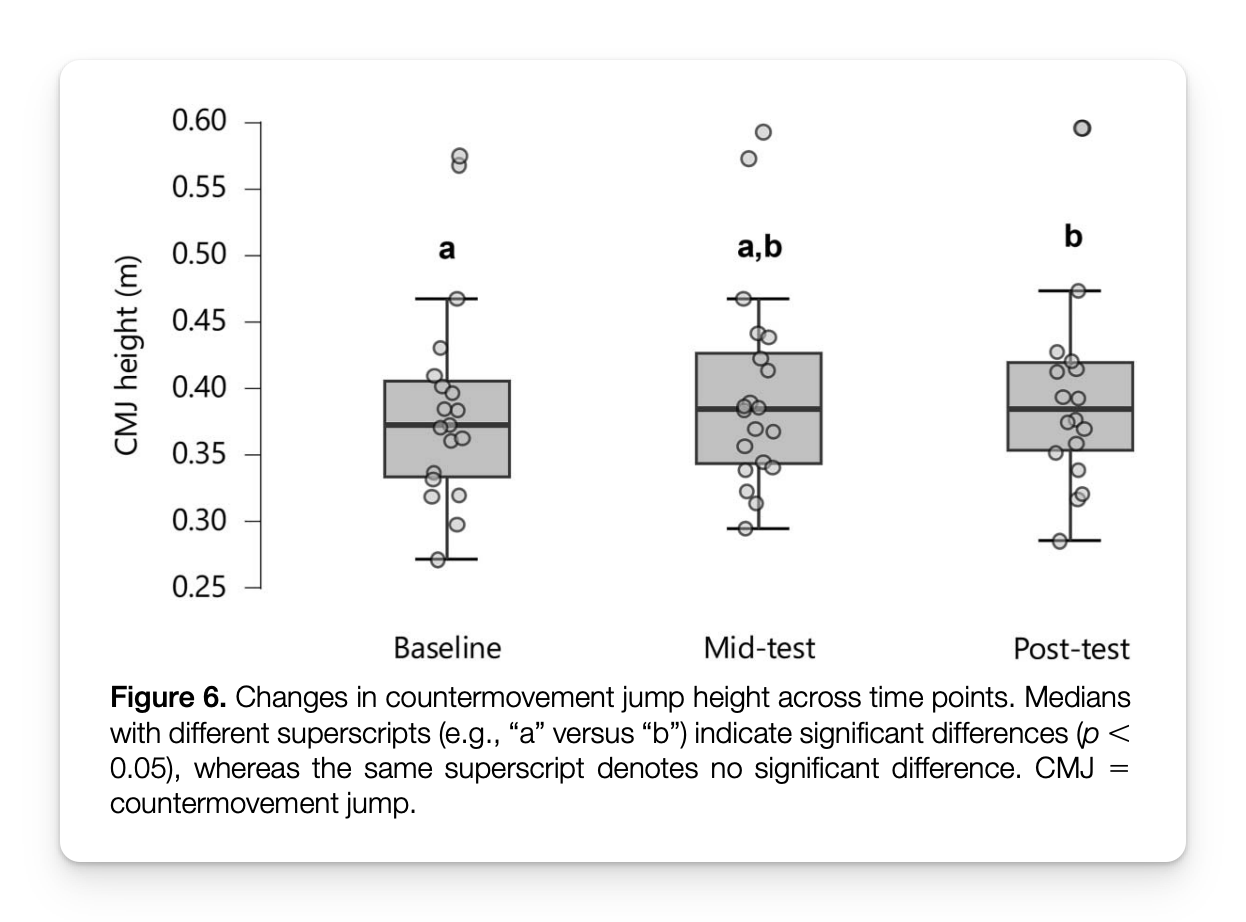
- CMJ height improved
- RSI improved
- countermovement displacement decreased
This may suggest:
- improved lower limb stiffness
- more efficient SSC behavior
- improved force transmission
- enhanced movement coordination
Importantly, these changes occurred alongside the sprint improvements.
10–20m Sprint Performance Did NOT Improve
Interestingly, the 10–20m split did not significantly improve. This suggests:
- Initial acceleration improved
- Later acceleration mechanics may not have changed enough
The authors suggest this may relate more to horizontal force orientation, sprint technique, and technical proficiency.
What Does This Mean?
This paper suggests that adaptation may follow a sequence of Capacity → Coordination → Performance.
Capacity
The athletes first improved:
- maximal strength
- force production
- output capabilities
This represents the development of physical potential.
Coordination
The nervous system may then require time to:
- Reorganize movement strategies
- Regulate stiffness
- Refine acceleration mechanics
- Improve timing and sequencing
The authors repeatedly discuss the possibility that athletes required time to “actualize” strength adaptations into improved sprint performance.
This may explain why athletes often feel slower during heavy loading phases, taper periods suddenly reveal speed, and sprint performance improvements are delayed.
Performance
Only after these adaptations occurred did sprint acceleration improve.
This is a huge coaching concept because it shows that performance is not simply physical capacity.
Rather, performance is the expression of capacity through coordinated movement organization.
Limitations
Several limitations are important to consider:
- The study cannot establish direct causation between strength gains and sprint improvements
- Accelerative technique was not measured directly
- The athletes, while highly trained, were not elite sprinters
- Sport-specific training outside the intervention was not fully controlled
Additionally, coordination changes were inferred rather than measured, and stiffness adaptations were speculative based on CMJ and RSI findings.
Nevertheless, the sequencing observed in the data is highly interesting.
Coach’s Takeaway
- Strength gains may occur before sprint performance improves
- Coordination and movement organization may be the missing link between capacity and performance
- Heavy training phases may temporarily mask speed improvements, while tapering may help reveal them
- Capacity does not guarantee performance, athletes must learn to organize and express new outputs efficiently
- Think beyond “strength = speed” and instead consider the sequencing of Capacity then Coordination then Performance
I hope this helps,
Ramsey
Reference
Holmberg PM, James LP, Lamont HS, Kelly VG. (2026). Are Strength Adaptations Reflected in Changes in Sprint Acceleration Performance in Highly Trained Team Sport Athletes? Journal of Strength and Conditioning Research, 40(6), 663–675.


