

Passive heating (e.g., sauna, hot water immersion) is increasingly used by athletes to improve performance, accelerate recovery, or induce physiological adaptation.
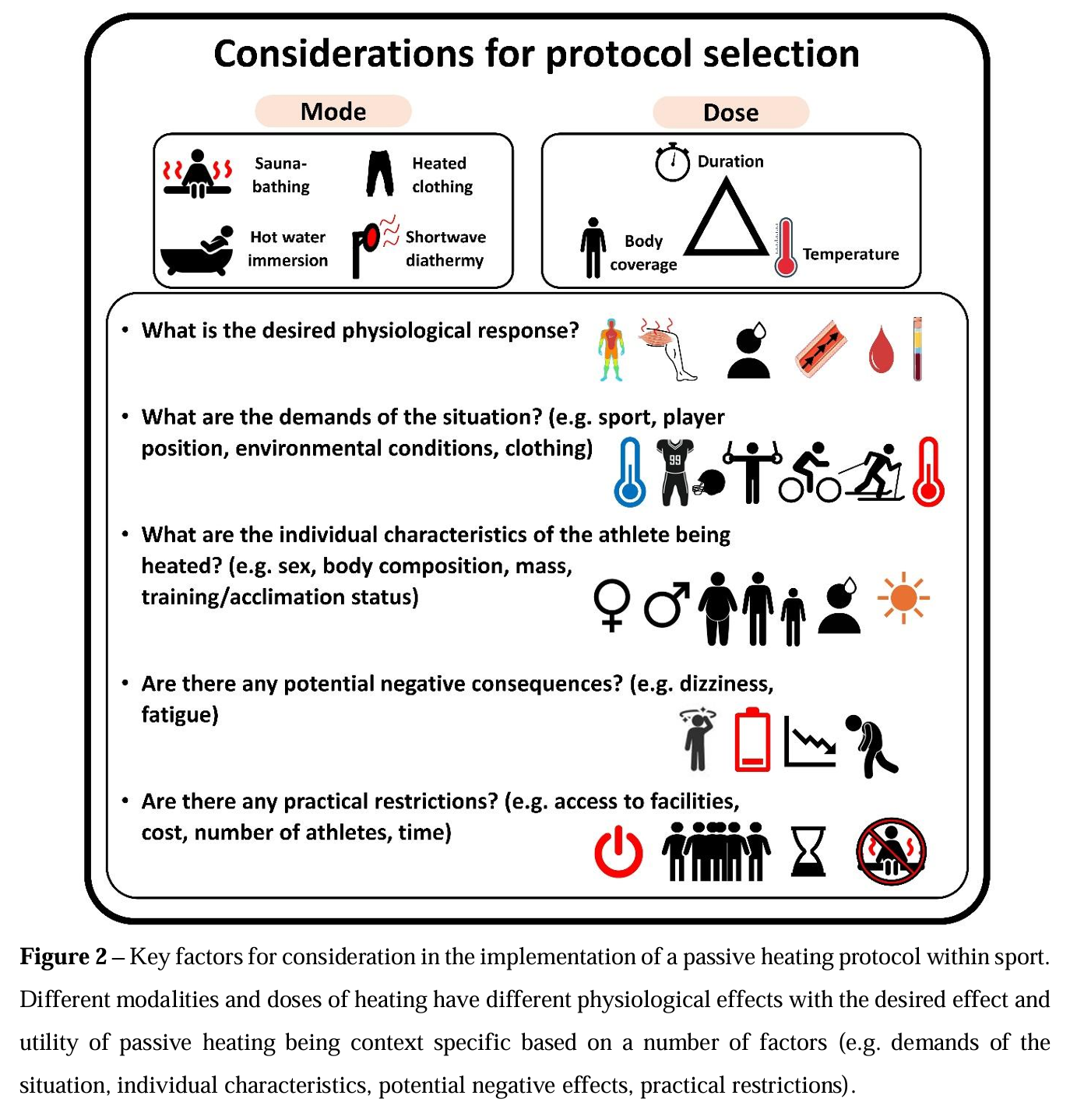
This review explores how heating modality, dose, and context determine whether passive heating is helpful, or harmful, in sport.
Can passive heating improve training, performance, recovery, or adaptation and when should we avoid it?

What Did the Researchers Do?
This was a narrative review focused on human trials. It summarized:
- Acute and chronic physiological responses to passive heating.
- Different heating modalities (e.g., sauna, immersion, heated clothing).
- How context—like sport type, timing, and individual athlete traits—affects outcomes.
Key mechanisms examined included muscle temperature, cardiovascular strain, inflammatory signaling, and thermoregulatory adaptations.
What Were the Results?
Performance Enhancement (Short-Term Use)
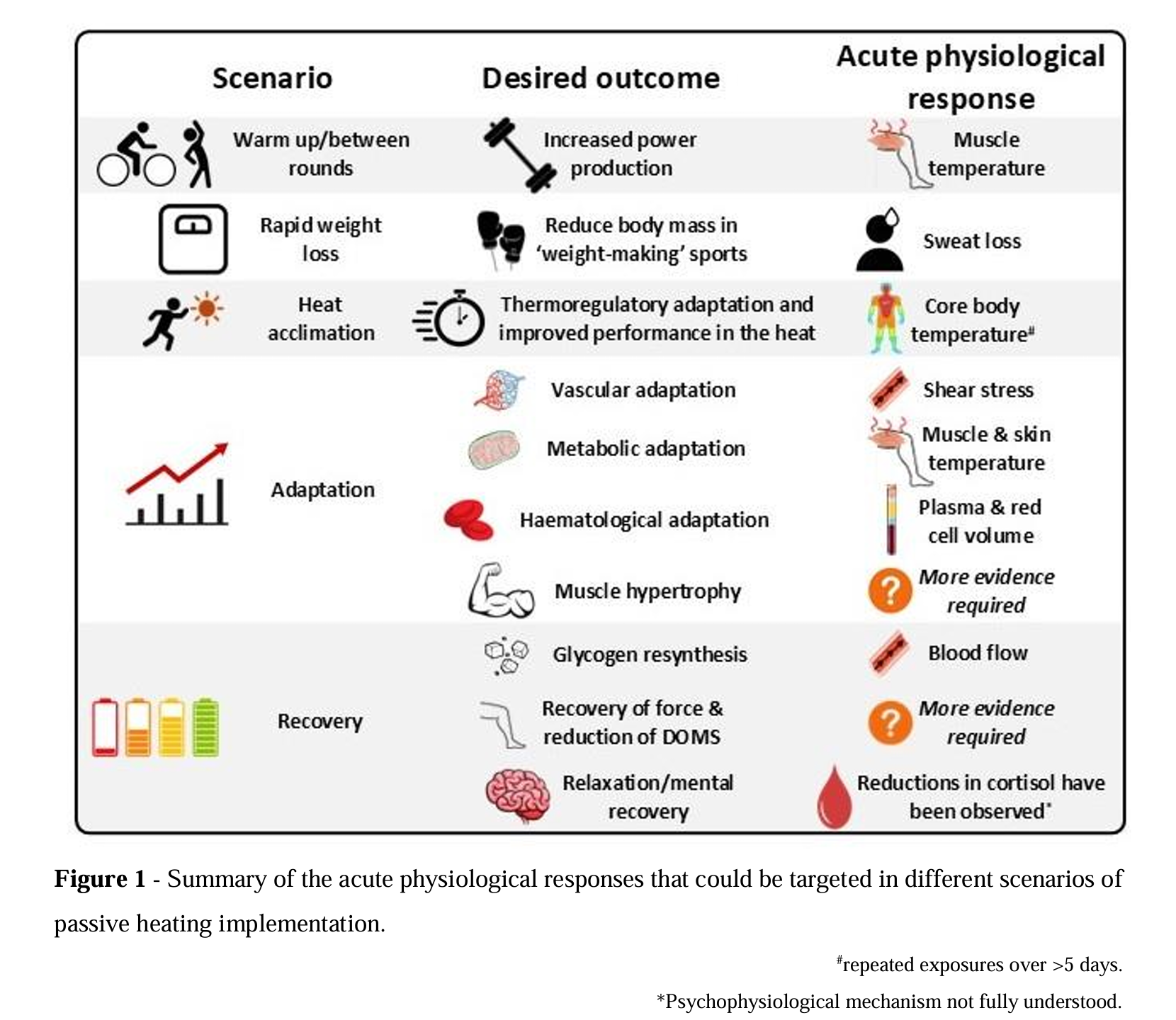
- Maintaining or elevating muscle temperature improves sprint and power output during warm-ups and breaks.
- Heated clothing or hot water immersion can maintain performance in sports with pauses (e.g., rugby, judo, track cycling).
Performance Impairment (Inappropriate Timing)
- Heating before long-duration or hot-environment events (e.g., marathon, soccer in summer) can impair endurance, decision-making, and safety due to elevated core temperature.
Thermal Adaptation (Repeated Use)
- Passive heating can replicate or augment traditional heat acclimation protocols.
- Effective doses: ≥30 minutes/day for ≥6 days (sauna or hot water immersion).
Recovery & Relaxation
- Moderate heating may reduce stress and improve perception of recovery.
- Excessive heating (e.g., ≥60 min or very high core temperature) may increase fatigue and elevate cortisol.
Adaptation & Muscle Strength/Size
- May improve VO2max, capillary density, and mitochondrial function.
- Mixed results for hypertrophy; whole-body heating and core temperature rises may be needed to stimulate anabolic signaling.
Rapid Weight Loss
- Common in combat sports to "make weight."
- 60 min sauna = ~1–2% body mass loss; effective but risky (rhabdomyolysis, dehydration).
Injury & Rehab
- Promising tool to limit deconditioning during injury; can maintain cardiovascular fitness and muscle mass (in theory), but more research needed, and admittedly this is probably very limited.
What Does This Mean?
Passive heating can be a powerful tool, but it's not universally beneficial. Coaches must match the modality and dose to the desired outcome:
- Muscle temp → Power/speed boost.
- Core temp → Heat acclimation, cardiovascular strain, adaptation.
- Local heating → Potential recovery or tissue-specific responses.
When misused, it may increase fatigue, impair performance, or lead to heat illness.
Limitations
- Most recommendations are based on short-term studies with variable heating protocols.
- Individual response (e.g., sex, body size, fitness level) can drastically alter outcomes.
- Mechanisms in muscle hypertrophy and injury recovery are still under investigation.
Coach’s Takeaway
- Use passive heating to maintain muscle temperature between warm-up and performance (e.g., heated pants in sprint sports).
- Avoid pre-event heating before long-duration or heat-sensitive sports (consider pre-cooling instead).
- For adaptation or rehab, use systemic heating ≥30 minutes per session, but monitor for fatigue or tolerance issues.
I hope this helps,
Ramsey
Reference:
Menzies, C., Clarke, N. D., Pugh, C., Steward, C. J., Thake, C. D., & Cullen, T. (2025). Passive heating in sport: Context specific benefits, detriments, and considerations. Applied Physiology, Nutrition, and Metabolism.


