

As performance coaches, we are often short on time with our athletes, competing with sport volume and whatever else is going on in the athletes' lives.
So we need training strategies that deliver in limited time and myo-reps may be a tool for your tool-belt.
Myo-Reps use:
- One hard activation set near failure
- Short rest periods (20-40 seconds)
- Several brief "mini-sets"
The idea is to maintain a high level of effort while dramatically reducing workout duration.
This study investigated the if myo-reps actually work.
Can resistance-trained lifters build the same amount of muscle strength, with less volume and time, using Myo-Reps?
What Did the Researchers Do?
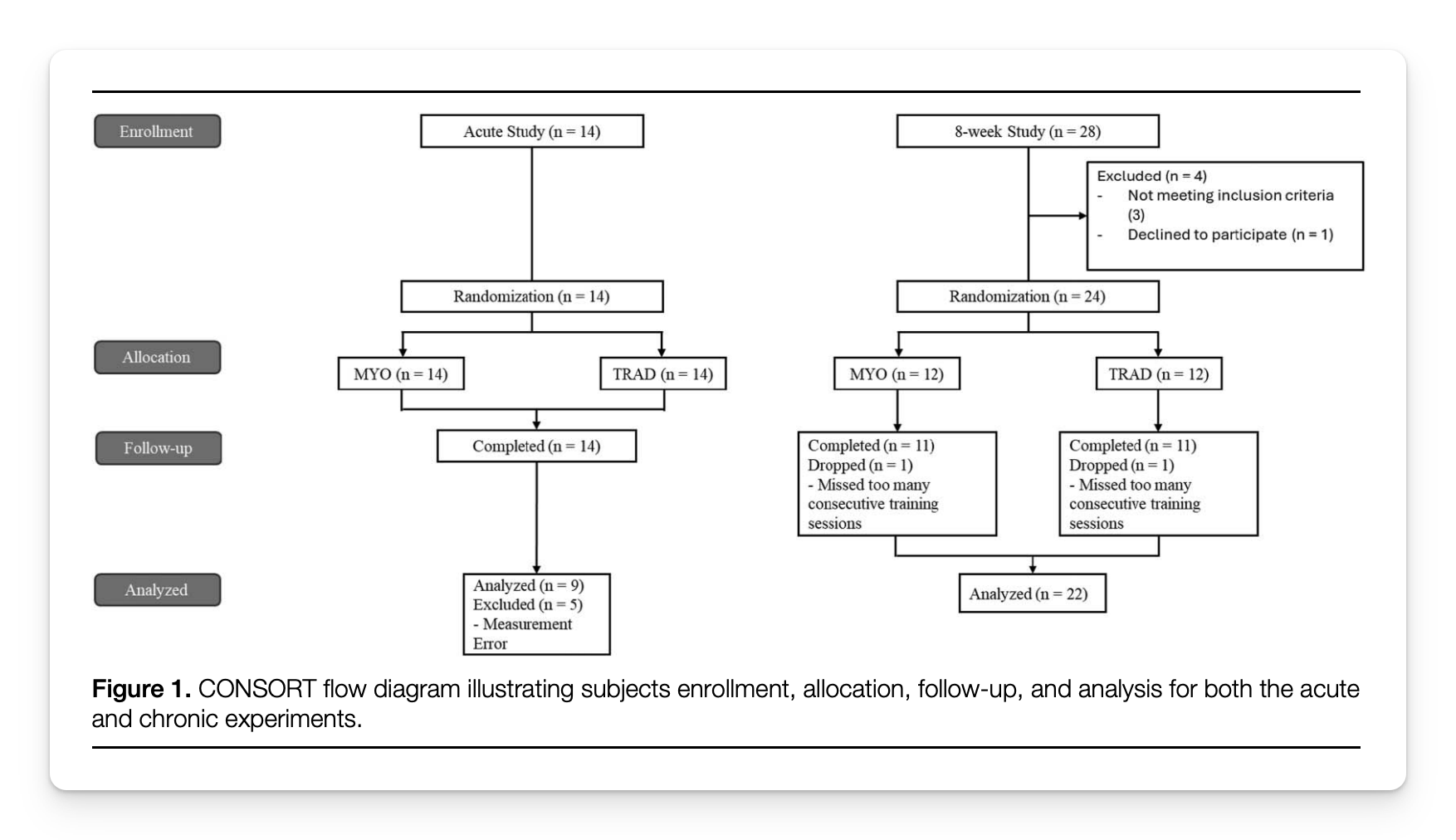
The study consisted of two separate experiments.
Acute Experiment
Researchers recruited 9 resistance-trained men and had them complete both training conditions using the bench press.
They measured:
- Session duration
- Muscle excitation using EMG
- Mean barbell velocity
Chronic Training Study
Researchers recruited 22 resistance-trained men and randomly assigned them to either Myo-Reps (MYO) or Traditional Straight Sets (TRA)
Training lasted 8 weeks with 2 sessions per week and included:
- Flat bench press
- Incline bench press
- Seated cable fly
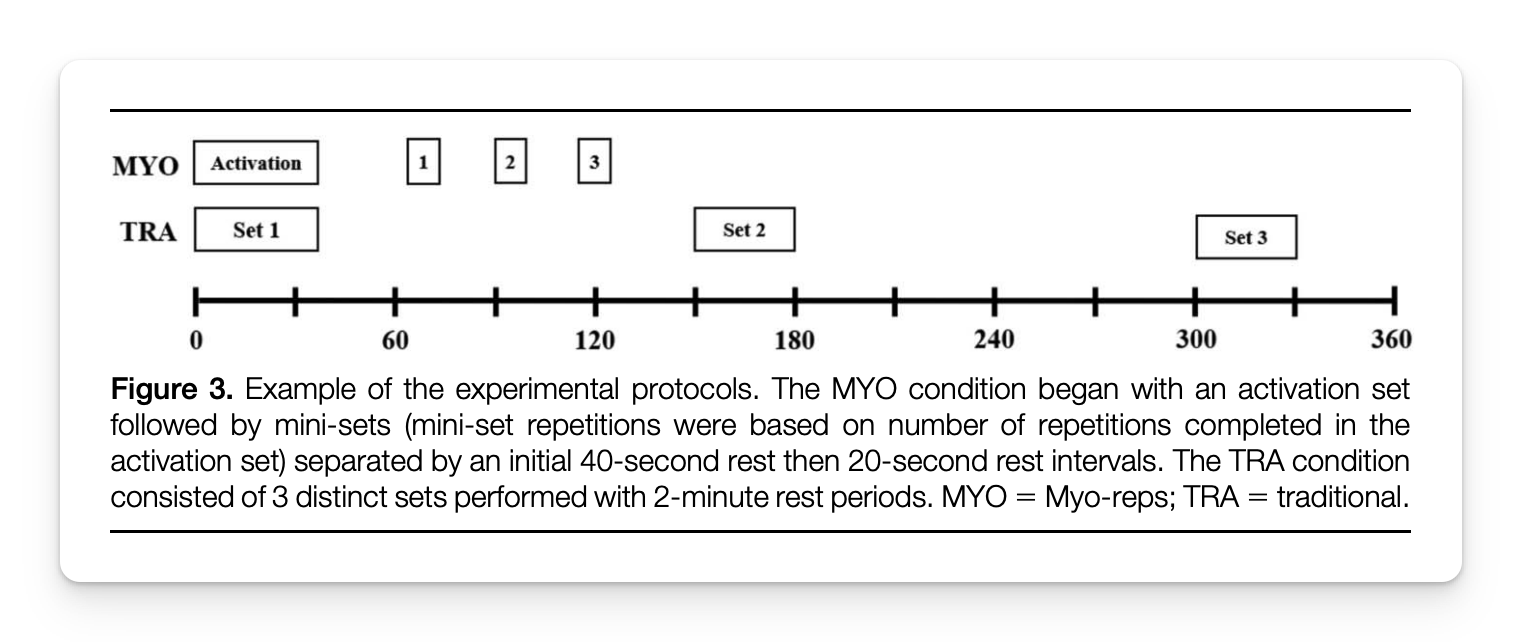
Traditional Group
- 3 sets to failure
- 6-12 repetition range
- 120 seconds rest between sets
Myo-Reps Group
- One activation set to failure
- 40 seconds rest
- Several mini-sets separated by 20-second rests
Training continued until the target repetitions could no longer be achieved.
Measured Variables
- Bench press 1RM
- Strength endurance
- Pectoralis muscle thickness via ultrasound
- Volume load
- RPE
- Recovery scores
What Were the Results?
Myo-Reps Cut Training Time Nearly in Half
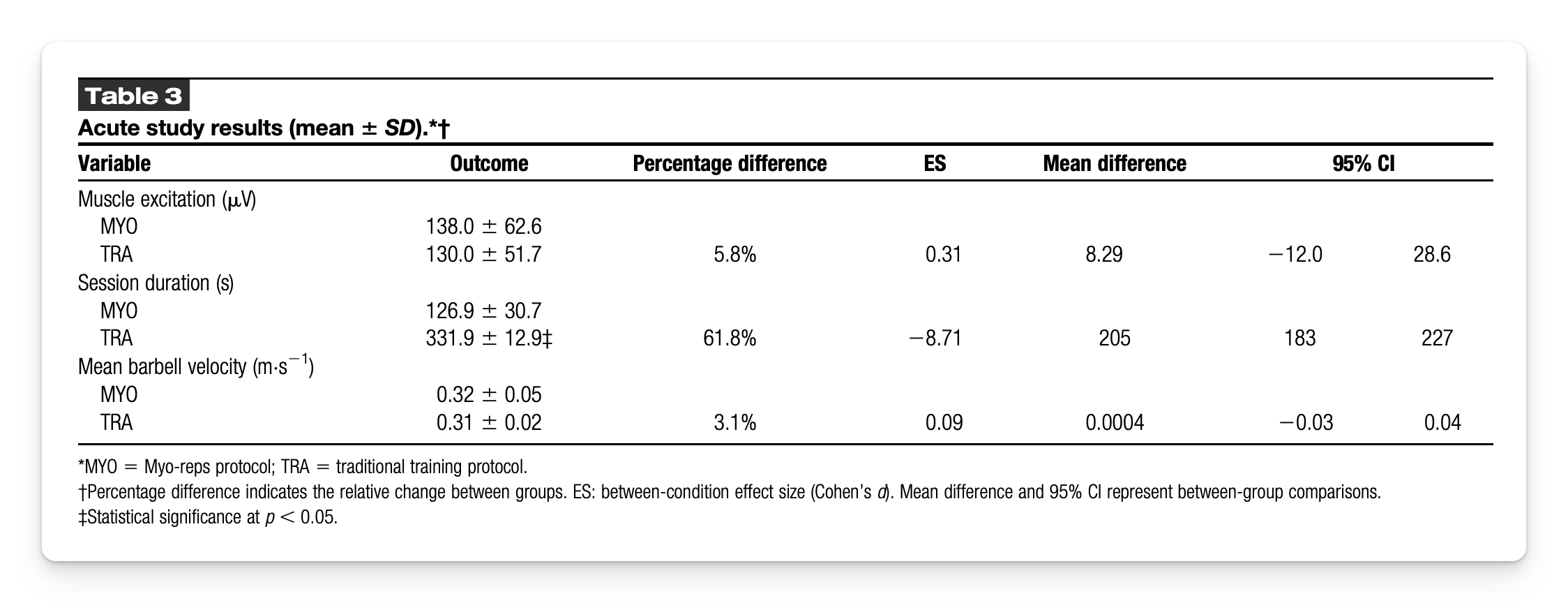
The acute portion of the study found a substantial difference in session duration.
- Myo-Reps: ~127 seconds
- Traditional sets: ~332 seconds
That's 62% less time to complete the bench press protocol while producing a similar training stimulus.
Muscle Activation and Bar Speed Were Similar
Despite the shorter training time, researchers found:
- No differences in muscle excitation (EMG)
- No differences in mean barbell velocity
Both protocols appeared to expose athletes to a similar level of effort and proximity to failure.
Strength Improved Equally
After 8 weeks of training:
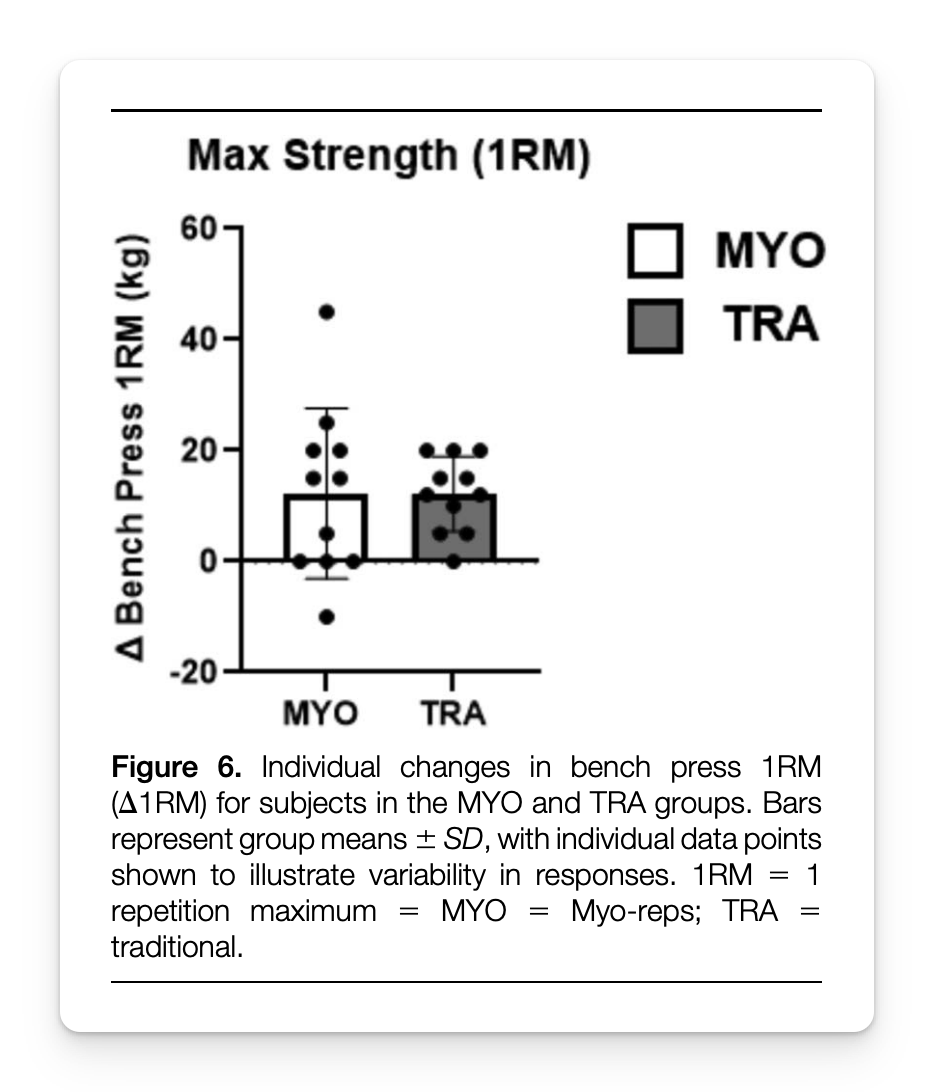
- Myo-Reps increased bench press 1RM by ~4.9%
- Traditional sets increased bench press 1RM by ~4.6%
Both groups got stronger, with no meaningful differences between training methods.
Muscle Growth Improved Equally
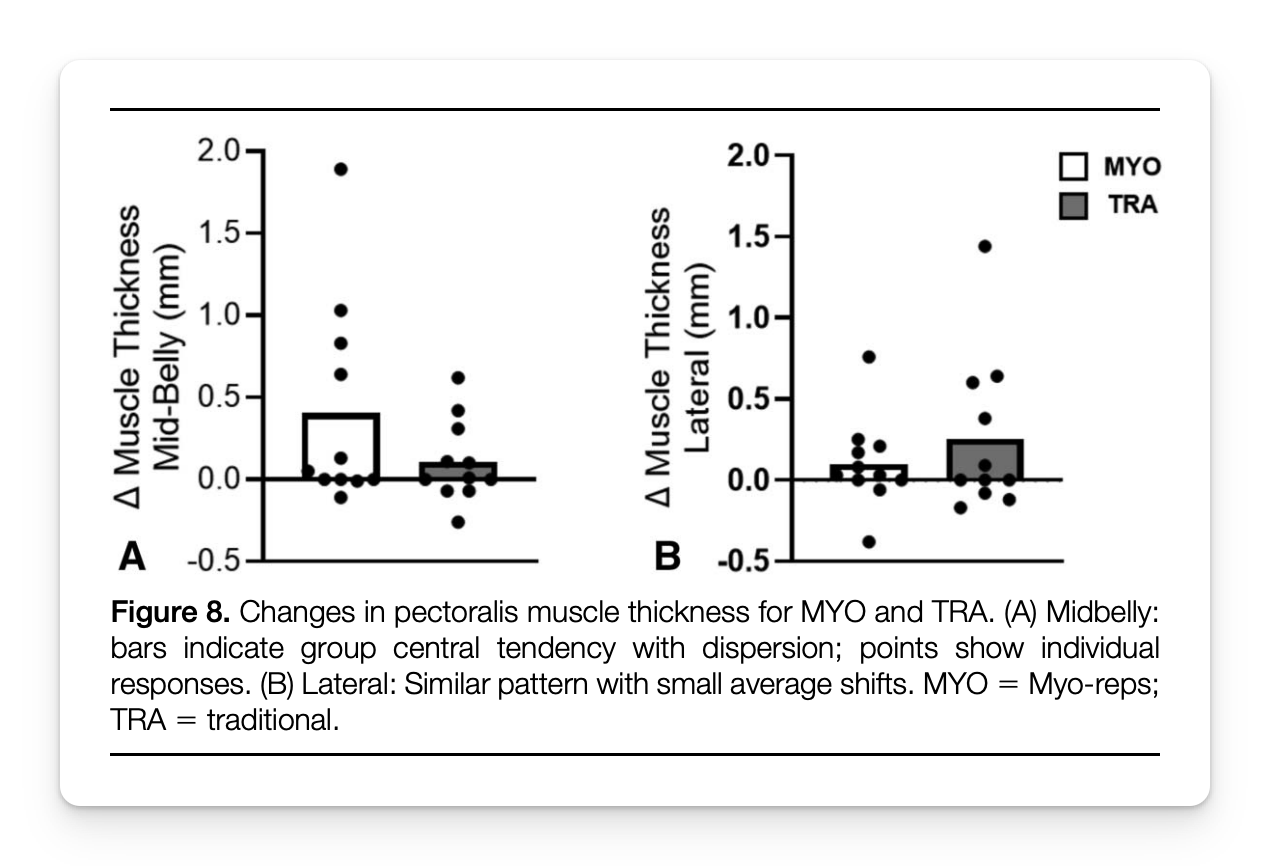
Both groups experienced significant increases in pectoralis muscle thickness.
Researchers measured hypertrophy at multiple regions of the pectoralis major and found no significant differences between groups.
In short:
- Myo-Reps built muscle
- Traditional sets built muscle
- Neither method was superior
Myo-Reps Achieved Similar Results with 30% Less Volume
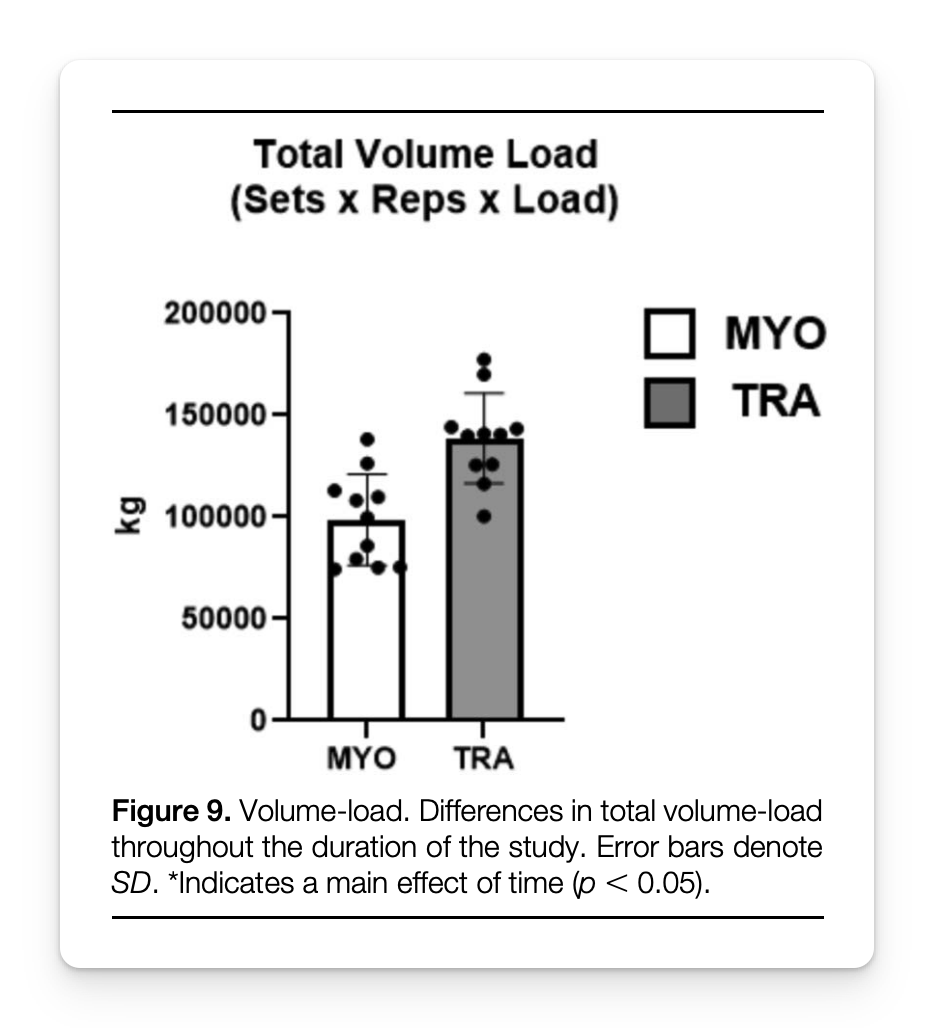
Perhaps the most interesting finding was the difference in volume load.
- Myo-Reps: ~98,000 kg total volume load
- Traditional sets: ~139,000 kg total volume load
The Myo-Reps group accumulated approximately 30% less volume, yet achieved similar improvements in strength and hypertrophy.
Recovery and Effort Felt Similar
Researchers also tracked:
- Rating of Perceived Exertion (RPE)
- Perceived Recovery Status (PRS)
Neither measure differed between groups, suggesting the more time-efficient Myo-Reps protocol did not create noticeably greater fatigue or recovery demands.
What Does This Mean?
- Both groups improved strength and muscle size similarly, despite the Myo-Reps group performing approximately 30% less total volume.
- The findings challenge the idea that accumulating more volume automatically leads to greater adaptations.
- Both groups performed a similar number of slower repetitions near failure, suggesting high-effort repetitions may be more important than total tonnage alone.
- Myo-Reps reduced training time by more than 60% while producing comparable outcomes.
- For athletes, coaches, and busy lifters, Myo-Reps may be a practical strategy when time is limited and training efficiency is a priority.
Limitations
Several limitations should be considered:
- Only resistance-trained young men were studied
- Only upper-body training was examined
- Sample size was relatively small (22 participants) and duration was short (only 8 weeks)
- Nutrition was not strictly controlled
Coach's Takeaway
- Myo-Reps Can Save Time ⮕ The protocol reduced exercise duration by more than 60% while producing similar outcomes.
- More Volume Isn't Always Better ⮕ The traditional group accumulated roughly 30% more volume load without achieving greater strength or hypertrophy.
- High-Effort Repetitions Appear to Drive Adaptation ⮕ Both groups accumulated similar numbers of challenging, slower reps near failure, which may explain the nearly identical results.
For coaches working with athletes, busy professionals, or anyone short on time, Myo-Reps appear to be a practical strategy for maintaining training quality while increasing session efficiency.
I hope this helps,
Ramsey
The Applied Performance Coach Certification and Mentorship is a
6-week live online course that will accelerate your understanding, application and confidence in performance science and coaching.
Reference: Bradshaw JT, Sanzo K, Barakat C, Barshun A, Inglima S, Gotla T, Thompson BK, De Souza EO, Walters JA. (2026). Similar Strength and Hypertrophic Adaptations in Less Time? Myo-Reps vs. Traditional Straight-Sets in Resistance-Trained Men. Journal of Strength and Conditioning Research, 40(6), 638-649.


