

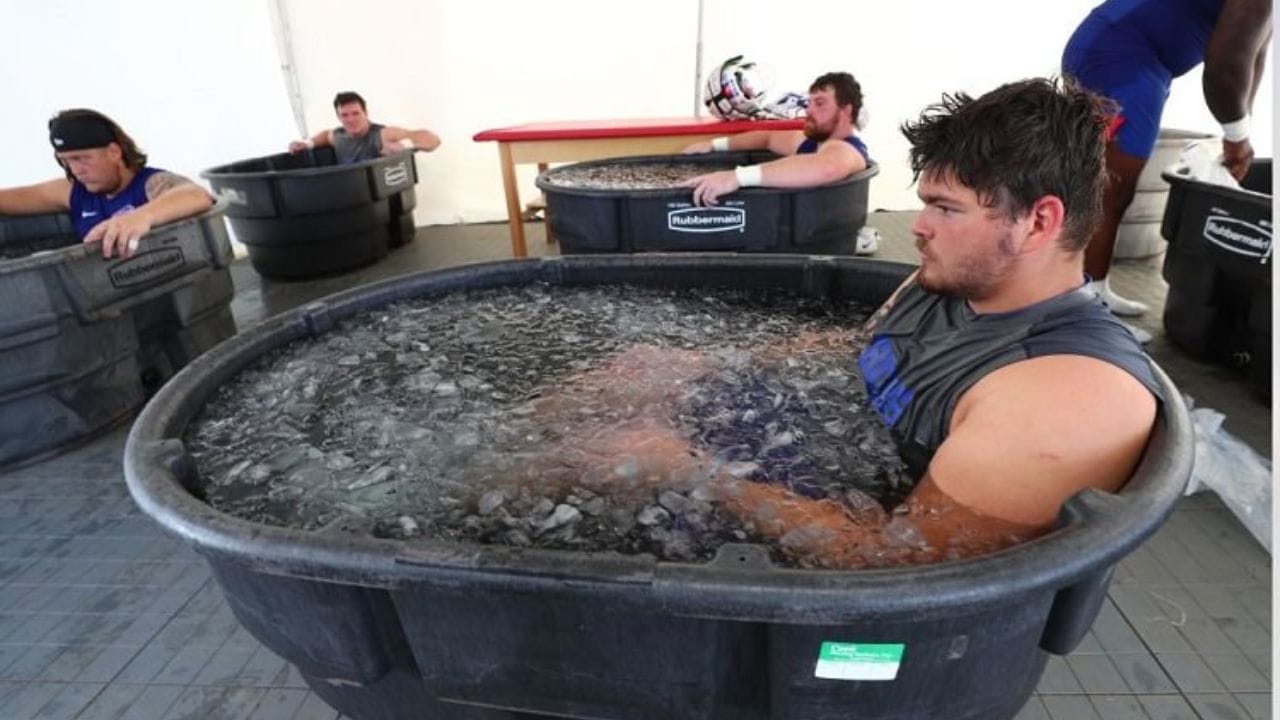
Ice baths have become one of the most popular recovery strategies in sport.
They can reduce soreness, improve perceived recovery, and help athletes feel ready for their next session.
But recovery and adaptation are not always the same thing.
Several individual studies have suggested that repeatedly using cold water immersion after lifting may interfere with muscle-building adaptations.
This meta-analysis pooled the available research to answer one simple question:
Does taking an ice bath after resistance training reduce muscle growth?
What Did the Researchers Do?
Researchers conducted a systematic review and meta-analysis of eight randomized resistance training studies comparing:
- Resistance training alone
- Resistance training followed immediately by cold water immersion
Across the studies:
- Programs lasted 4 to 12 weeks.
- Participants included both trained and untrained adults.
- Ice baths were typically performed within 15 minutes of training, lasted 10 to 20 minutes, and used water temperatures between 10 and 15°C.
- Muscle growth was measured using DXA, MRI, ultrasound, muscle biopsy, and other validated methods.
What Were the Results?
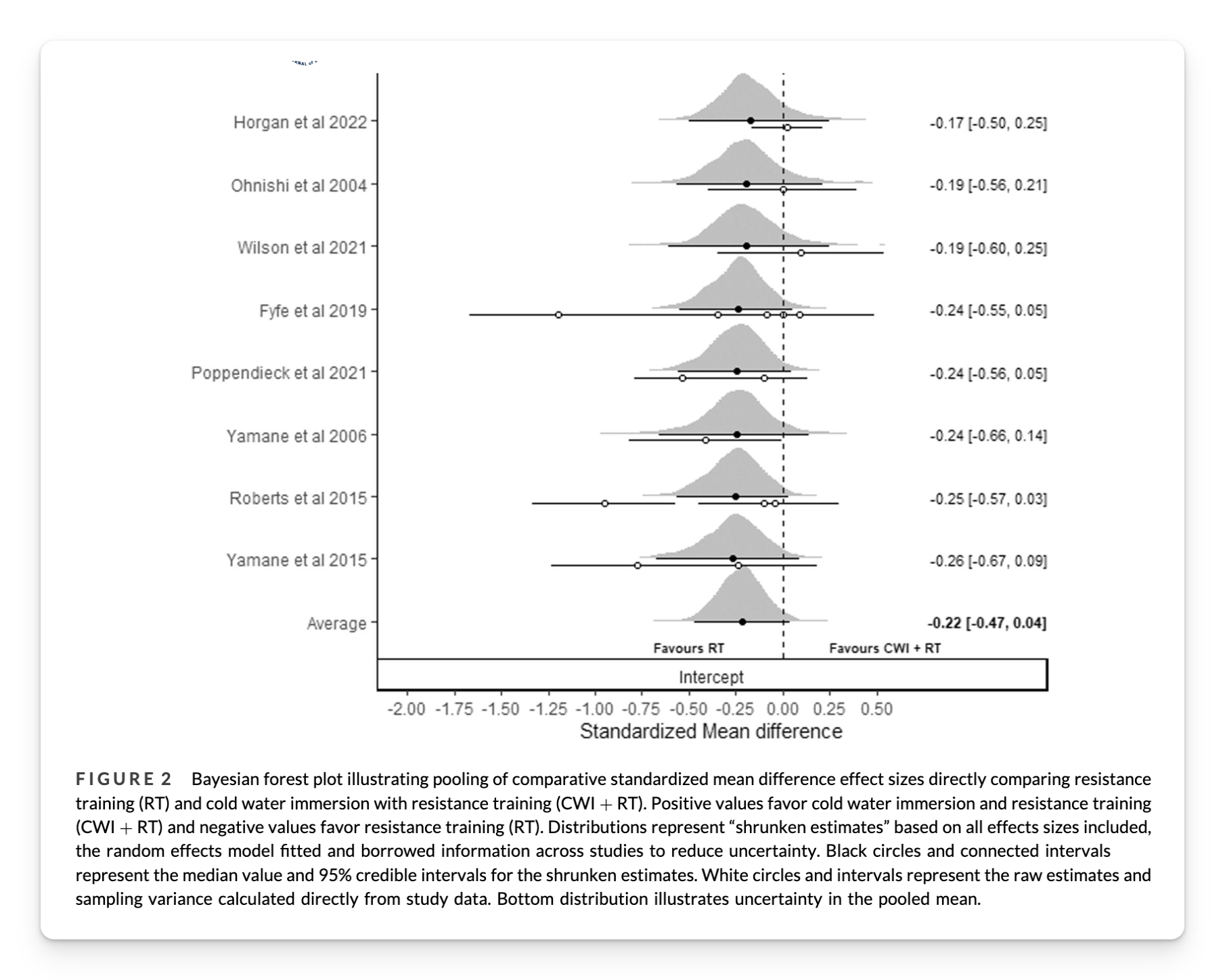
Resistance training alone consistently produced meaningful muscle growth.
Athletes who used cold water immersion also gained muscle, but their gains were consistently smaller than those who performed resistance training without ice baths.
The overall reduction in hypertrophy was small, but consistent across the available evidence.
The authors also noted that cold water immersion may reduce several biological processes involved in muscle growth, including muscle protein synthesis, mTOR signaling, satellite cell activity, and muscle blood flow.
What Does This Mean?
For athletes trying to maximize muscle growth, routinely taking an ice bath immediately after lifting may not be the best strategy.
That does not mean ice baths are "bad."
They remain an effective recovery tool, especially during tournaments, congested competition schedules, or periods where short-term performance is more important than long-term adaptation.
The key takeaway is that recovery strategies should match the goal of the training phase.
Limitations
There are several important limitations to consider:
- Only eight studies met the inclusion criteria.
- Most interventions lasted fewer than eight weeks.
- Nearly all participants were young men.
- The findings only apply to ice baths performed immediately after resistance training.
- It remains unknown whether waiting several hours after training or using ice baths less frequently would produce the same effects.
Coach's Takeaway
- Ice baths do not stop muscle growth, but they may slightly reduce it.
- If hypertrophy is the goal, avoid making ice baths an automatic part of every lifting session.
- Save cold water immersion for periods when recovery is the priority, not adaptation.
I hope this helps,
Ramsey
Reference
Piñero A, Burke R, Augustin F, et al. (2024). Throwing Cold Water on Muscle Growth: A Systematic Review with Meta-analysis of the Effects of Postexercise Cold Water Immersion on Resistance Training-Induced Hypertrophy. European Journal of Sport Science.


