

Most coaches think about strength but far fewer think about whether the tendon is adapting alongside that strength.
And the mismatch between muscle strength and tendon adaptation may be risky.
A 2024 study followed adult male volleyball athletes across an entire competitive season and found that while athletes often get stronger during the season, their tendons do not always keep pace.
The result is higher tendon strain, greater muscle-tendon imbalance, and potentially greater injury risk.
The Applied Performance Coach Certification and Mentorship is a
6-week live online course that will accelerate your understanding, application and confidence in performance science and coaching.
Individualized Tendon Loading
The researchers measured tendon strain and prescribe training based on the strain experienced by the tendon rather than the force produced by the muscle.
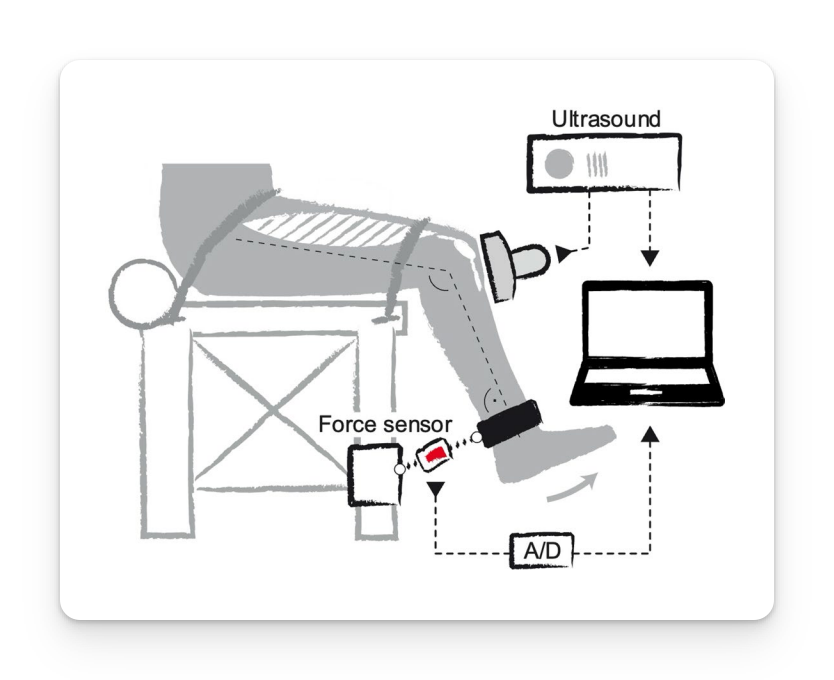
Using ultrasound and dynamometry, they estimated each athlete's patellar tendon strain during a maximal isometric contraction.
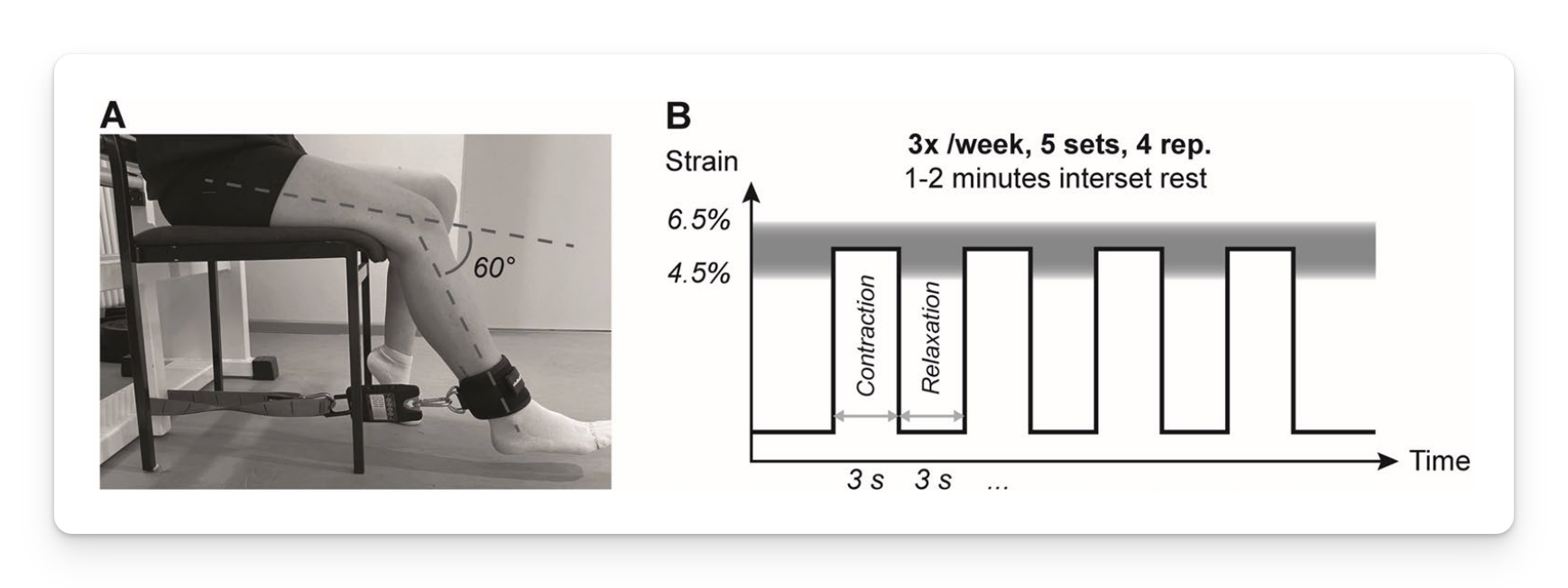
Athletes then performed isometric knee extensions with loads individualized to create approximately 5.5% tendon strain, a range believed to be highly effective for tendon adaptation.
Same Exercise, Different Intensity
The training exercise was identical for everyone:
- Isometric knee extension
- 5 sets × 4 reps
- 3-second holds
- 3 sessions per week
What changed was the load.
Some athletes only needed 42% MVC while others required 90% MVC to achieve the same tendon strain stimulus.
This is critical:
Two athletes with similar strength levels could require dramatically different loads to expose their tendons to the same mechanical stimulus.
What Happened?
Both groups got stronger over the course of the season.
The control group improved strength by roughly 8%.
The intervention group improved strength by roughly 7%.
Strength development was essentially similar between groups.
The difference showed up in tendon strain.
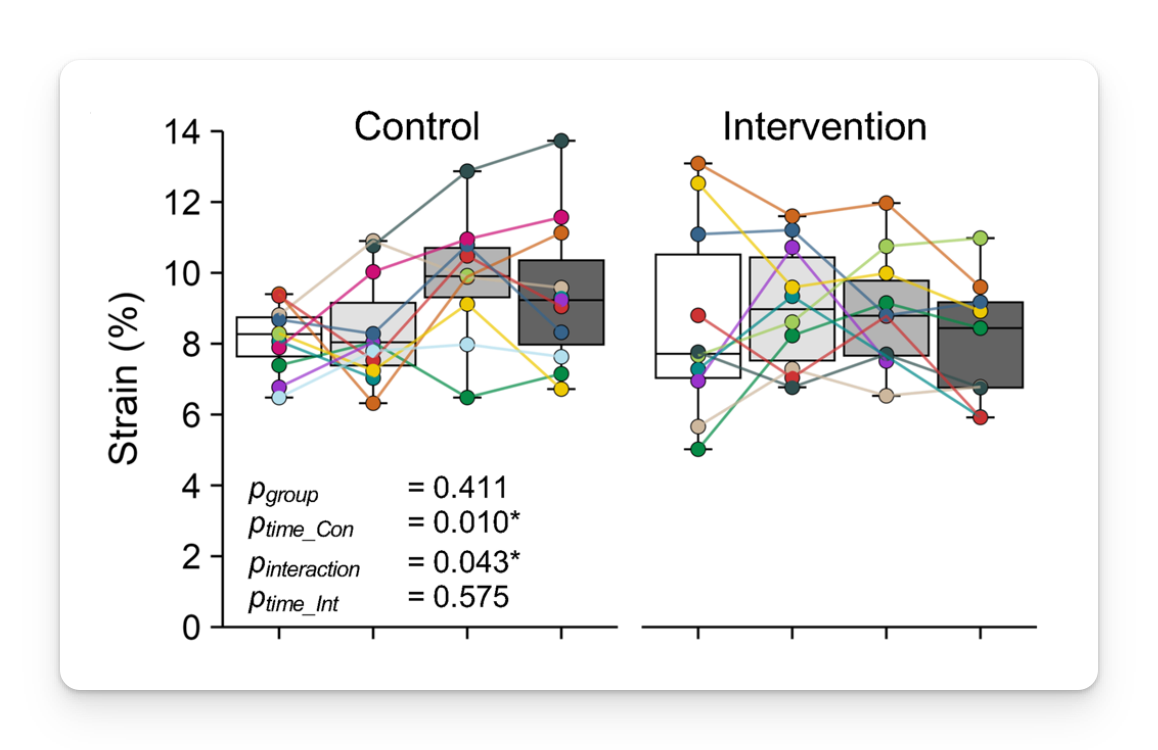
The control group experienced a steady increase in tendon strain throughout the season. The intervention group did not.
Perhaps even more interesting was what happened when the researchers looked at athletes exceeding the proposed high-risk threshold of 9% tendon strain.
- At the start of the season, relatively few athletes exceeded that threshold.
- By the end of the season, a much larger percentage of the control group had crossed it.
The intervention group remained considerably more stable.
Who Benefited Most?
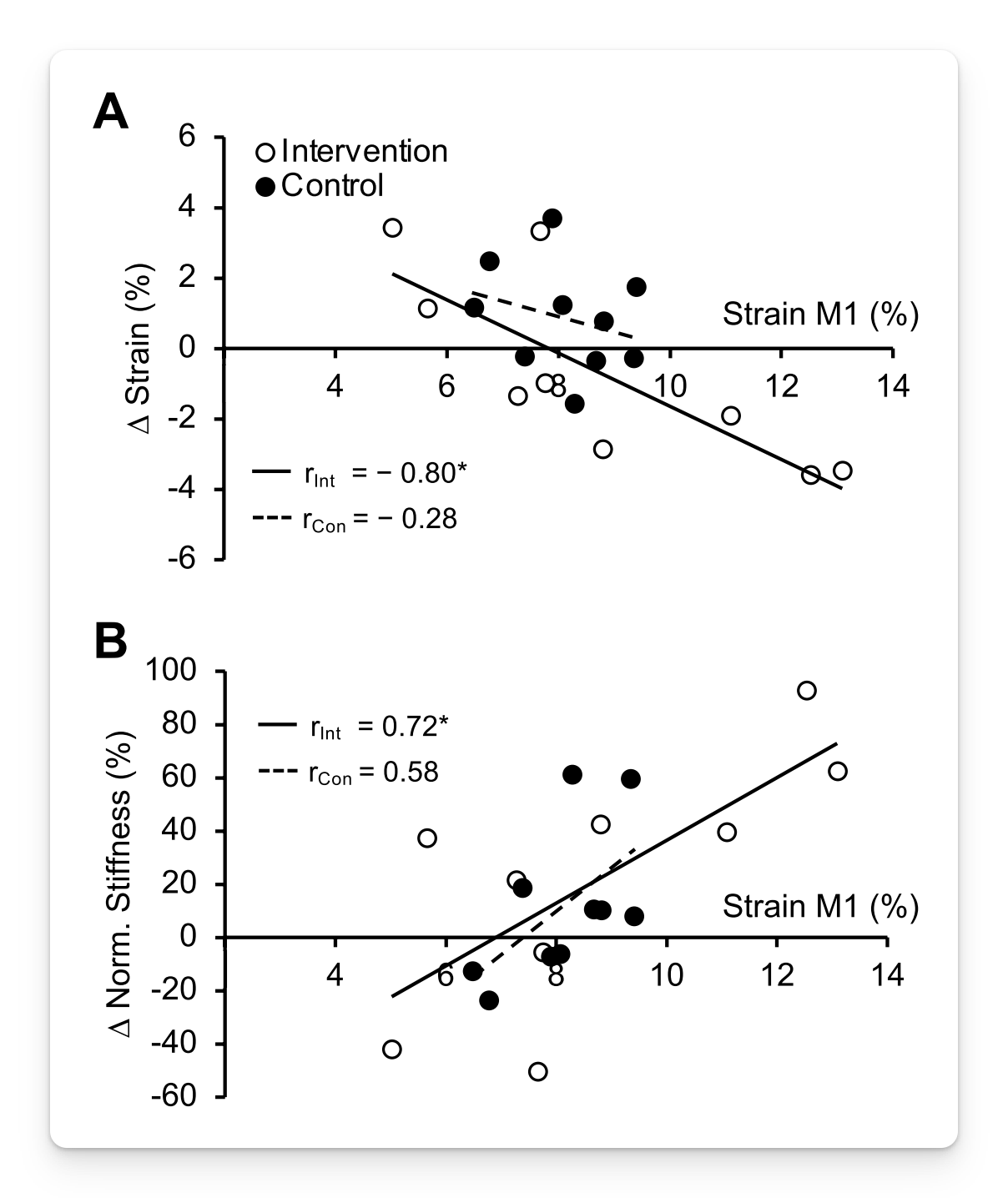
The athletes who started the season with the biggest tendon deficits showed the greatest improvements.
Athletes with the highest tendon strain at baseline tended to:
- Reduce tendon strain over time
- Improve tendon stiffness over time
In other words, the athletes who needed the intervention most appeared to benefit the most.
Why Does This Matter?
One of the long-standing assumptions in sport performance is that stronger muscles automatically mean better-prepared tissues.
This study, along with other data, challenges that idea.
Muscles and tendons do not always adapt at the same rate and athletes can get stronger while tendon strain continues to rise.
When that happens, the tendon is being asked to tolerate more deformation during every contraction. Over time, that may increase mechanical demand on the tissue and potentially elevate injury risk.
This is particularly relevant in sports like volleyball, basketball, and track and field where tendons are repeatedly exposed to high-force stretch-shortening cycle activities.
Coach's Takeaway
- Athletes often get stronger faster than tendons adapt.
- Rising tendon strain may indicate a growing muscle-tendon imbalance.
- Personalized tendon loading may become an important tool for injury prevention in the future.
Perhaps the primary takeaway is that athletes with similar strength levels may not have similar tendon capacities and ignoring the gap between muscle and tendon may have consequences.
I hope this helps,
Ramsey
Reference: Weidlich K, Domroes T, Bohm S, Arampatzis A, Mersmann F. (2024). Addressing muscle–tendon imbalances in adult male athletes with personalized exercise prescription based on tendon strain. European Journal of Applied Physiology.


