

Some coaches think higher volume equals greater adaptations, while others emphasize quality repetitions and fatigue management.
A major issue in previous research is that training volume and fatigue are usually confounded. Higher volume typically means higher fatigue, which makes it difficult to determine what actually drives adaptations.
This study attempted to isolate the role of training volume itself.
Researchers compared three squat programs with very different volumes but matched fatigue levels by using short rest periods between repetitions. This allowed them to answer an important question:
Does more volume actually produce better strength and hypertrophy outcomes when fatigue is controlled?
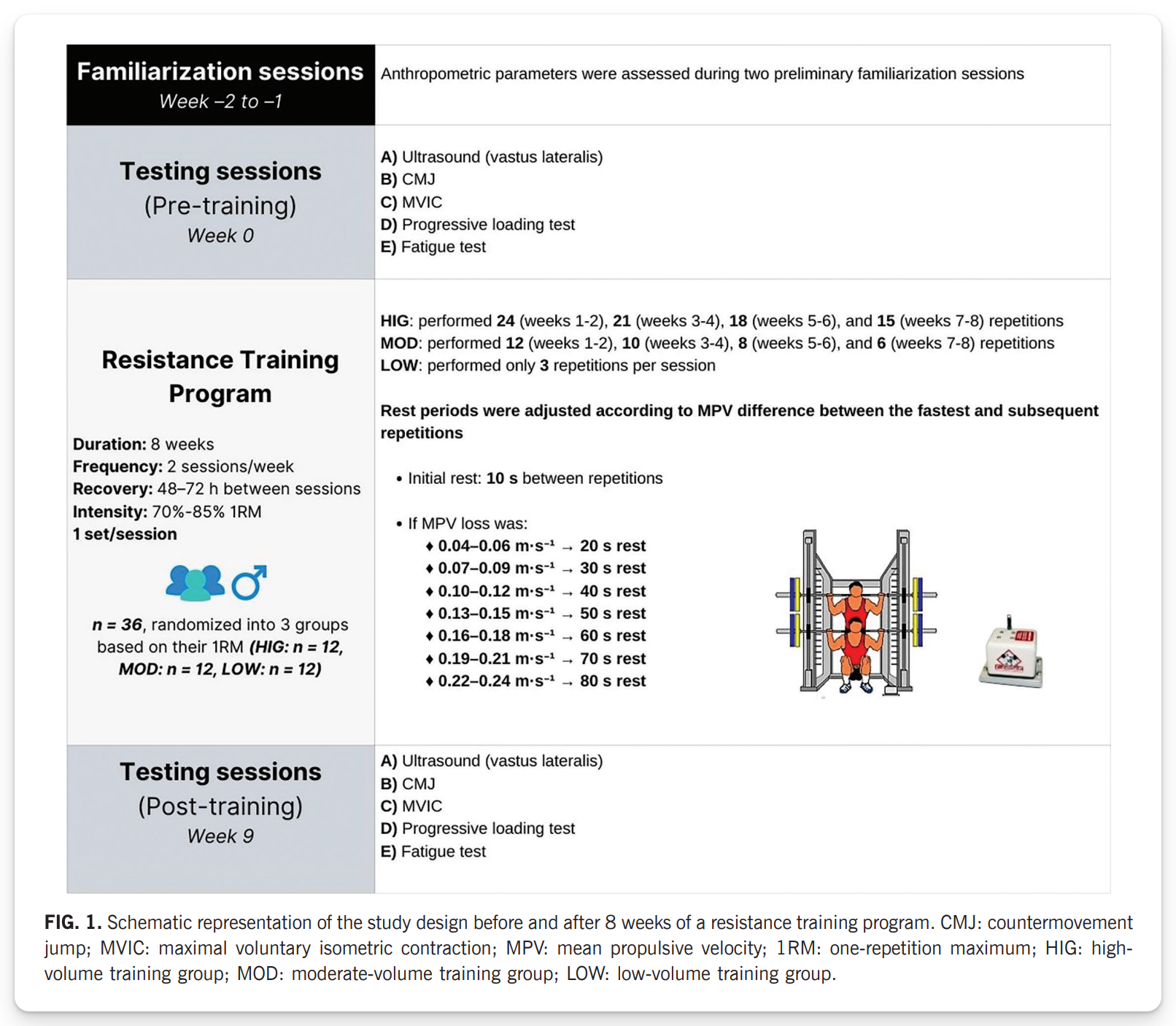
What Did the Researchers Do?
Study Design
Resistance-trained men (36 participants ~25 years old) with a minimum of 1 year of lifting experience and relative squat strength of abourt 1.35 × bodyweight were randomly assigned to three groups:
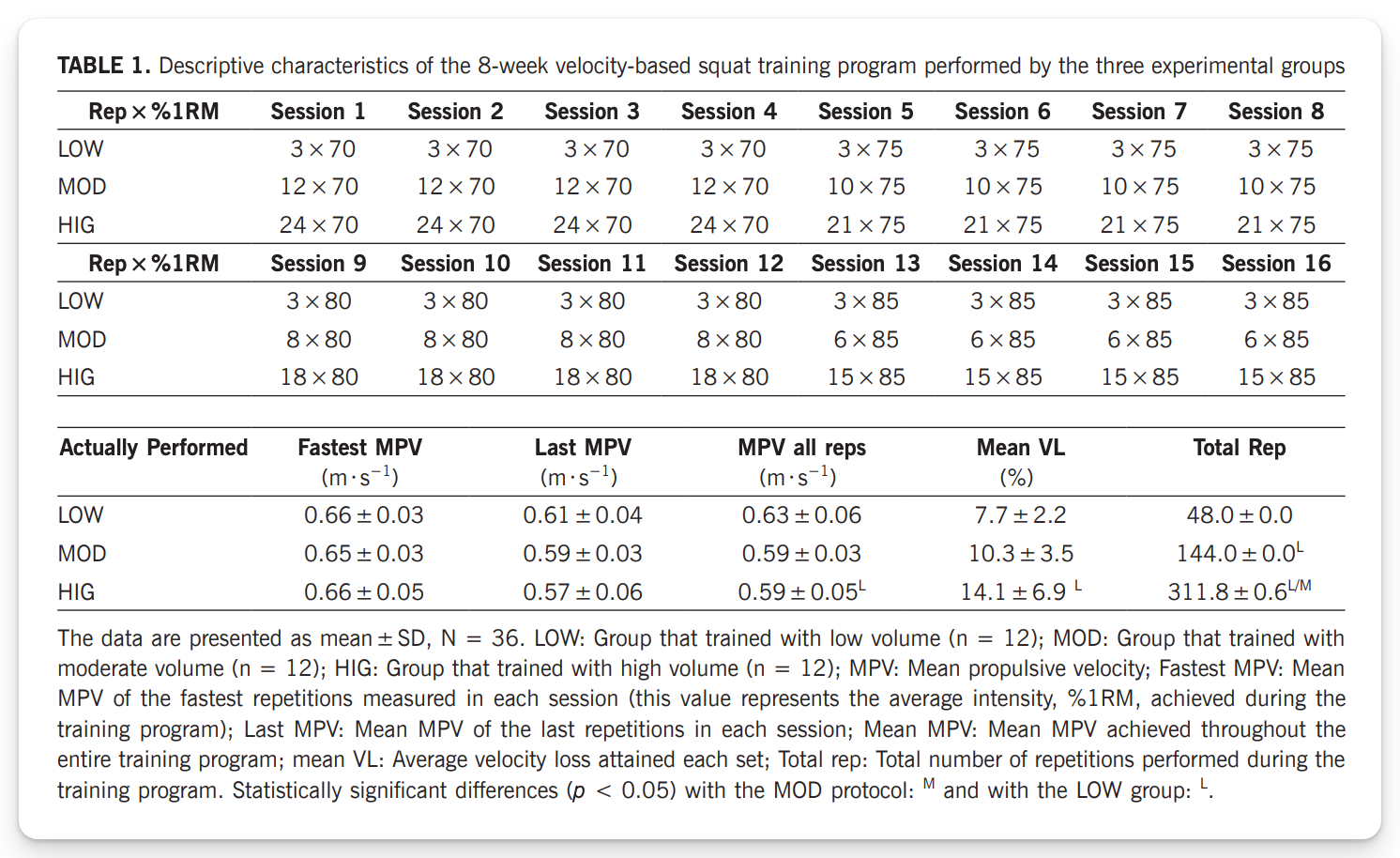
- LOW volume: 48 total reps per session
- MODERATE volume: 144 total reps per session
- HIGH volume: 312 total reps per session
Training Program
All groups performed:
- Full squat
- 2 sessions per week for 8 weeks
- Intensity progressing from 70–85% 1RM
Rest Between Repetitions
Rest between reps was adjusted to maintain bar velocity and minimize fatigue.
- Subjects started with 10 seconds of rest between reps
- Rest was extended based on the velocity drop
This ensured the groups differed primarily in volume, not fatigue.
Testing Measures
Before and after training, researchers measured:
- Muscle hypertrophy ⮕ Vastus lateralis cross-sectional area (ultrasound)
- Strength ⮕ 1RM squat and Isometric squat force
- Performance ⮕ Countermovement jump (CMJ)
- Force-velocity profile ⮕ Load-velocity relationship
- Muscular endurance ⮕ Repetitions at 70% 1RM
- Neuromuscular activation ⮕ EMG activity during squat tests
What Were the Results?
All Groups Got Stronger
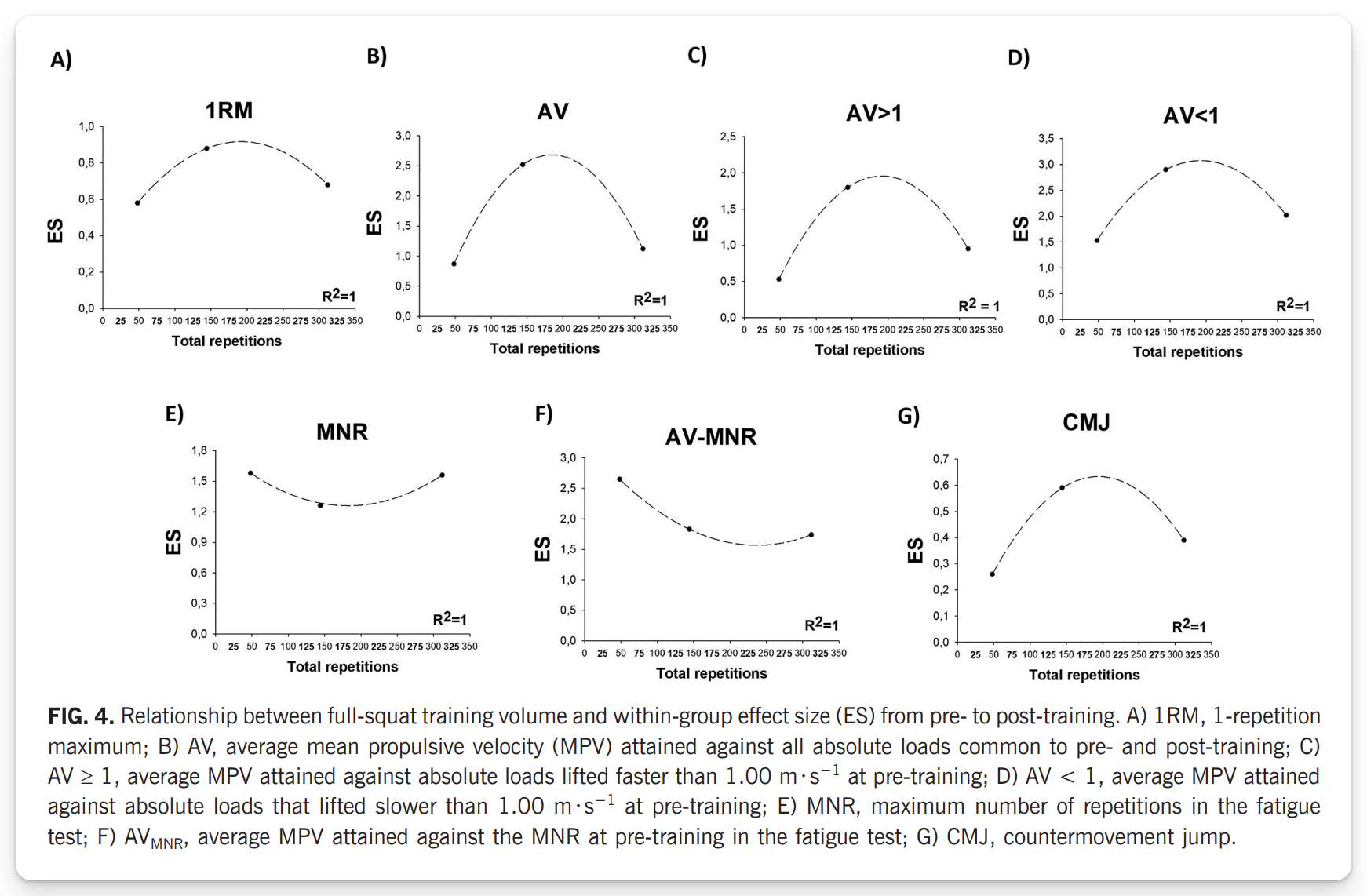
Squat strength improved significantly in every group. The 1RM increases by group were:
- Low volume: +13.7%
- Moderate volume: +16.4%
- High volume: +14.0%
Moderate volume produced the largest strength improvements.
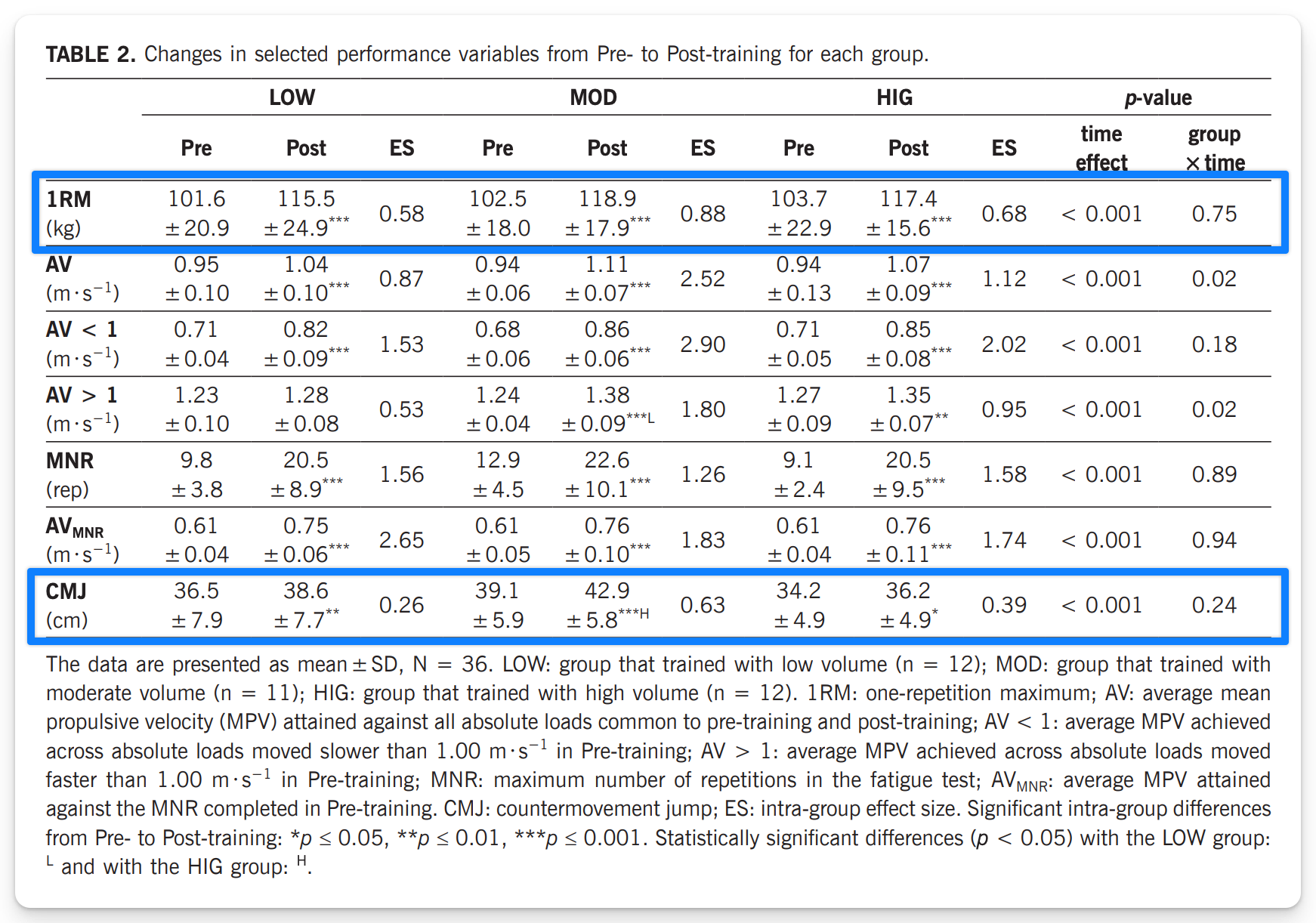
Muscle Growth Was Similar Across All Volumes
All groups increased vastus lateralis muscle size:
- ~7–10% increases across groups
- No significant differences between groups
More volume did not produce more hypertrophy when fatigue was controlled.
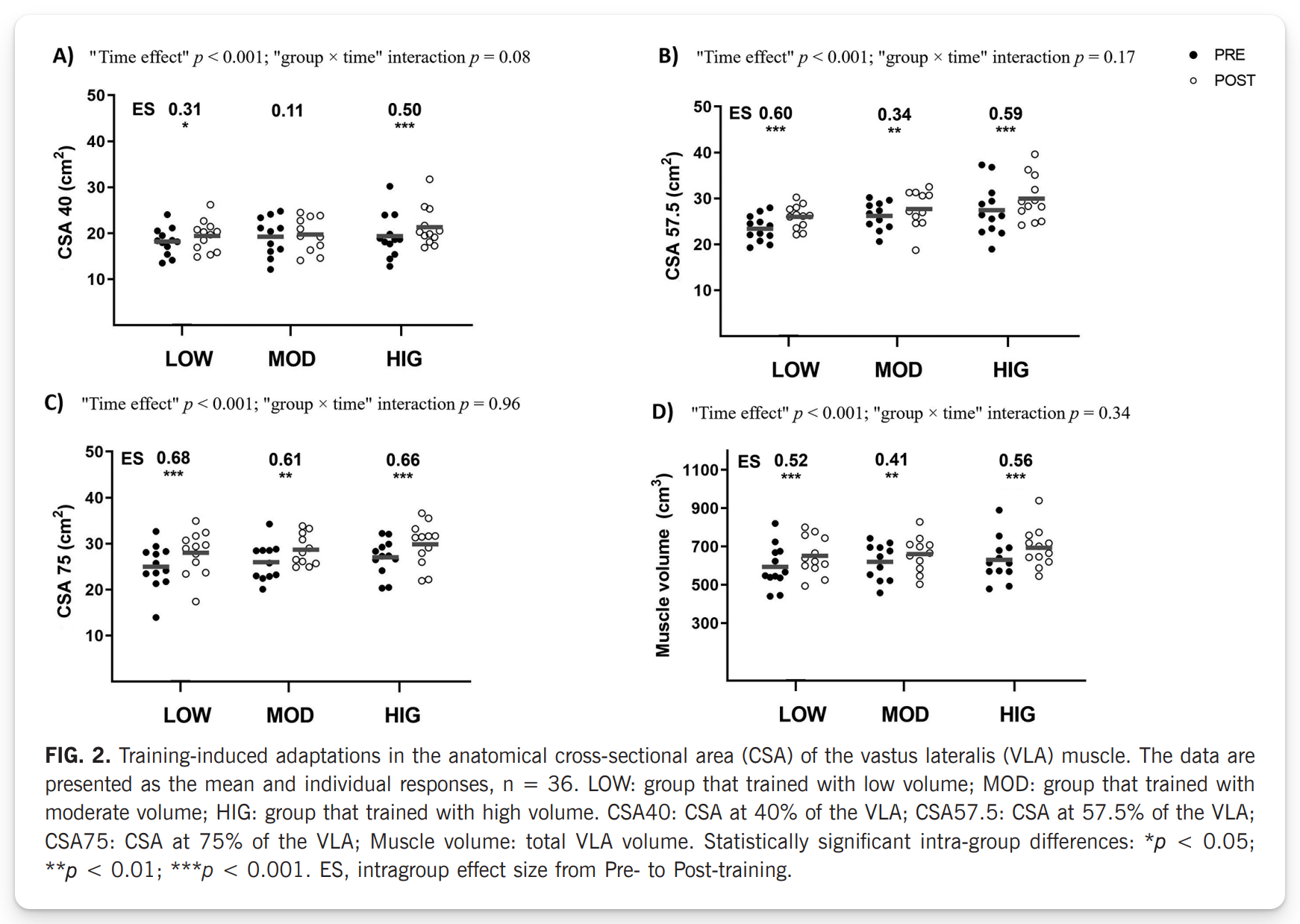
Moderate Volume Produced the Best Performance Improvements
Moderate training volume showed the greatest improvements in movement velocity and power outputs.
- Greater improvements in load-velocity performance
- Better high-velocity force production
- Highest gains in CMJ height
Moderate-volume outperformed the high-volume group in jump performance.
High Volume Increased Neuromuscular Activation
The high-volume group showed the largest increases in EMG amplitude, which suggests:
- Greater motor unit activation
- Strong neuromuscular stimulus
However, this did not translate into superior performance outcomes.
Muscular Endurance Improved in All Groups
- All groups increased the repetitions performed at 70% 1RM.
- Improvements were similar despite large volume differences.
Muscular endurance improvements may not depend heavily on training volume when fatigue is managed.
What Does This Mean?
Optimal volume balances training stimulus, with high-quality repetitions and limited fatigue.
- There appears to be an optimal training volume ⮕ too little may limit adaptations while too much does not add benefit, with results following an inverted U-shaped relationship and moderate volume emerging as the sweet spot
- Quality repetitions matter ⮕ controlling fatigue allowed each rep to be performed with high movement quality and maintained mechanical tension, helping explain why low and moderate volumes still drove strong adaptations
- Excess volume may dilute performance adaptations ⮕ very high volume did not improve strength more and led to smaller gains in jump performance, showing that more work does not equal better outcomes
Limitations
Several limitations should be considered:
- Only trained men were studied
- Intervention lasted only 8 weeks
- Hypertrophy was measured only in vastus lateralis
- Some fatigue tests were performed on the same day
Coach's Takeaway
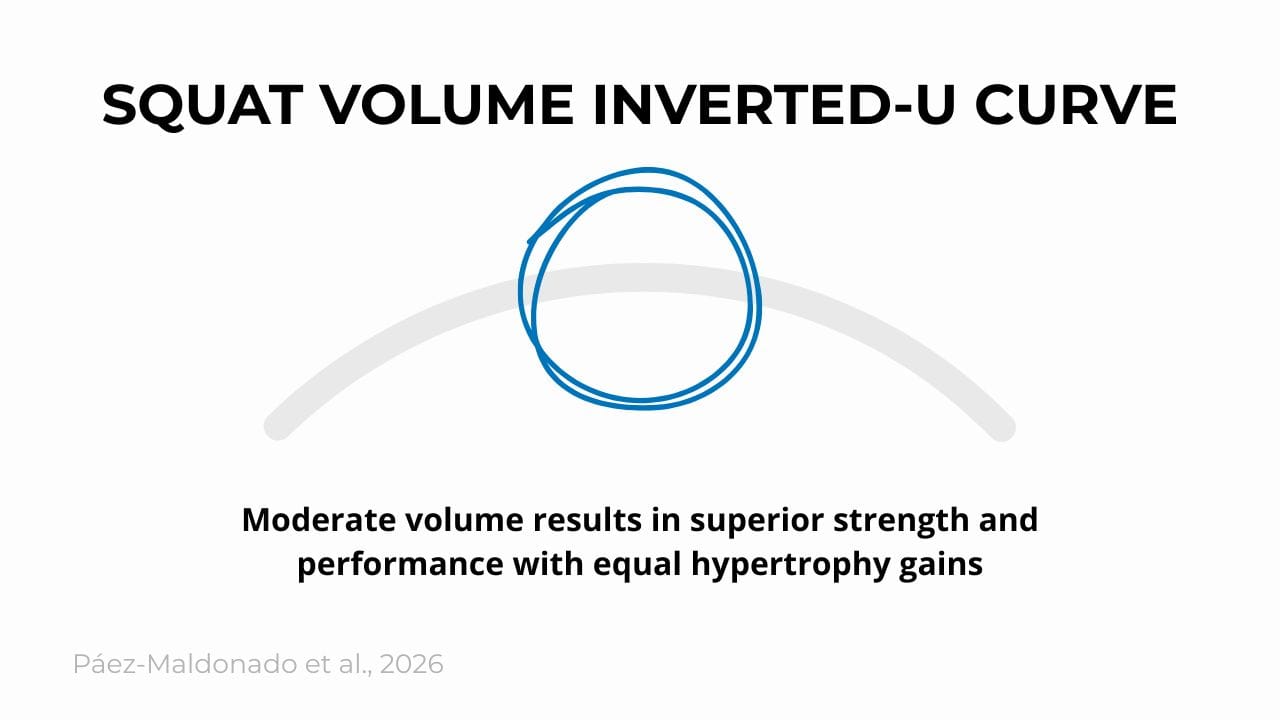
- Moderate volume produced the best strength and performance gains
- Muscle growth was similar across all volumes and more work didn’t add benefit
- Maintaining velocity and rep quality drove strong adaptations
- Moderate volume + high-quality reps is likely the most efficient strategy
I hope this helps,
Ramsey
Reference: Páez-Maldonado JA, Cano-Castillo C, Cornejo-Daza PJ, et al. (2026). Effects of different full squat training volumes matched for fatigue on strength gains, neuromuscular adaptations, and muscle hypertrophy. Biology of Sport.


