

There is increasing interest in the idea that training at long muscle lengths may enhance hypertrophy.
This has led to a practical question for coaches: do we actually need full range of motion, or can long-length isometrics produce similar adaptations?
This study directly compares long-length isometric training to full ROM isotonic training in resistance-trained individuals.
Do high-effort long muscle length isometrics produce different hypertrophy outcomes compared to full range of motion training?
What Did the Researchers Do?
Study Design
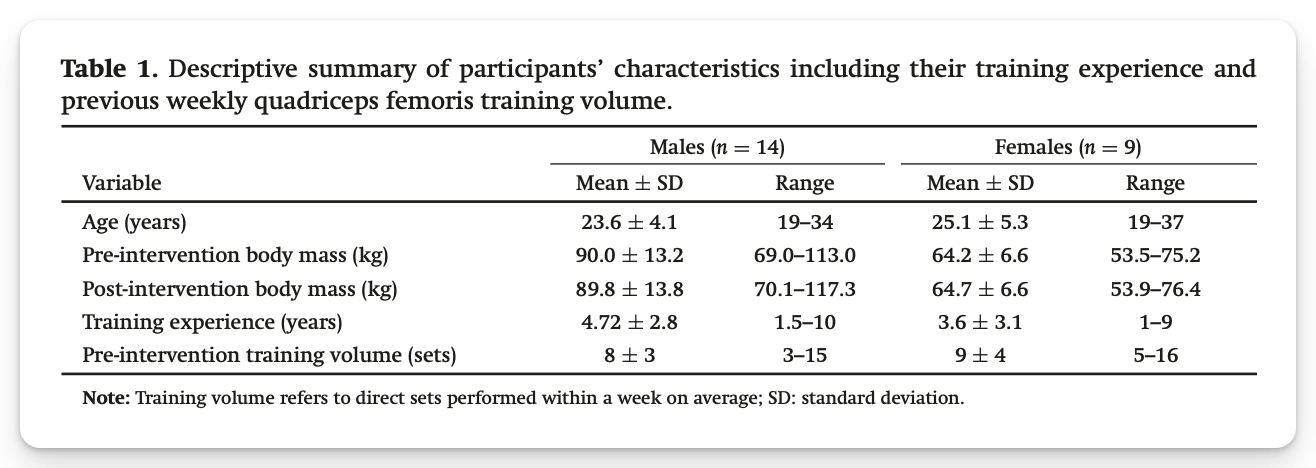
- 23 resistance-trained men and women (~4 years of lifting experience)
- Within-subject design (each participant trained both conditions)
- One leg performed isometric training, the other isotonic
Training Protocol
- Subjects trained 6 weeks, 2 sessions per week
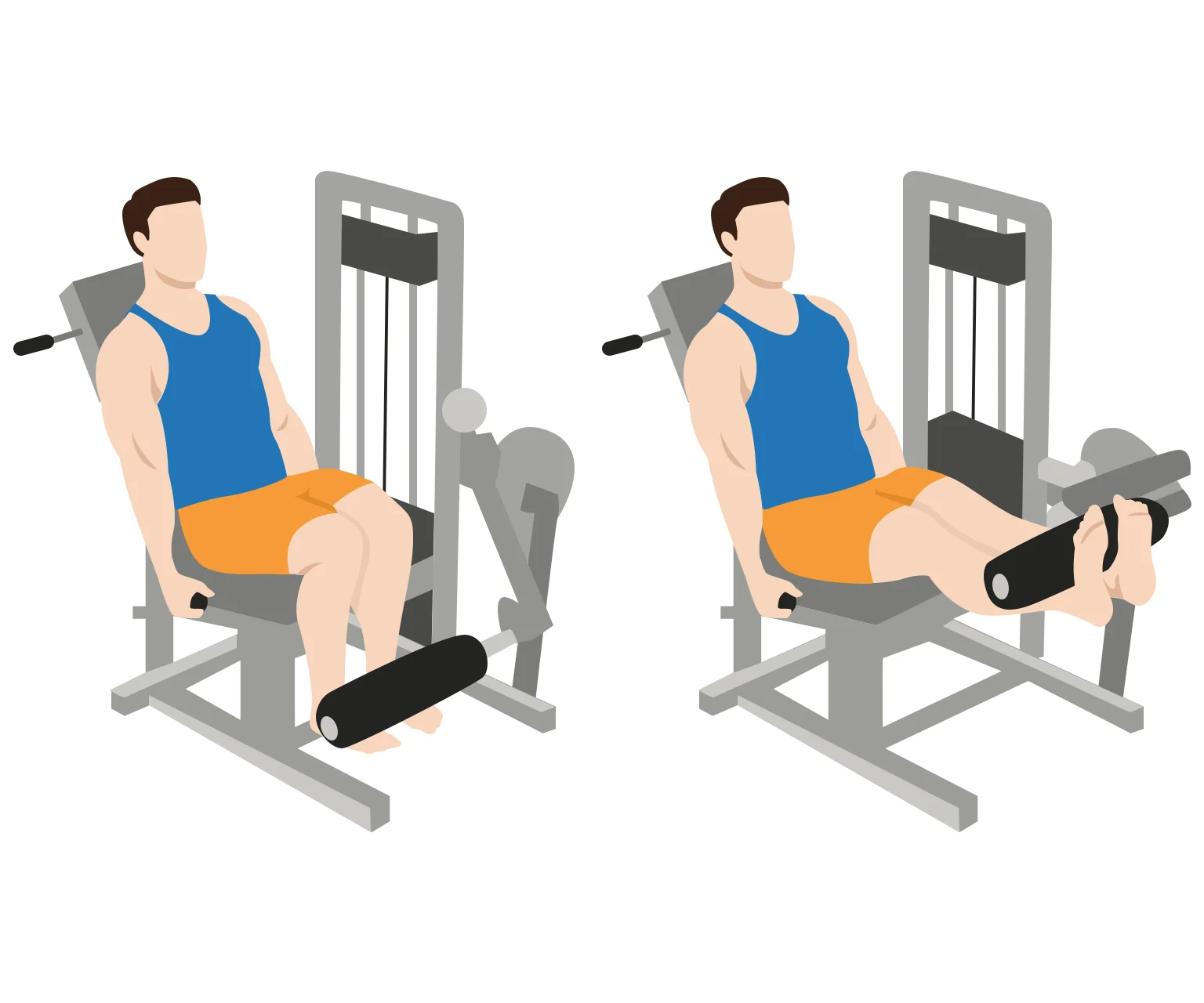
- Exercise: unilateral knee extension
- Volume progressed from 3 to 5 sets per session
- Each set was standardized to 30 seconds of time under tension
The isometric
- The isometric group held a maximal contraction at a long muscle length (around 125 degrees of knee flexion)
- Isotonic group performed full ROM repetitions from near extension (~10 degrees) to deep flexion (~125 degrees)
Measurements
Quadriceps Muscle thickness assessed via ultrasound at:
- Proximal (30 percent of thigh length)
- Mid (50 percent)
- Distal (70 percent)
Both anterior and lateral quadriceps were assessed
What Were the Results?
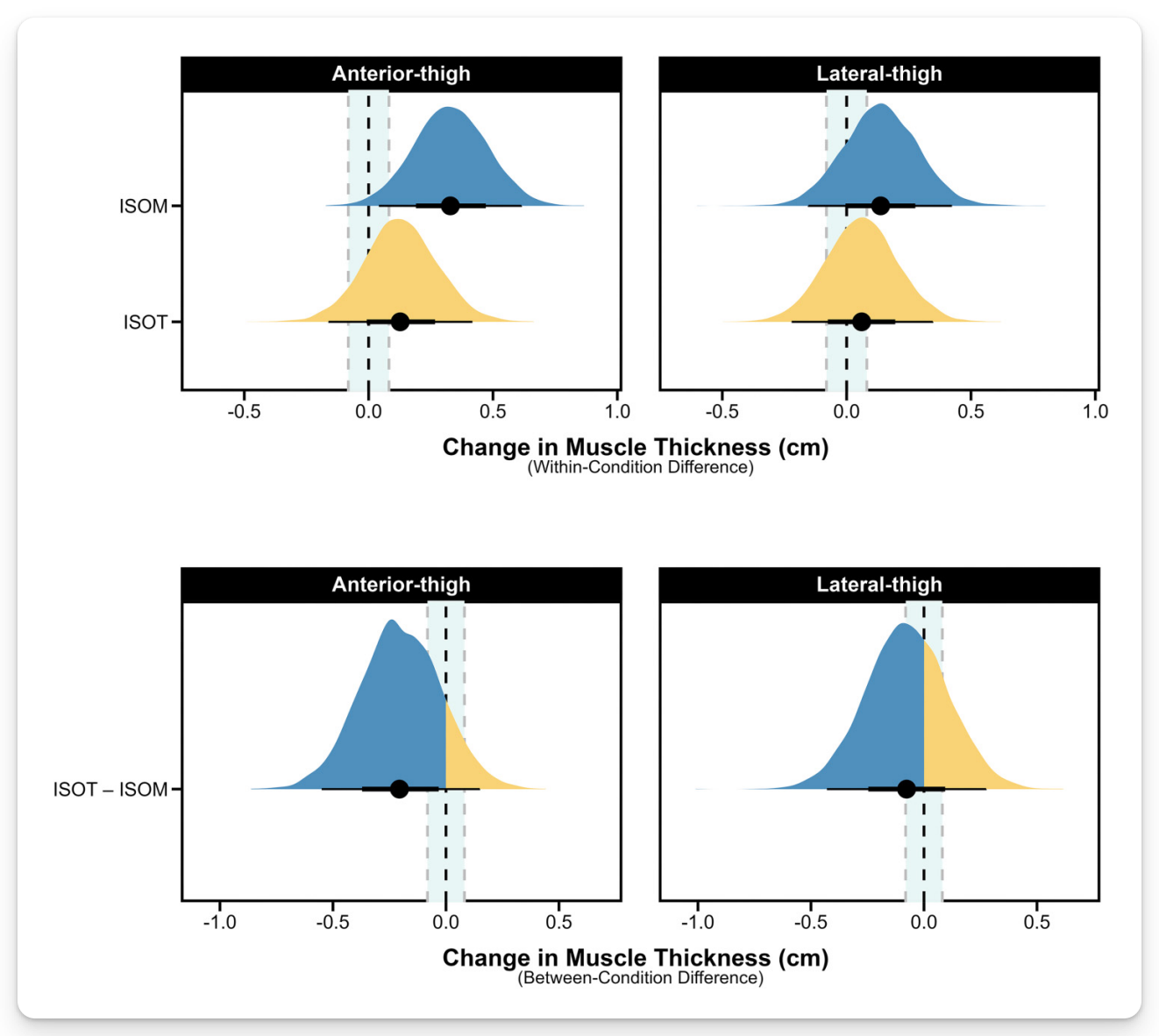
There was no clear winner between isometric and isotonic conditions.
- Both isometric and full ROM training increased muscle thickness
- No clear difference between methods, with most of the data falls within the “no meaningful difference” zone
- Regional differences are small and inconsistent
Bottom line, contraction type did not meaningfully impact hypertrophy when effort and length were matched
What Does This Mean?
- Effort and mechanical tension appear to be the primary drivers of hypertrophy, and when these are matched, contraction type becomes less important
- Training at long muscle lengths likely provides a key stimulus, which may explain why both groups achieved similar outcomes
- There may be a threshold effect, where once sufficient tension is reached at long lengths, changing the contraction type adds little additional benefit
Limitations
- Short intervention duration (6 weeks) with moderate weekly volume (maximum around 10 sets per week)
- Single-joint exercise limits generalizability
- No strength or performance outcomes reported
Coach’s Takeaway
- Contraction type is not the primary driver of hypertrophy ⮕ Isometric and isotonic work can produce similar results when effort and tension are high
- Long muscle length training should be a priority ⮕ Programming should emphasize loading in lengthened positions
- Isometrics are a viable hypertrophy strategy ⮕ especially in rehab or when joint stress and movement are limited
I hope this helps,
Ramsey
Reference:
Varovic et al. (2025). The effects of long muscle length isometric versus full range of motion isotonic training on regional quadriceps femoris hypertrophy in resistance-trained individuals.


