Strong Enough for Speed? Finding the Sprint “Saturation Point”
Coaches chase speed through strength and power work. The relationship is real, but not linear forever. At some point, “more”
Science-Backed Testing Articles to Enhance Your Performance and Rehab Assessments.
Coaches chase speed through strength and power work. The relationship is real, but not linear forever. At some point, “more”
Coaches often encourage athletes to “land softly” to protect the knee. While this may reduce injury risk, it may also
Teams often add foam rolling and massage guns to pre-practice warm-ups. Coaches and athletes assume these tools boost readiness, mobility,
Collegiate football athletes train in highly structured environments with robust strength and conditioning (S&C) and nutrition support. Coaches
Non‑contact ACL injuries often occur during abrupt stop‑jump actions in basketball. While physical fatigue gets most of the
The Achilles tendon (AT) plays a crucial role in storing and releasing energy during stretch-shortening cycle (SSC) activities like jumping
The countermovement jump (CMJ) is a widely used method to assess neuromuscular fatigue in athletes. But does it detect fatigue
Maximal strength assessments are critical in sport performance monitoring and program design. Isometric tests like the Isometric Squat (ISQ) and
ACL injuries are common in basketball and re-injury rates remain high, especially among youth athletes. Force plate jump testing can
The countermovement jump (CMJ) is a popular neuromuscular monitoring tool, but its long-term utility in sprinters hasn’t been clearly
Sprinting and acceleration are crucial in field sports like soccer, hurling, and rugby, where plays often hinge on short bursts
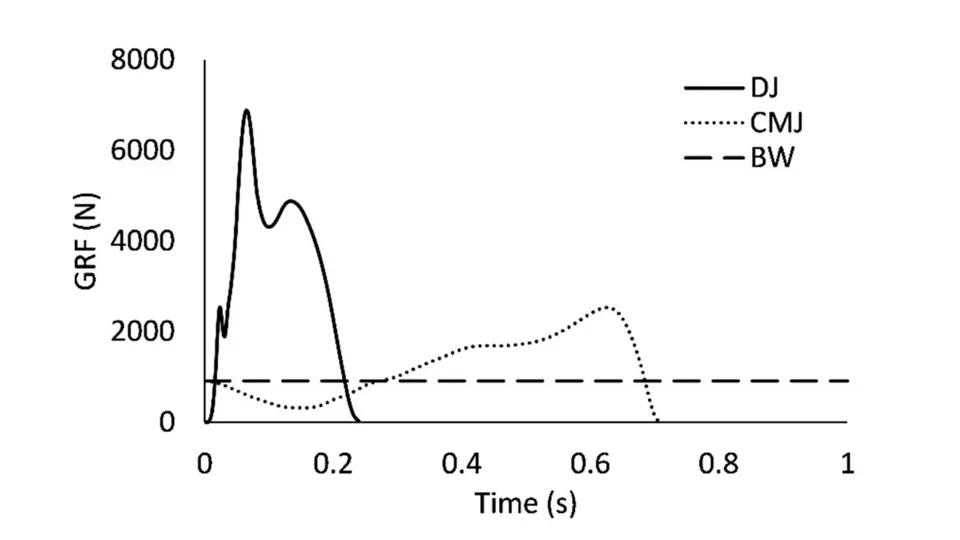
Drop jumps (DJs) are a core plyometric tool used to develop explosive strength and improve jump performance, critical qualities in