

If training loads are too frequent, without rest, tendons may strain more and break down.
This study tested how the Achilles tendon responds to 12 consecutive days of high-strain loading, once per day vs. three times per day.
If you pile on heavy tendon work with little rest, does the tendon get weaker and strained even while strength improves?
Whether you’re coaching athletes, rehabbing injuries, or studying performance, this playbook will give you the clarity and confidence to train tendons smarter.
What Did the Researchers Do?
Protocol
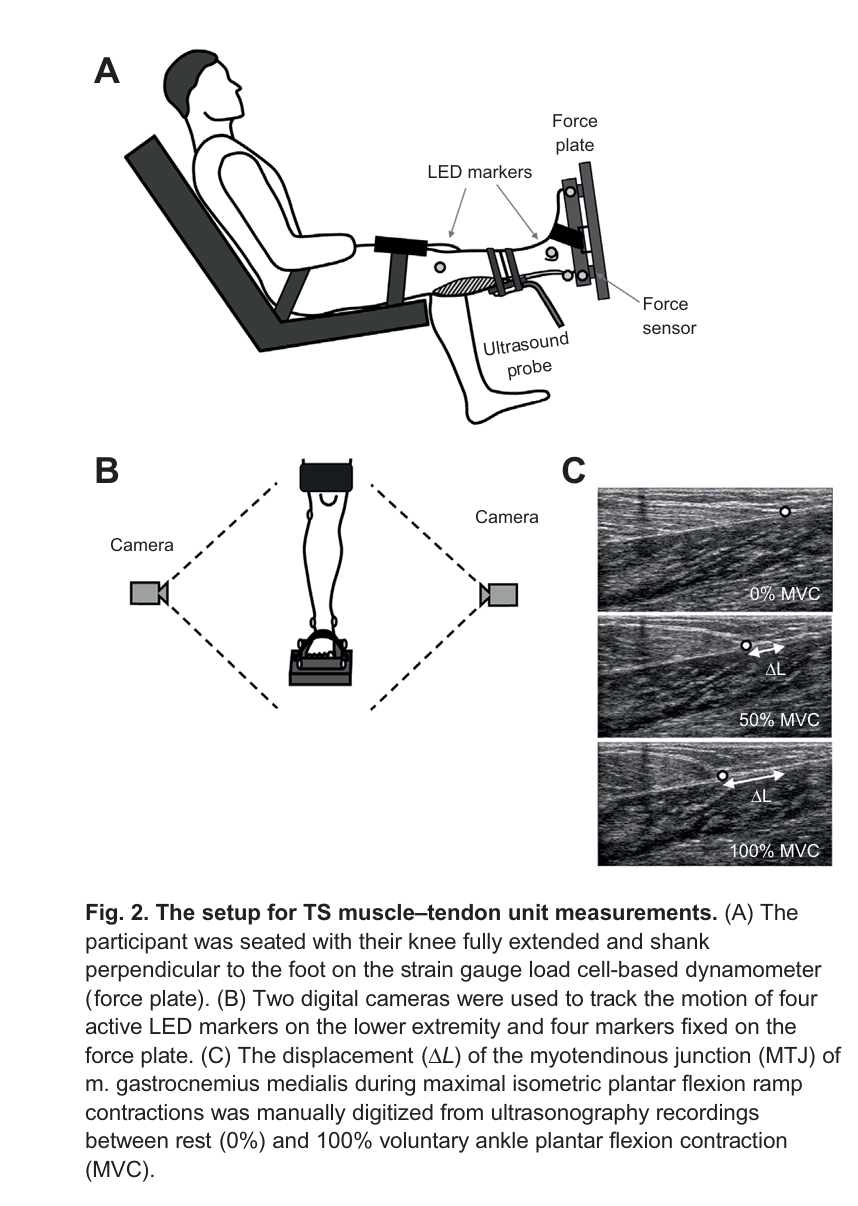
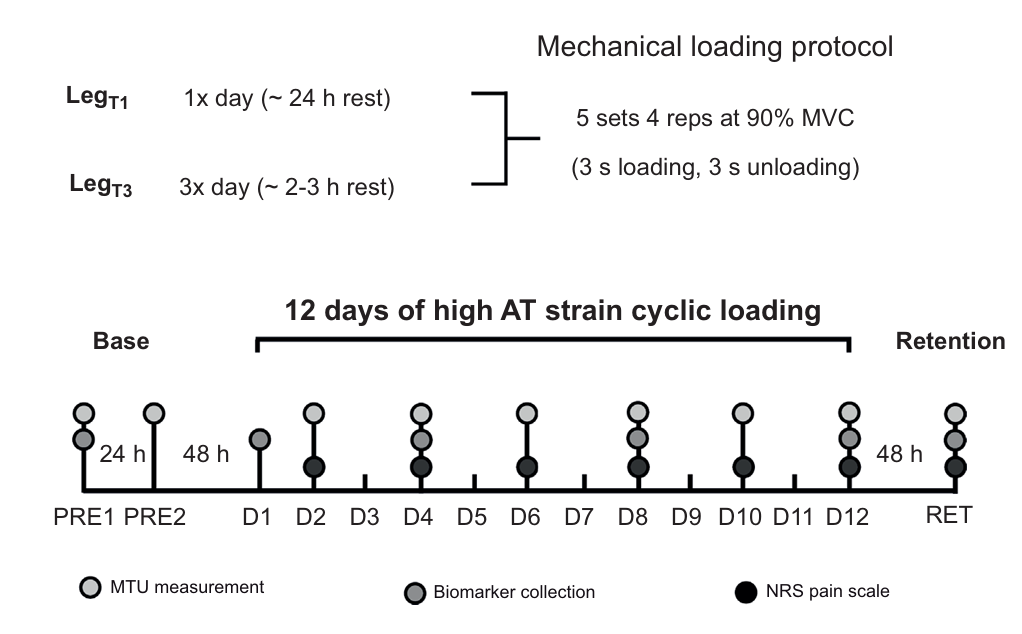
Researchers had 11 healthy men train both legs at ~90% max effort isometrics (5×4 reps, 3s load/3s rest).
- Isometric plantarflexion contractions (pushing down against a fixed footplate so the ankle doesn’t move).
- One leg = once per day (LegT1, ~24 h rest).
- Other leg = three times per day (LegT3, only 2–3 h rest).
Measures
- Muscle strength, tendon stiffness, tendon strain, blood markers of collagen turnover, and pain ratings.
Results
Strength Gains
- Both legs got about 10% stronger by day 6.
- Strength held steady through day 12 and after 48 h rest.
Tendon Changes
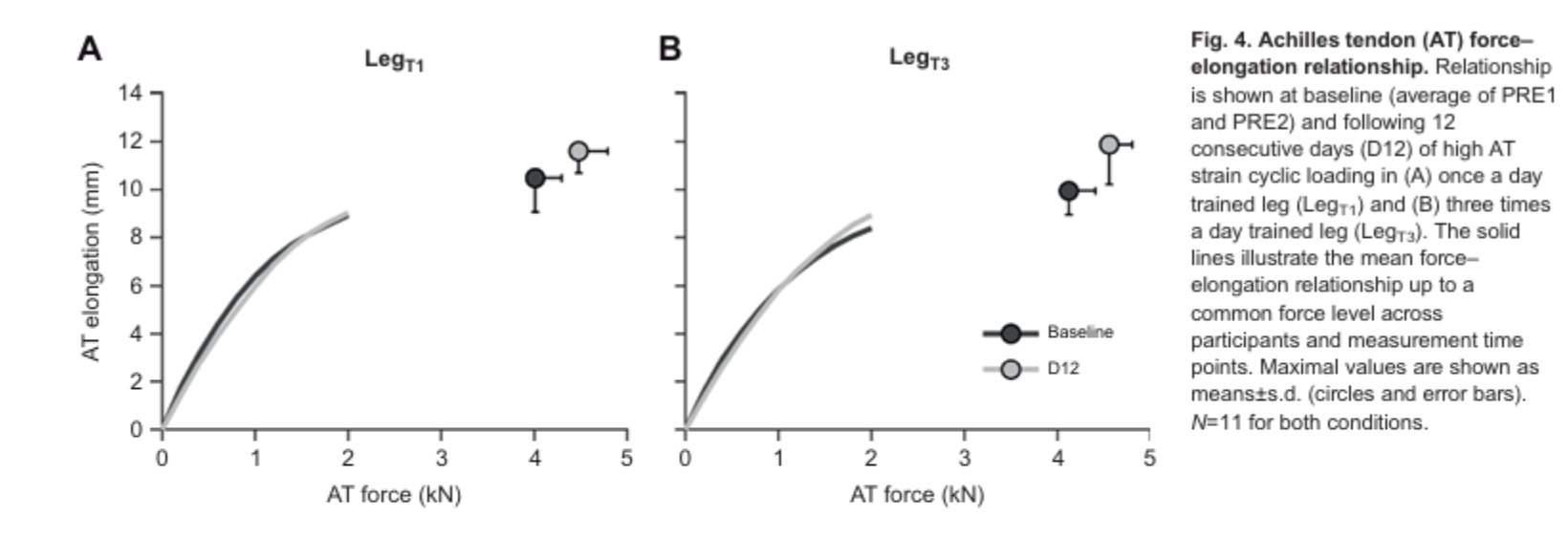
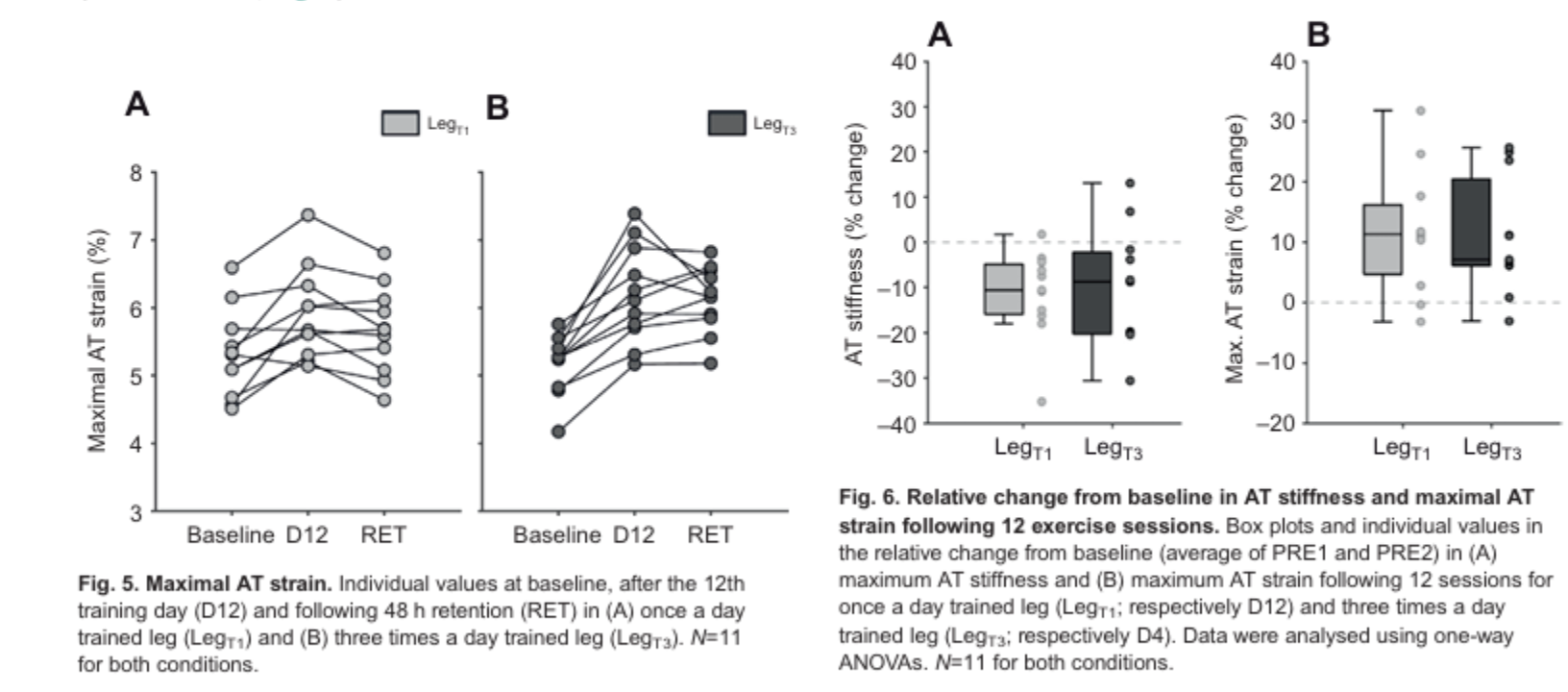
- LegT3 (3×/day): Tendon stiffness dropped ~24% and tendon strain rose ~20% after 8 days. This stuck even after 48 h rest.
- LegT1 (1×/day): No big changes, just a late trend toward more strain by day 12.
Biomarkers
- Signs of collagen breakdown showed up early.
- Collagen synthesis didn’t increase until 48 h after the final session, a lagging repair signal.
Pain
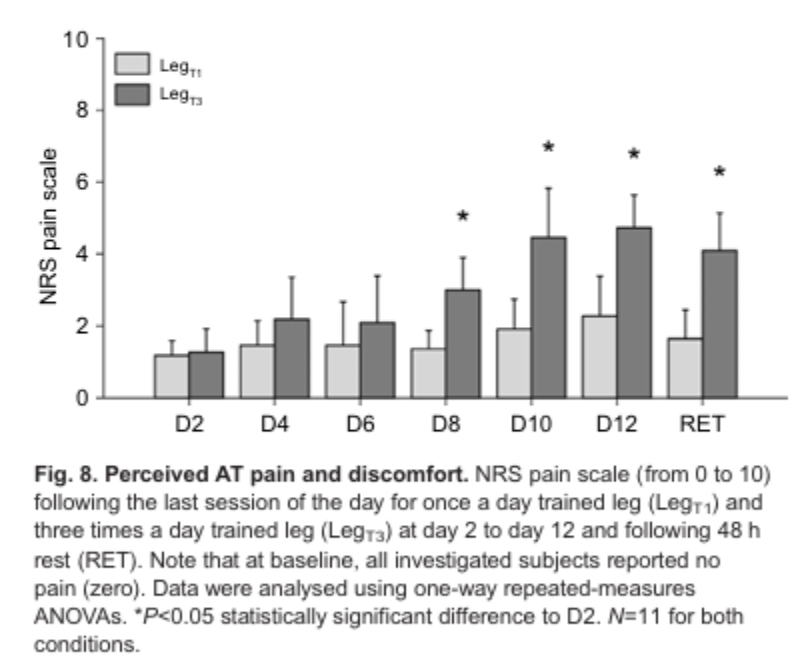
- LegT3: Moderate Achilles pain by day 8, lasting past the rest period.
- LegT1: Only mild pain.
What Does This Mean?
- Muscles recover fast, but tendons lag behind.
- Frequent high-strain sessions can cause tendons to become “softer, strained.”
- Collagen repair signals come after the heavy block, not during.
Limitations
- Short trial (12 days) and only on healthy young men.
- Biomarkers came from blood, not directly from tendon tissue.
- Total loading volume may matter more than rest spacing, but longer studies are needed.
Coach’s Takeaways
- Space it out ⮕ Leave at least 24 h between high-strain tendon sessions.
- Monitor pain ⮕ Tendon discomfort is an early warning, don’t ignore it.
- Block planning ⮕ Push tendons in short waves, then give 48–72 h for collagen to catch up.
I hope this helps,
Ramsey
Reference
Epro G, Suhr F, Karamanidis K. (2023). Human muscle–tendon unit mechanobiological responses to consecutive high strain cyclic loading. Journal of Experimental Biology, 226: jeb246507.


