

Sleep is always talked about as “recovery,” but far less often as a performance input.
Most of the sleep–performance research focuses on endurance, reaction time, or skill execution. Power outputs like jumping, sprinting, and lifting have shown mixed results, especially in lab studies that don’t reflect real training environments.
The purpose of this study was to examine whether natural, night-to-night changes in sleep duration are associated with next-day vertical jump performance in collegiate athletes.
Does more sleep improve jump height? And if so, why?
What Did the Researchers Do?
Subjects
- 174 NCAA Division I male football players
- Data collected over 2.5 years
- Only healthy, active roster athletes included
Sleep Measurement
- Oura Ring (photoplethysmography-based)
- Worn 5 nights per week
- Primary variable: nocturnal sleep duration
- Total observations: 4,046 nights
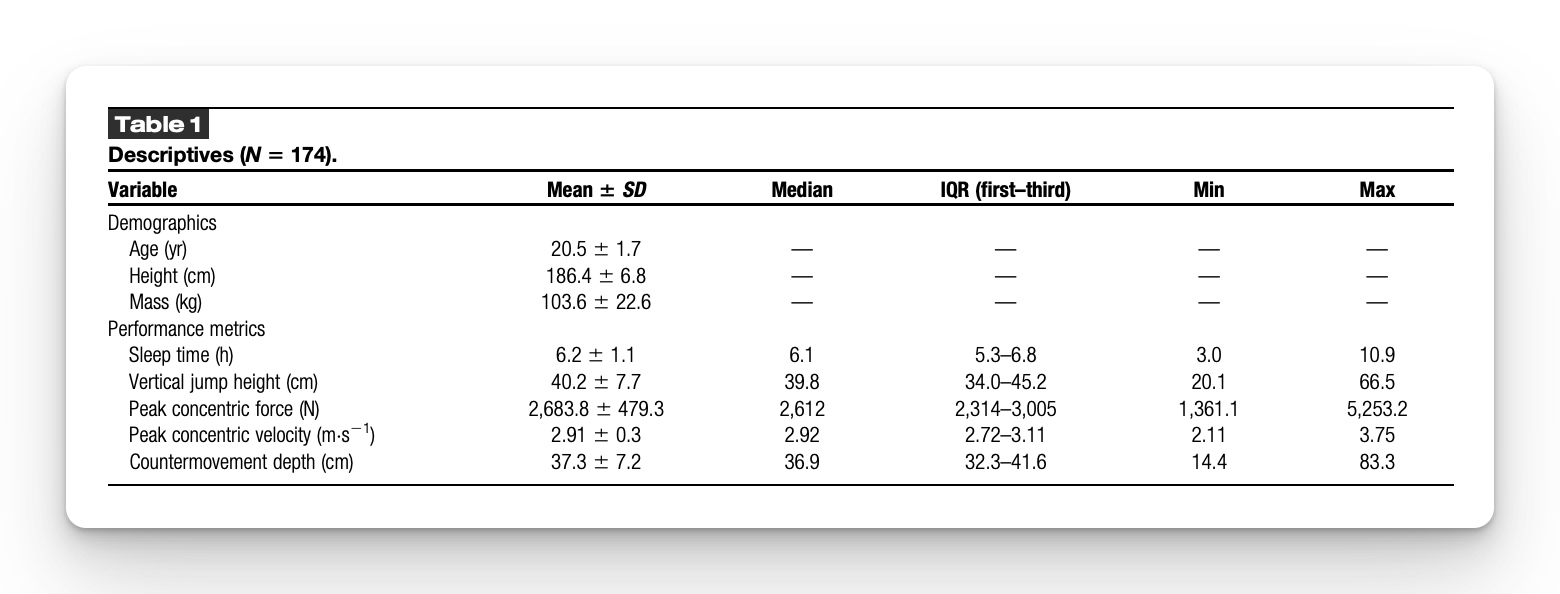
Average sleep was 6.2 ± 1.1 hours, with only 20.6% of nights ≥ 7 hours
Jump Testing
- Weekly countermovement jumps
- Dual force plates (ForceDecks)
- 3 trials per session
Metrics Analyzed
- Max jump height
- Average jump height
- Peak concentric force
- Peak concentric velocity
- Countermovement depth
A within-subject design was used to avoid the common trap of comparing “good sleepers” vs “bad sleepers.” Instead, the researchers asked, When you sleep more than usual, what happens?
What Were the Results?
More Sleep = Better Jump Performance
For every additional hour of sleep the night before:
- Max jump height ↑ ~0.19 cm
- Average jump height ↑ ~0.28 cm
These effects were statistically significant, small in magnitude, and consistent across thousands of observations.
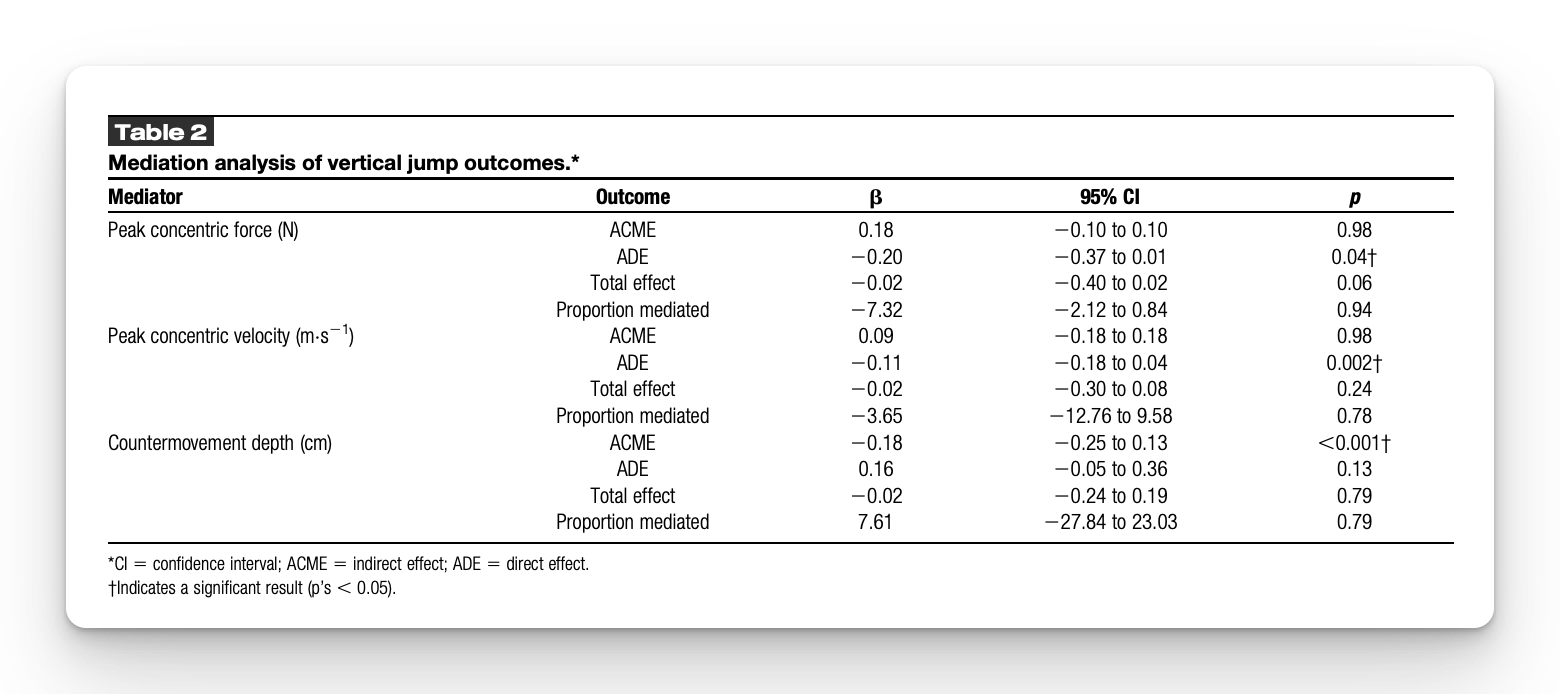
Force and Velocity Did NOT Explain the Improvement
Sleep was not associated with:
- Peak concentric force
- Peak concentric velocity
In other words, athletes weren’t producing more force or velocity.
Movement Strategy Changed With Sleep
The only variable that significantly mediated the sleep–jump relationship was Countermovement Depth:
- Less sleep → deeper countermovements
- More sleep → slightly shallower, more efficient jumps
However, depth only explained part of the relationship, not all of it.
What Does This Mean?
Sleep Affects How Athletes Move
The takeaway is not “sleep makes you stronger.”
It’s more subtle and more interesting:
- Sleep appears to influence motor coordination and strategy
- When under-slept, athletes may “search” for depth to compensate
- That deeper countermovement does not translate into better output
This aligns with previous work showing increased movement variability with sleep restriction and central fatigue without clear force deficits.
Chronic Sleep Debt Matters
These athletes were averaging ~6 hours per night and likely carrying chronic sleep debt. The authors suggest that:
- One good night helps, but only a little
- Chronic restriction blunts acute recovery benefits
This helps explain the modest effect sizes.
Limitations
- Male football players only
- No direct measures of training load, nutrition, or stress
- Sleep duration only (not sleep quality or timing)
- Observational design, not causal
Coach’s Takeaway
- Sleep is a performance input, not just recovery.
- Under-slept athletes may change jump strategy, not lose force.
- Small gains matter when they show up consistently across thousands of reps.
I hope this helps,
Ramsey
Reference
Hummel JW, Miltenberger MM, Hummer ET, Spaeth AM. (2026). Nocturnal sleep is associated with next-day vertical jump performance in collegiate athletes. Journal of Strength and Conditioning Research, 40(2), 180–185.


