

Muscle damage is usually blamed on eccentric work, but this paper tests whether that is really about contraction type or about training at long muscle lengths with an unaccustomed stimulus.
For rehab and performance, we care about soreness, torque loss, ROM, and structural changes on ultrasound. This study tracks all of those.
Elbow flexors were used as a model to ask a simple question that matters for coaches:
If I load athletes hard at long muscle lengths, does concentric training cause the same level of muscle damage as eccentric training?
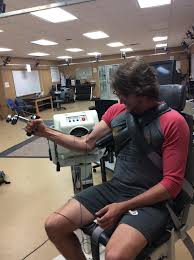
I participated in a study like this during my masters and it hirt to turn the steering wheel for days after.
What Did The Researchers Do? 🔬
Study Design
- 13 physically active young women (around 23 years old) with no recent resistance training or upper limb issues; all tested in the early follicular phase of the menstrual cycle to control hormones.
- Each athlete used one arm for concentric and the other for eccentric work (within-subject design).
- Order and arm assignment were randomized.
- Two sessions separated by 24 to 30 days.
Exercise Protocol
- Isokinetic elbow flexor work on Biodex at 45°/s.
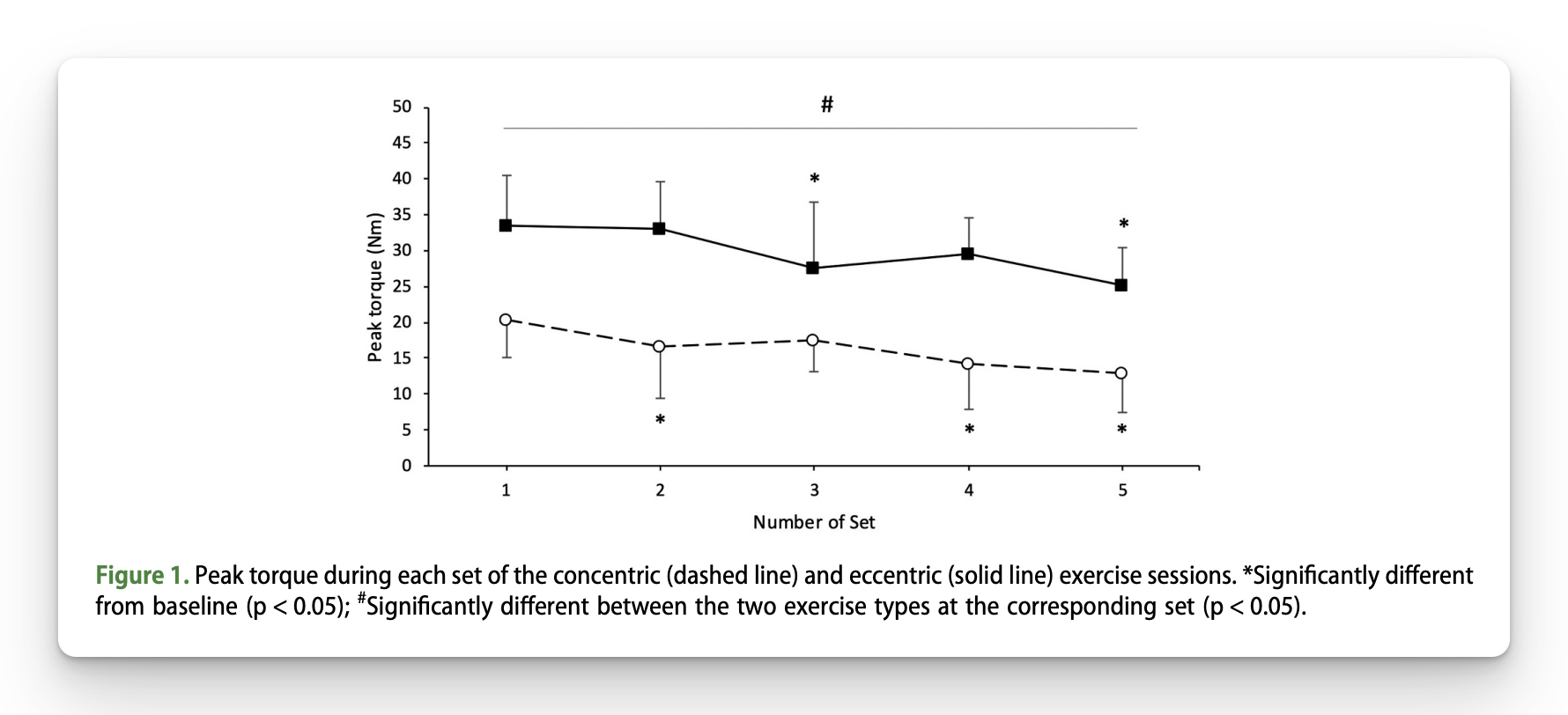
- 5 sets × 15 maximal voluntary reps (75 total) per session.
- ROM: 5° to 50° (0° = full extension) to keep the biceps working at long muscle length on the descending limb of the length tension curve.
- Strong verbal encouragement, 1 minute rest between sets, and high RPE values at the end of both protocols (around 19 out of 20).
Muscle Damage Indices
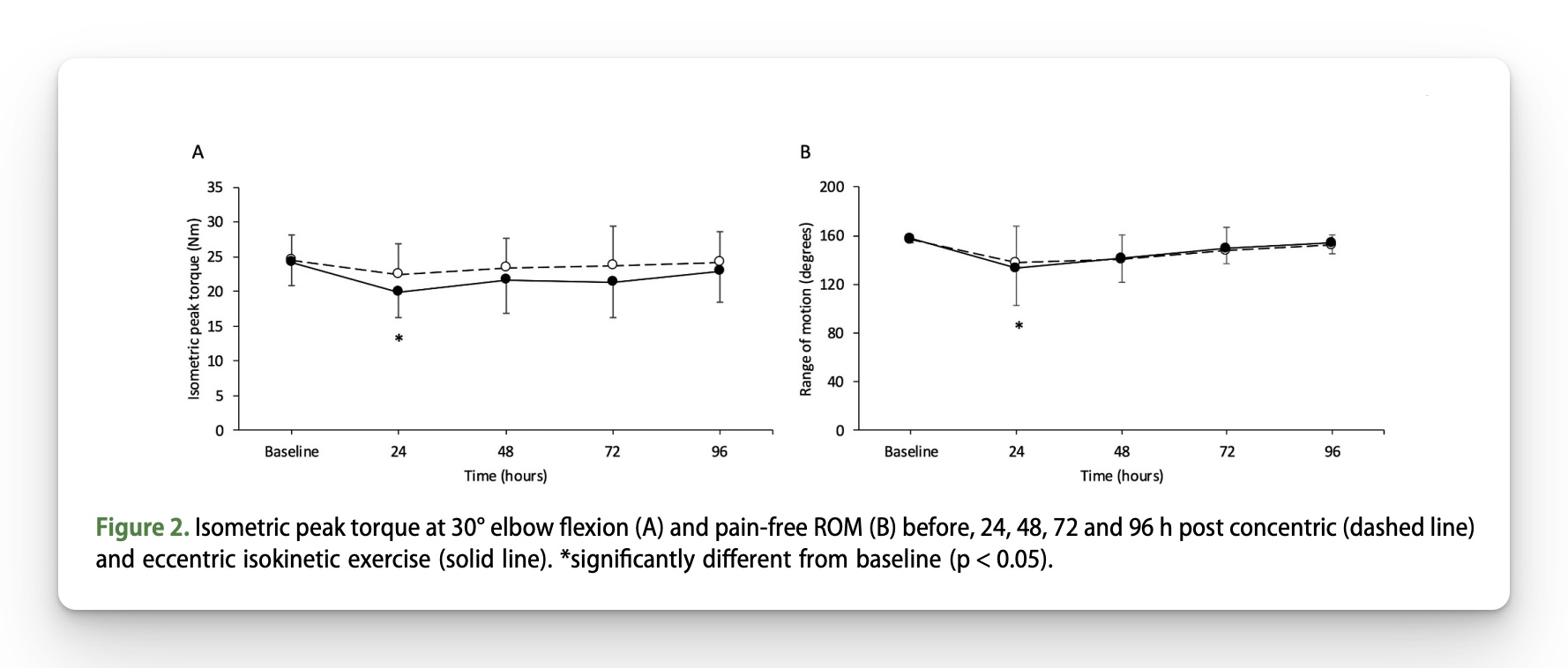
- Isometric peak torque at 30° elbow flexion.
- Pain free ROM, measured as the angle where discomfort starts during slow extension.
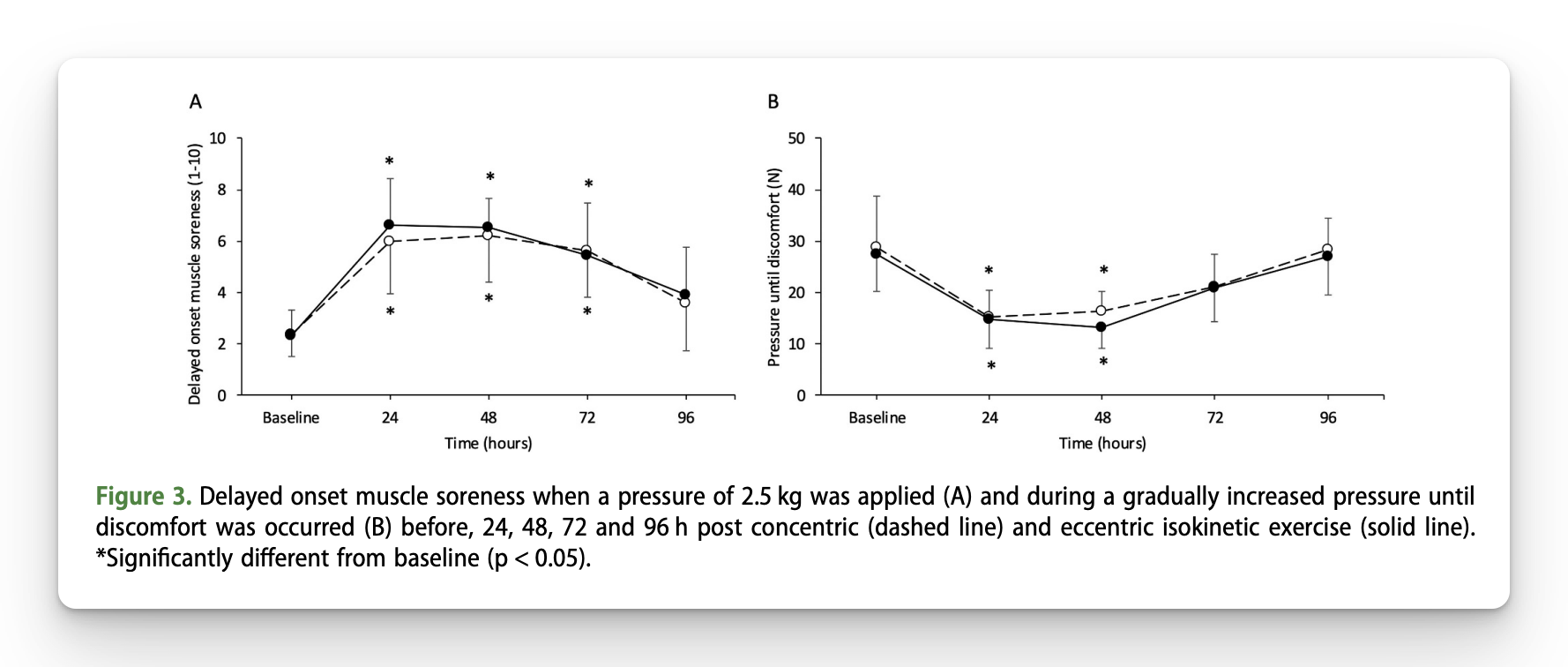
- DOMS via pressure algometry in two ways: fixed 2.5 kg pressure and gradually increasing pressure until discomfort (PPT).
- Ultrasound of elbow flexors: muscle thickness (biceps brachii) and echo intensity (biceps and brachialis) as a marker of tissue disruption and inflammation.
- Measurements taken pre, 24, 48, 72, and 96 hours.
What Were The Results?
No “eccentric vs concentric” winner
- There was no significant exercise type by time interaction for any variable and no main effect of exercise type.
- Translation: in this setup, eccentric and concentric bouts at long muscle length produced broadly similar muscle damage profiles.
Torque and ROM
- Isometric peak torque showed a significant drop at 24 hours after eccentric exercise only.
- Pain free ROM also decreased at 24 hours after eccentric exercise.
- Concentric work did not show statistically significant torque or ROM loss, although trends followed similar directions.
Soreness (DOMS)
- Both concentric and eccentric sessions caused clear increases in soreness at 24, 48, and 72 hours (depending on the method).
- No meaningful difference between contraction types for DOMS.
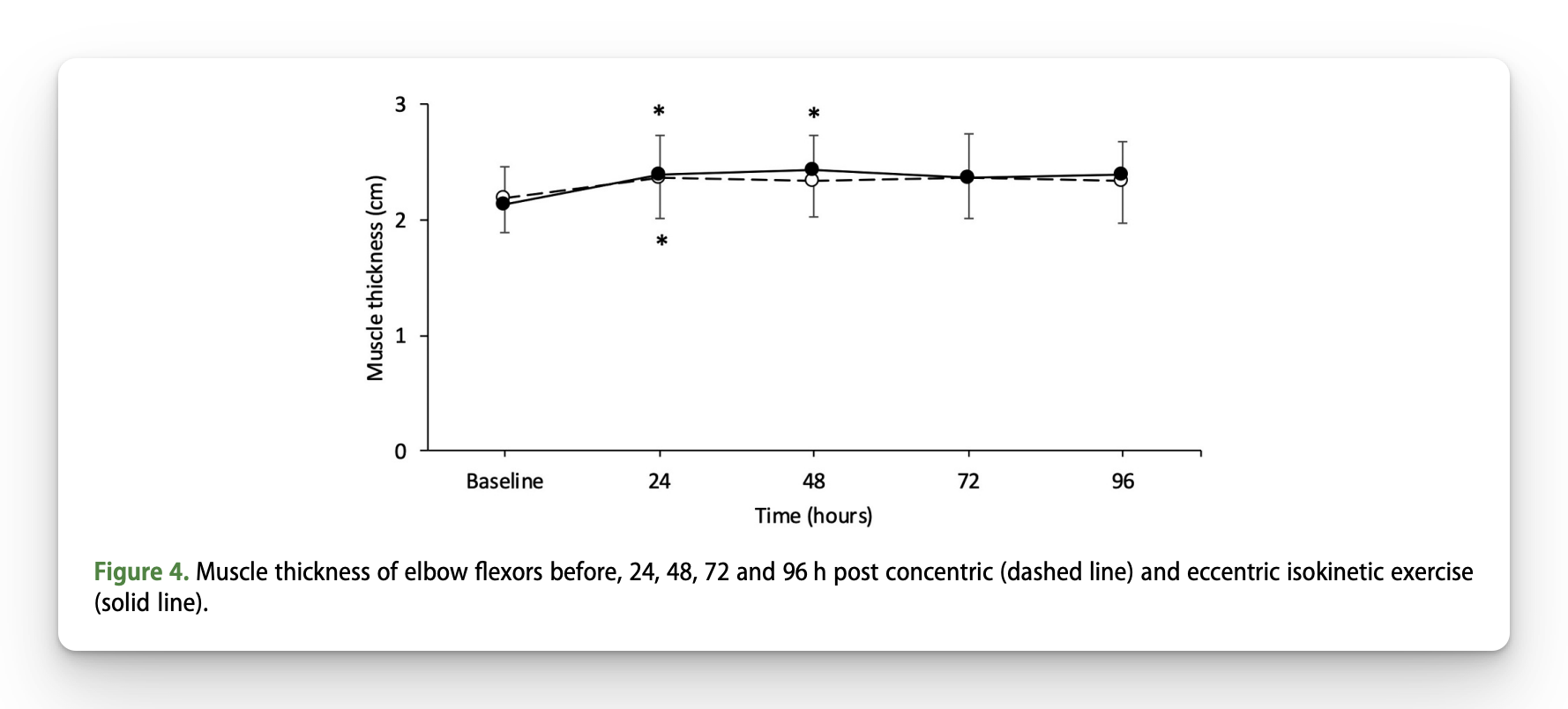
Muscle Thickness
Biceps thickness increased after both conditions:
- At 24 hours post concentric.
- At 24 and 48 hours post eccentric.
- This likely reflects swelling and edema.
Echo Intensity
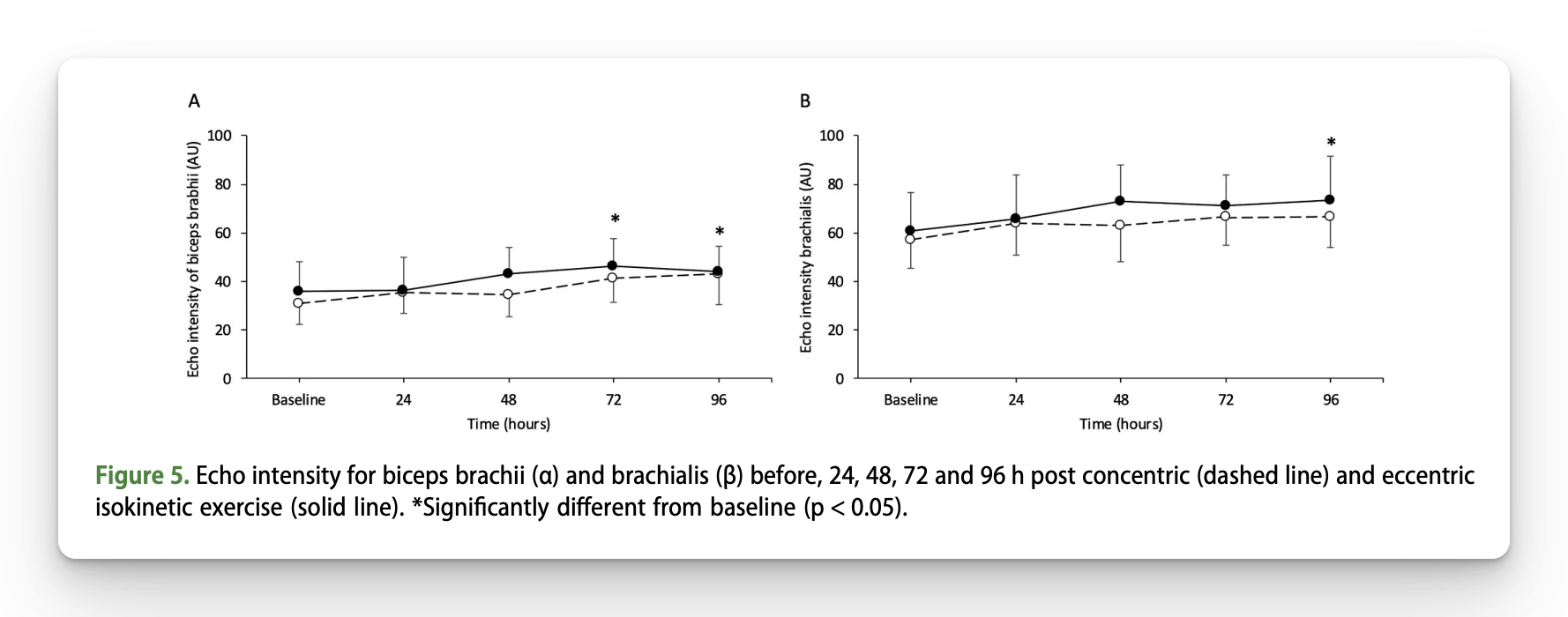
Echo intensity (a proxy for structural disruption and inflammation) increased only after eccentric exercise:
- Biceps brachii: higher at 72 and 96 hours post eccentric.
- Brachialis: higher at 96 hours post eccentric.
Concentric work did not significantly change echo intensity, even though soreness was similar.
What Does This Mean?
- Unaccustomed high-intensity work at long muscle length is the real problem, not just “eccentric is bad.”
- Both concentric and eccentric contractions can drive muscle damage when the stimulus is novel and the muscle is positioned long.
- Eccentric exercise still carries some unique characteristics which inclkuded slightly greater early torque and ROM loss as well as clearer structural changes on ultrasound (echo intensity).
- The restricted ROM (5° to 50°) likely limited total torque and work, which probably kept the overall level of damage “moderate” despite the long length.
- The authors frame these changes as part of an adaptive remodeling process rather than purely a negative outcome, which lines up with the repeated bout effect perspective.
Limitations
- No direct markers of cellular damage (for example, biopsies, blood markers), so we are inferring damage from indirect outcomes.
- No comparison to a full ROM protocol, so we cannot fully separate “long length” from “reduced torque due to shortened ROM.”
- Untrained participants, so responses may differ in trained strength athletes.
- The study is a single muscle group, single joint lab model, so translation to complex field tasks needs caution.
Coach’s Takeaway
- Long muscle length plus unaccustomed high intensity work is a key driver of muscle damage, regardless of whether you choose concentric or eccentric loading.
- Expect similar soreness profiles from both concentric and eccentric sessions at long muscle length, but plan for slightly more torque and ROM loss and more structural disruption after eccentric heavy days.
- When progressing athletes into long length positions (think hamstrings near terminal swing, hip flexors in deep lunge, quads in deep knee flexion), load them gradually; not because “eccentrics are damaging,” but because the combination of long length, novel stimulus, and high tension is what actually beats them up.
I hope this helps,
Ramsey
Reference: Karyofyllidou, A. V., Terzis, G., Mandalidis, D., Margaritelis, N. V., & Paschalis, V. (2025). The effects of concentric and eccentric exercise performed at long muscle length on muscle damage. Journal of Sports Sciences.


