

Most coaches default to dynamic lifting or plyometrics to improve running performance. Those methods work.
But isometric training deserves a spot in the conversation.
High-intent isometrics can improve tendon stiffness and running economy, often with less fatigue than traditional strength work. That matters when your runners are already carrying a heavy training load.
Can isometric strength training improve endurance running performance, and if so, how?

What Did the Researchers Do?
Study Overview
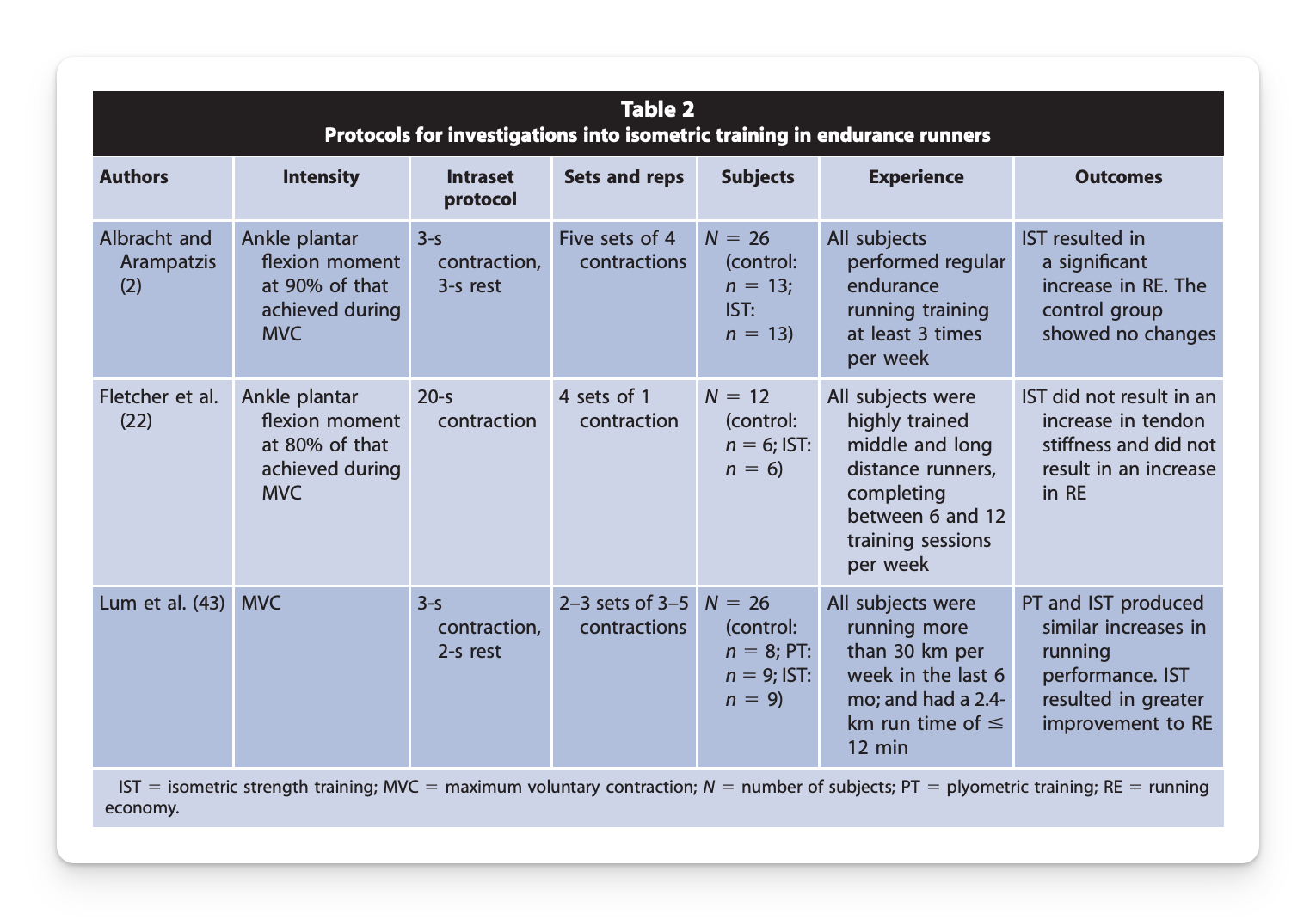
Researchers reviewed the three studies that directly examined IST in recreational to highly trained endurance runners and integrated findings from:
- Running biomechanics research
- Tendon and muscle adaptation literature
- Isometric strength training research in other populations
Exercises Studied:
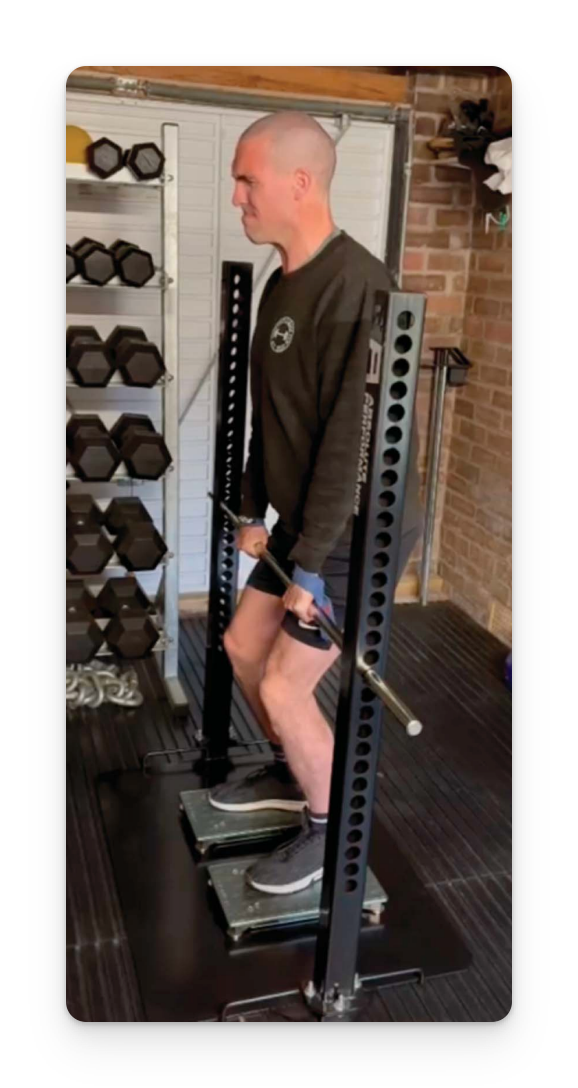
- Isometric plantar flexion
- Isometric mid-thigh pull
Training Variables Examined
- Intensity (80–100% MVC)
- Contraction duration (3s vs 20s)
- Frequency (3–4x/week)
- Total contractions per session (10–20)
What Were the Results?
IST Can Improve Running Economy, But Not Always
- Two studies (Albracht & Arampatzis, Lum et al.) showed improved running economy
- One study (Fletcher et al.) showed no change in tendon stiffness or running economy
Why the difference?
- Higher intensity (≈90–100% MVC) and higher weekly exposure appeared to be more effective
- Lower intensity (≈80% MVC) and shorter intervention duration may be insufficient in trained runners
Tendon Stiffness Is the Likely Driver
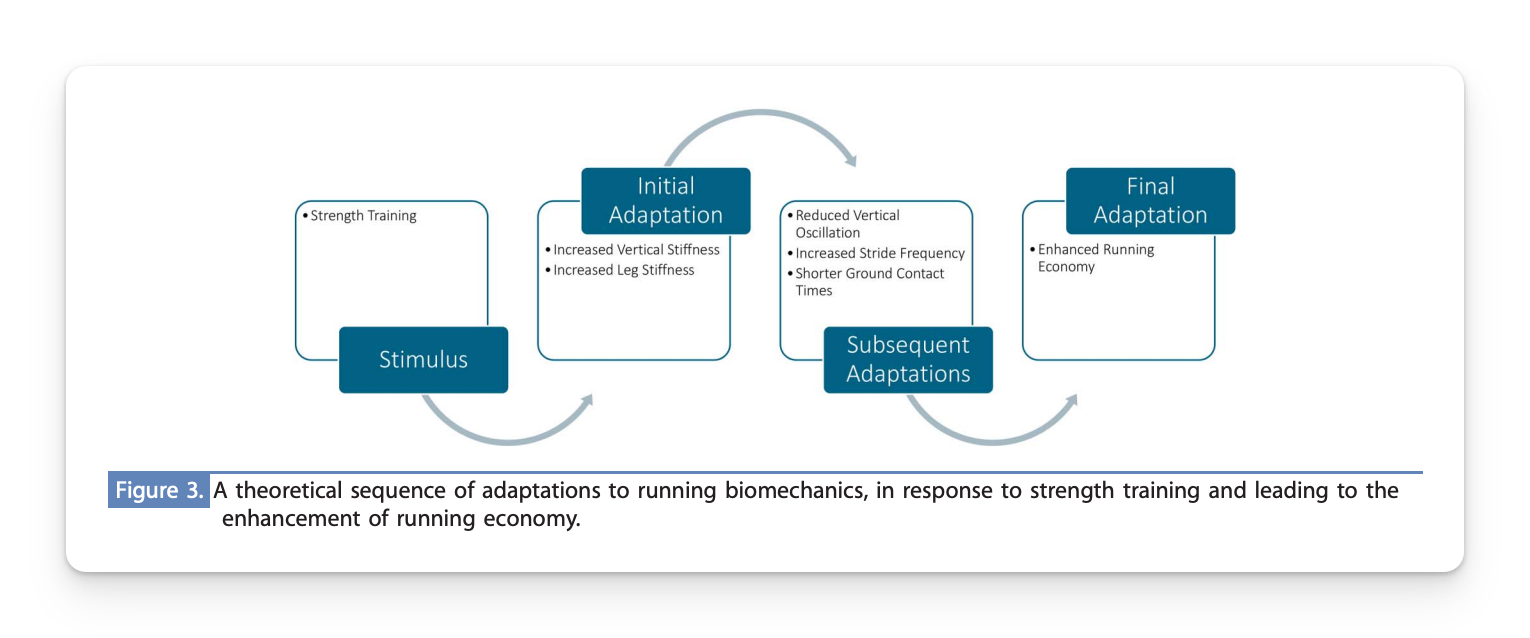
IST consistently increases tendon stiffness, often to a greater extent than dynamic or plyometric training. That matters because higher tendon and leg stiffness are associated with:
- Shorter ground contact times
- Lower vertical COM displacement
- Better elastic energy reuse
These changes are strongly associated with improved running economy.
Faster Force Production Matters More Than Max Force
- Isometric force-time characteristics within 0–200 ms are linked to running economy
- That time window matches ground contact times in endurance running
- Instructions to contract “as fast and as hard as possible” appear critical
This suggests intent may be as important as load.
Isometrics Don’t Replace Dynamic Strength
- IST improves peak force and stiffness
- IST does not train velocity or power well
- Sprint speed and anaerobic speed reserve still matter for endurance performance
This means that IST is a supplement, not a replacement for traditional training.
What Does This Mean?
- IST likely improves endurance performance indirectly via improved running economy
- Tendon stiffness is a central adaptation, not muscle hypertrophy
- The benefits appear most meaningful when intensity is high, contractions are short (≈3s), and intent is explosive.
- Fatigue cost is lower than traditional lifting, which is critical during heavy run blocks
This positions IST as a low-cost, high-upside tool when used correctly.
Limitations
This remains an emerging area, not yet settled science.,
- Only three intervention studies in endurance runners
- Mostly single-joint isometric exercises were studied
- Limited data in highly trained or elite runners
- No direct comparisons of holding vs pushing isometrics (HIMA vs PIMA), long vs short muscle length in runners, or IST alone vs well-designed mixed programs.
That said, given the potential benefits, IST is a straightforward addition to training and is worth using for your athletes and clients.
Coach’s Takeaway
- Use isometrics to target stiffness, not fatigue ⮕ High-intensity, short isometrics fit well alongside running without wrecking athletes.
- Prioritize ankle and knee positions ⮕ Plantar flexion and mid-thigh pull positions make sense biomechanically.
- Combine, don’t replace ⮕ Pair IST with dynamic strength and plyometrics to cover force, velocity, and stiffness.
I hope this helps,
Ramsey
Reference
Egerton, T. (2026). Isometric Strength Training in Endurance Runners: A Theoretical Framework for Adaptations and Performance Outcomes. Strength and Conditioning Journal, 48(1), 10–18.


