

Basketball is full of asymmetric actions, from driving off one foot to repeatedly landing on different legs. As a result, players often develop inter-limb differences in strength, power, and speed.
Coaches are constantly told to “correct asymmetries,” and the industry loves the idea of a 10% threshold as the cutoff.
This study asked whether asymmetry truly impacts basketball performance and whether that popular 10% cutoff actually means anything.
If a basketball athlete has more than 10 percent asymmetry between legs, do they actually jump worse or move slower? And which tests matter most?

I am developing the ultimate basketball performance course and certification program. This is a practical, no-fluff system for training basketball players, from the weight room to game day, and everything in between.
What Did the Researchers Do?
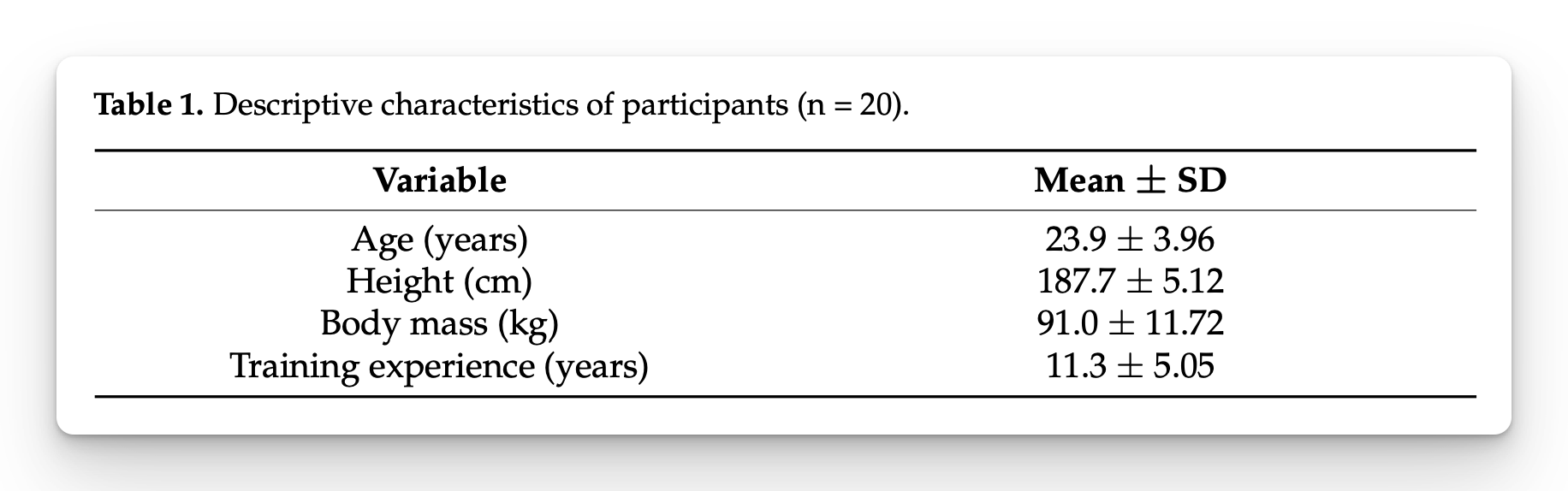
Participants
- 20 male university basketball players
- All trained 2x/week with additional S&C work
- Minimum 5 years of experience
- No injuries in the prior 6 months
Unilateral Assessments
Using OptoJump:
- Single-leg countermovement jump (vertical)
- Single-leg forward hop (Noyes1)
- Triple hop (Noyes3)
- 6-meter timed hop (Noyes6)
COD Asymmetry Test
- 5 m sprint, plant/cut, 5 m return
- Tested once cutting on the right leg, once on the left
- Used to quantify asymmetry, not to measure practical COD ability
Basketball-Specific Outcomes
- Lane Agility Test
- Bilateral Countermovement Jump (CMJ)
Asymmetry Calculation
- Absolute percent difference between limbs.
- Performance-based limb identification, not “dominant leg” claims.
Analysis
- Paired tests for limb differences
- Group comparison for <10% asymmetry and ≥10% asymmetry
- Correlations between asymmetry and basketball performance
What Were the Results?
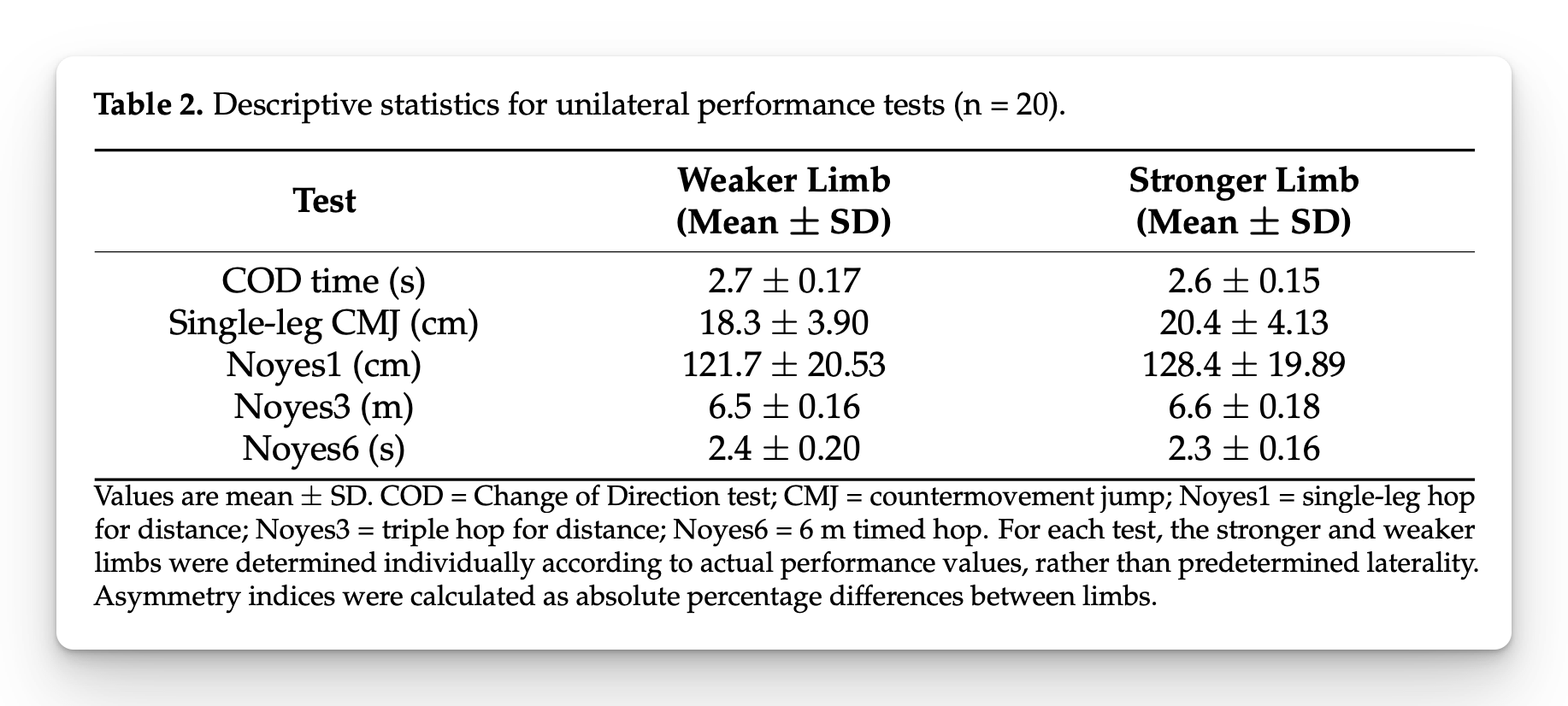
Players were asymmetric in every single unilateral test
- Single-leg CMJ
- Hop for distance
- Triple hop
- Timed hop
These differences were large and consistent, which fits what we see in real-world basketball populations.
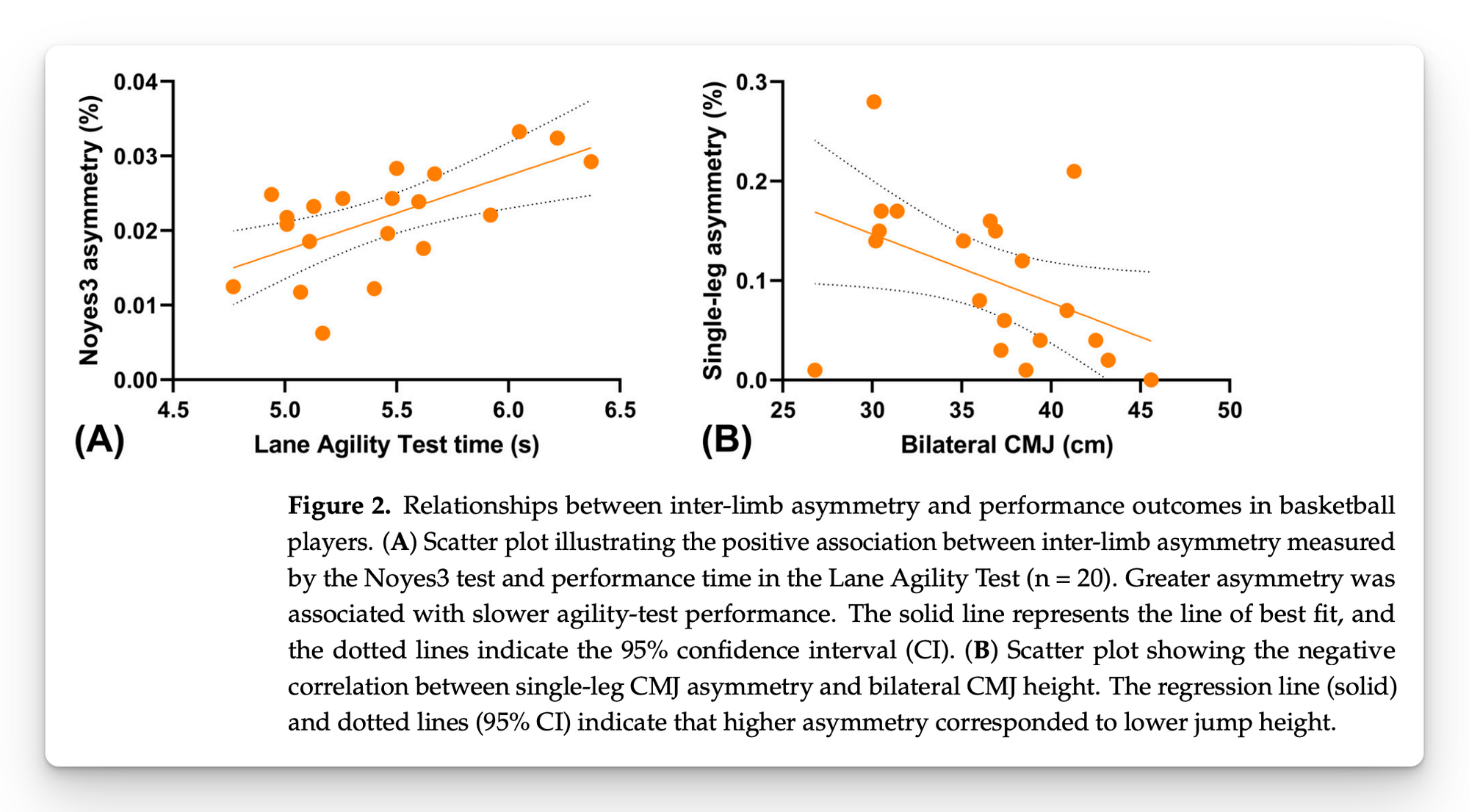
≥10% single-leg jump asymmetry = lower bilateral CMJ height
- <10% group CMJ: 38.8 cm
- ≥10% group CMJ: 34.1 cm
Thats a meaningful 4–5 cm difference.
Triple-hop and single-leg CMJ mattered
- Triple-hop (Noyes3) asymmetry was strongly linked to slower agility (r = 0.62)
- Single-leg CMJ asymmetry moderately predicted worse bilateral CMJ (r = −0.46)
COD asymmetry did not matter
- No relationship with Lane Agility
- No relationship with CMJ
- Likely because the test used emphasized linear speed, not true cutting mechanics.
What Does This Mean?
- The 10% threshold matters for jumping ⮕ Athletes above 10% asymmetry jumped meaningfully lower in bilateral CMJ.
- Triple-hop asymmetries matter most for agility ⮕ This test captured functional deficits better than single-leg vertical jumps or COD asymmetry.
- COD asymmetry tests must be better designed ⮕ If you want meaningful asymmetry data, use 505, 180 COD deficit and force plate cutting metrics.
- Not all asymmetry is equal ⮕ Some tests naturally show higher or lower percentages.
Limitations
- Small sample size (n=20)
- Subgroup analysis (10 vs 10 athletes) may be underpowered
- Results may differ in youth or female athletes
Coach’s Takeaway
- If an athlete has >10% asymmetry on single-leg jumping, expect a real drop in bilateral CMJ height.
- Triple-hop asymmetry is your best indicator of meaningful on-court movement limitations.
- COD asymmetry from short linear-dominant tests is misleading; use more robust tests when evaluating change of direction.
- Unilateral training targeting the weaker leg should be part of your athlete development process.
- Monitor in-season asymmetry, as workload and fatigue can widen these gaps.
I hope this helps,
Ramsey
Reference:
Szabó N, Atlasz T, Váczi M, Sebesi B. (2025). Does the 10% Asymmetry Threshold Matter? Effects of Lower-Limb Asymmetries on Jumping and Agility in Basketball. J Funct Morphol Kinesiol. 10(4):445.


