

Exercise selection influences how muscles adapt, but many programs still rely heavily on compound lifts without considering regional effects
The quadriceps are made up of multiple muscles that may respond differently depending on the exercise
This study directly compares back squat and leg extension in a controlled design
This is practical for coaches because it answers a simple question. Are we getting the same adaptations from squats as we are from leg extensions?
Does back squat vs leg extension lead to different patterns of quadriceps hypertrophy and strength adaptations?
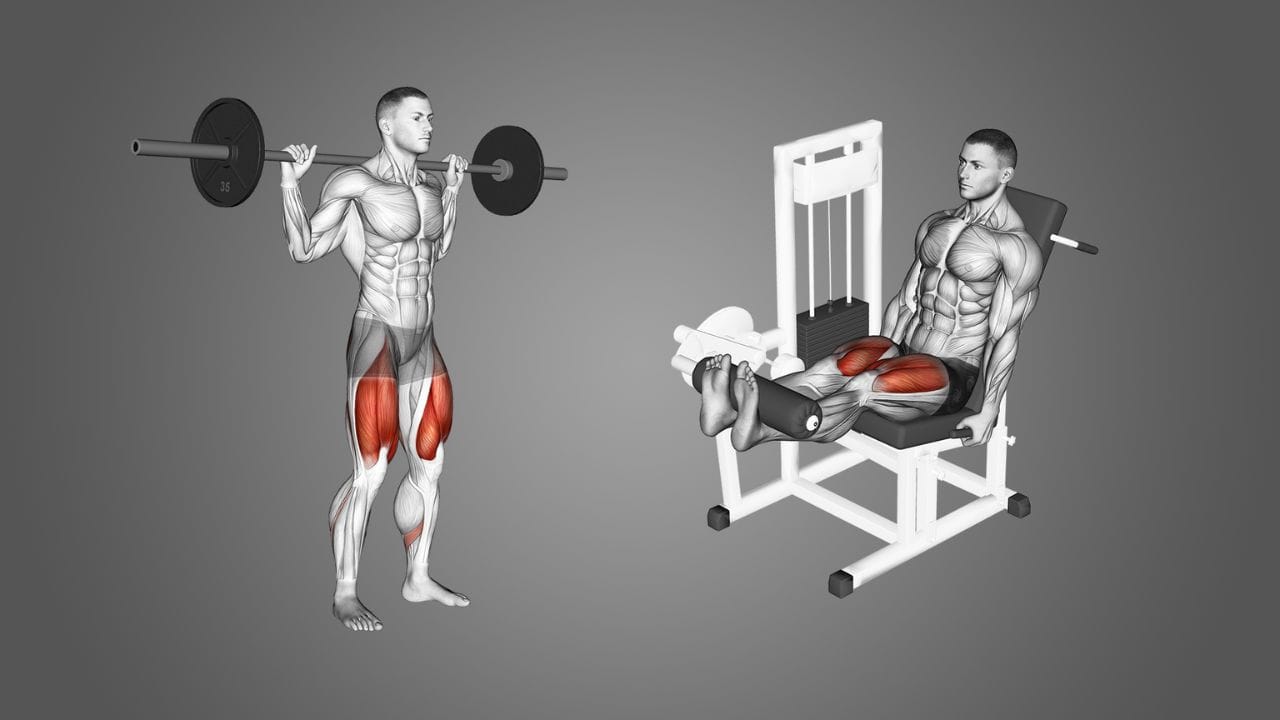
What Did the Researchers Do?
Training program
- 63 untrained young women grouped into back squat (SQ) or leg extension (LE) programs.
- 8 weeks, 2 sessions per week
- 3 sets of 8–12 reps to near failure
Measurements
- Muscle thickness of rectus femoris and vastus lateralis at proximal, middle, and distal regions
- Strength using 3RM in both exercises
Controls
- Supervised training
- Dietary intake monitored
- High adherence
What Were the Results?
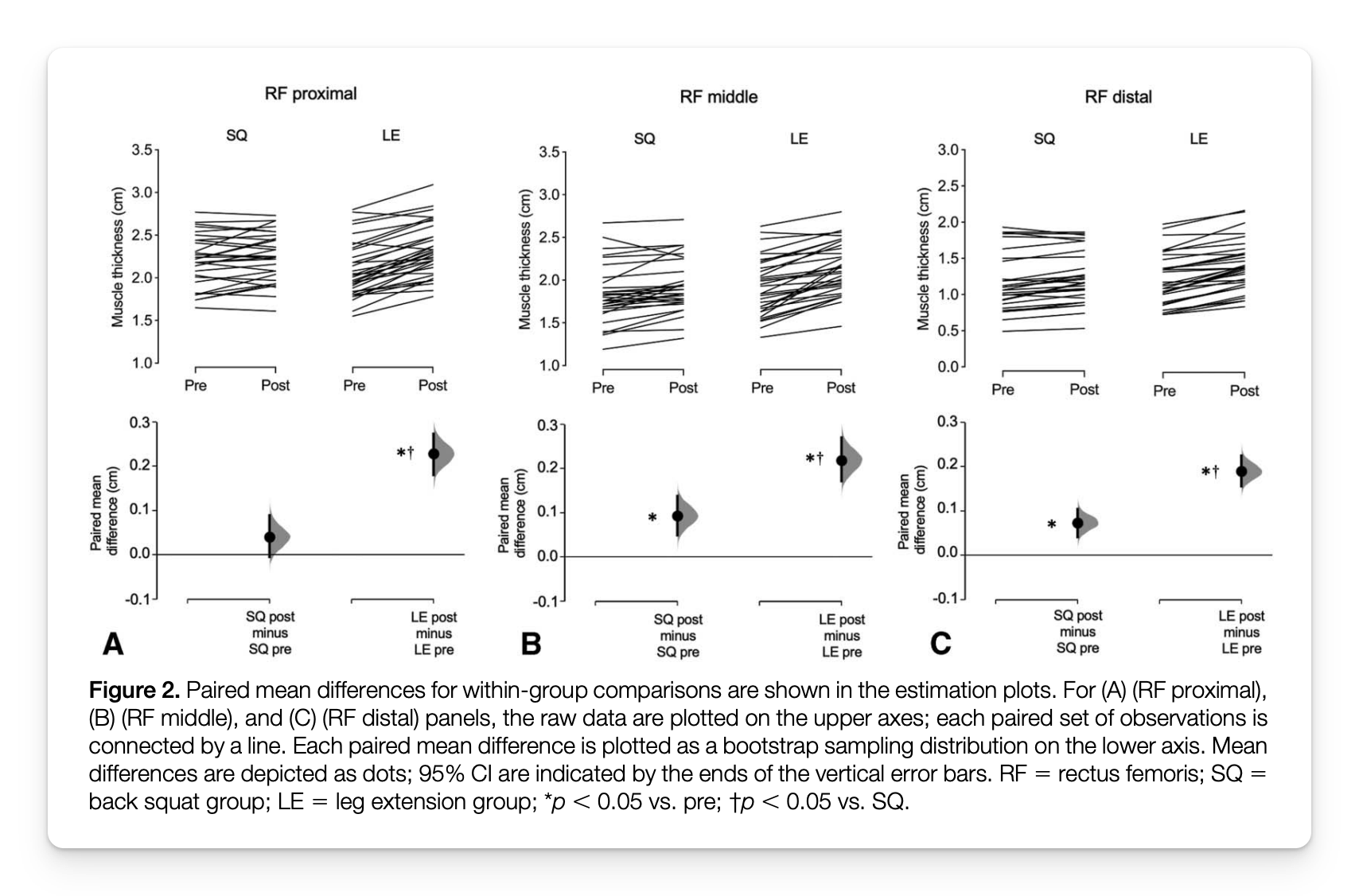
Rectus Femoris Hypertrophy
Leg extension produced greater growth at all sites:
- Proximal: +11.4% vs +2.0%
- Middle: +12.3% vs +5.7%
- Distal: +17.5% vs +7.9%
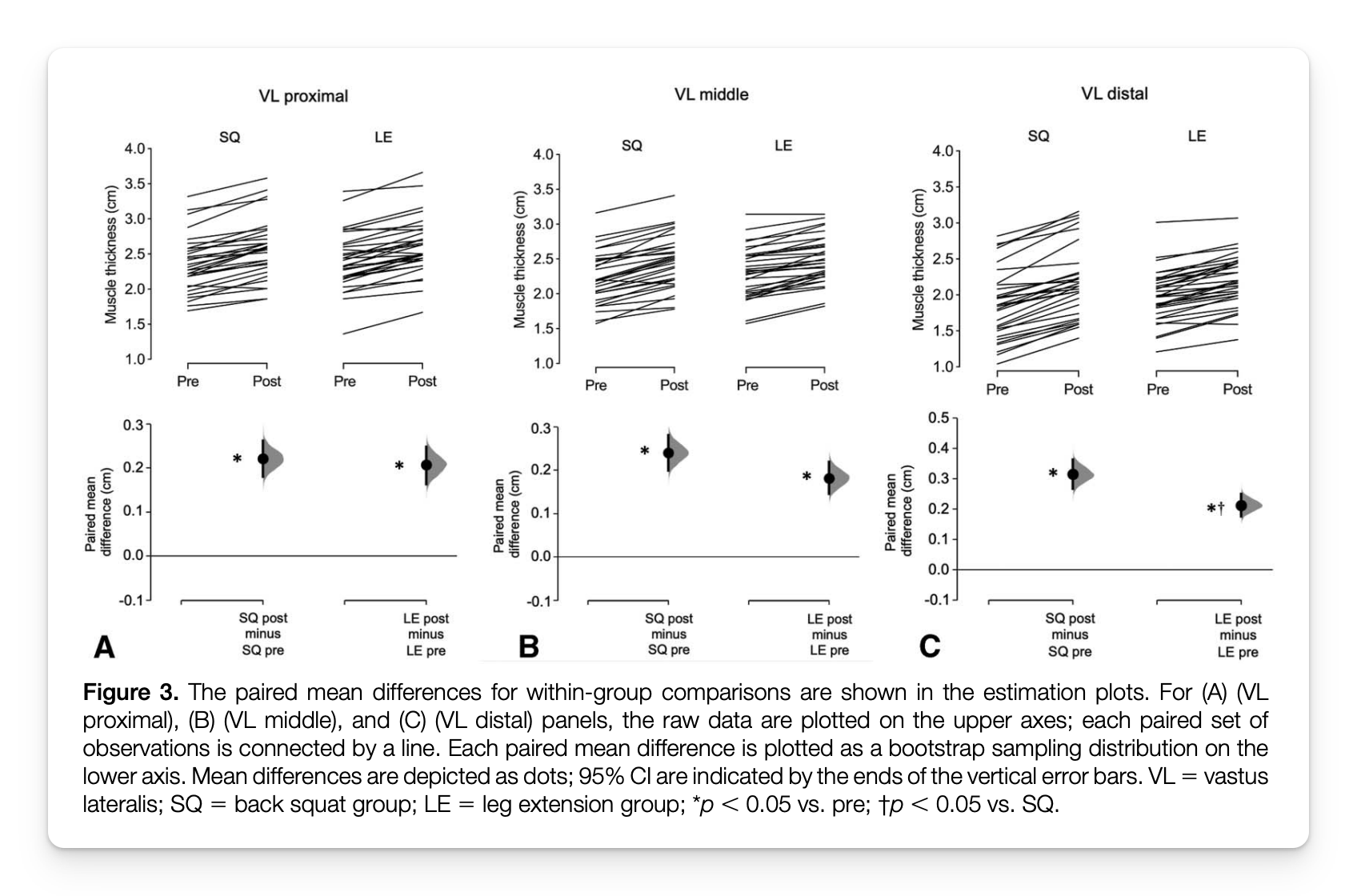
Vastus Lateralis Hypertrophy
- Similar growth between the proximal and middle regions for both groups
- The squat produced greater growth in the distal region (+18.2% vs +11.2%)
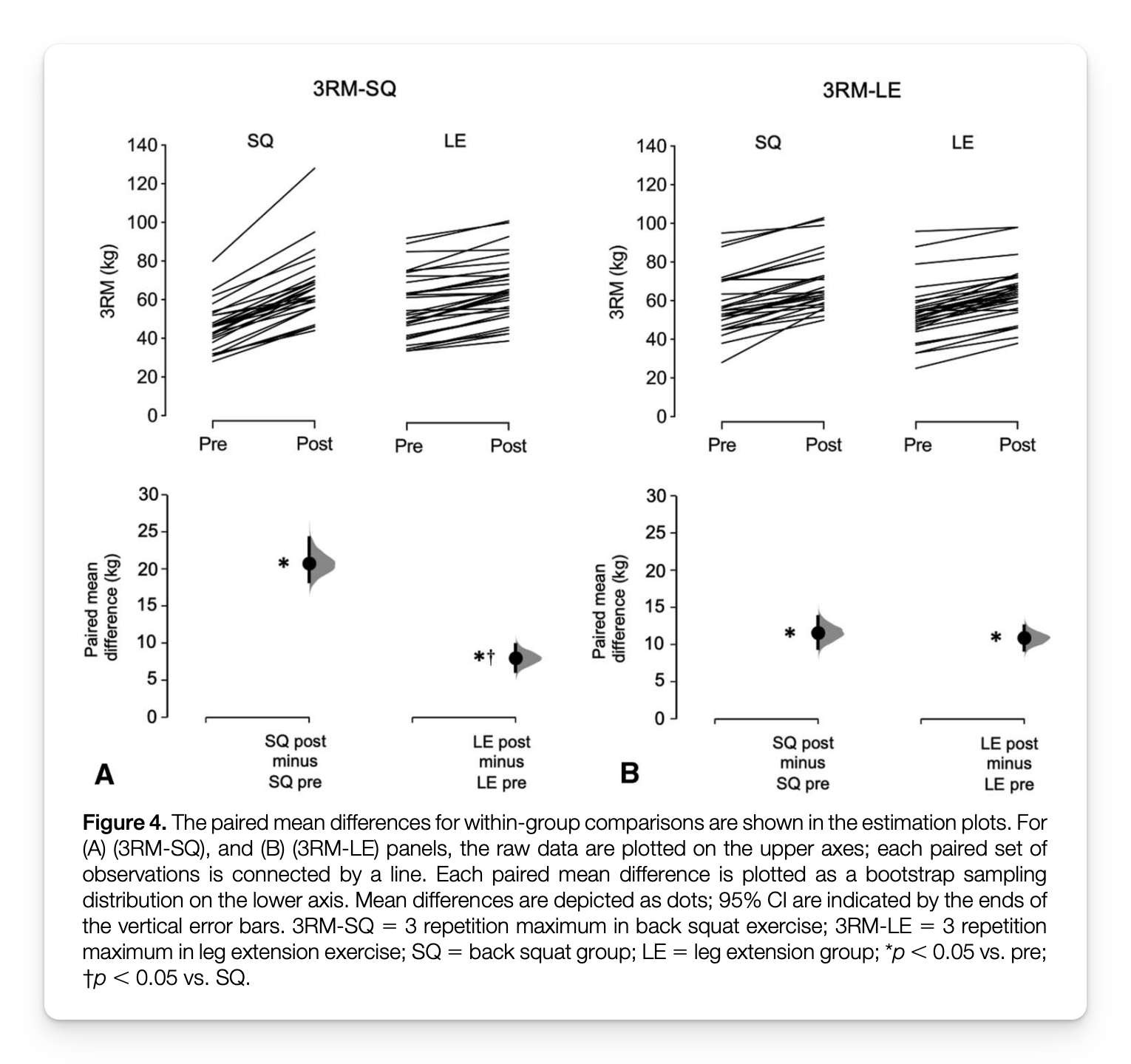
Strength Adaptations
- Squat strength improved more in the squat group (+46.7% vs +21.3%)
- Leg extension strength improved similarly in both groups
What Does This Mean?
Leg Extensions Target What Squats Miss
- The rectus femoris crosses both the hip and knee
- During squats, its role is limited because hip extension and knee extension occur together.
- During leg extensions, it acts directly as a knee extensor, which likely explains the greater hypertrophy.
Squats Have Greater Transfer
- Squat training improved both squat and leg extension strength
- Leg extension training did not transfer to squat performance
- This likely reflects the higher coordination and total system demands of the squat.
Regional Hypertrophy Exists
- Squats bias distal vastus lateralis
- Leg extensions bias rectus femoris
- Exercise selection changes where growth occurs.
Limitations
- Short intervention duration
- Only untrained young women were studied
- Differences were statistically significant but relatively small in absolute terms
Coach’s Takeaway
- Squats alone do not fully develop the quadriceps
- Leg extensions provide a unique hypertrophy stimulus, especially for rectus femoris
- Squats are more effective for overall strength and transfer
- A combination of both exercises is likely the best approach for complete quad development
I hope this helps,
Ramsey
Reference
Kassiano et al. (2026). Comparison of muscle hypertrophy and strength adaptations induced by back squat and leg extension resistance exercises. Journal of Strength and Conditioning Research.


