

Achilles tendon ruptures (ATR) are one of the most impactful lower-body injuries for both athletes and general populations.
Despite this, we’ve lacked a clear understanding of how often they occur, who is most at risk, and how trends are changing over time
This new study provides some clarity.

The 70 Year Analysis of Achilles Ruptures
Study Design
The researchers performed a systematic review and meta-analysis of:
- 28 population-based studies
- Over 630 million individuals
- ~568,000 Achilles ruptures
The reviewed included data from 1950 to 2022.
Key Methods
- Incidence reported per 100,000 person-years
- Random-effects meta-analysis
- Meta-regression to analyze time trends
Subgroup Analysis
- Sex
- Age
- Region
- Sport vs non-sport
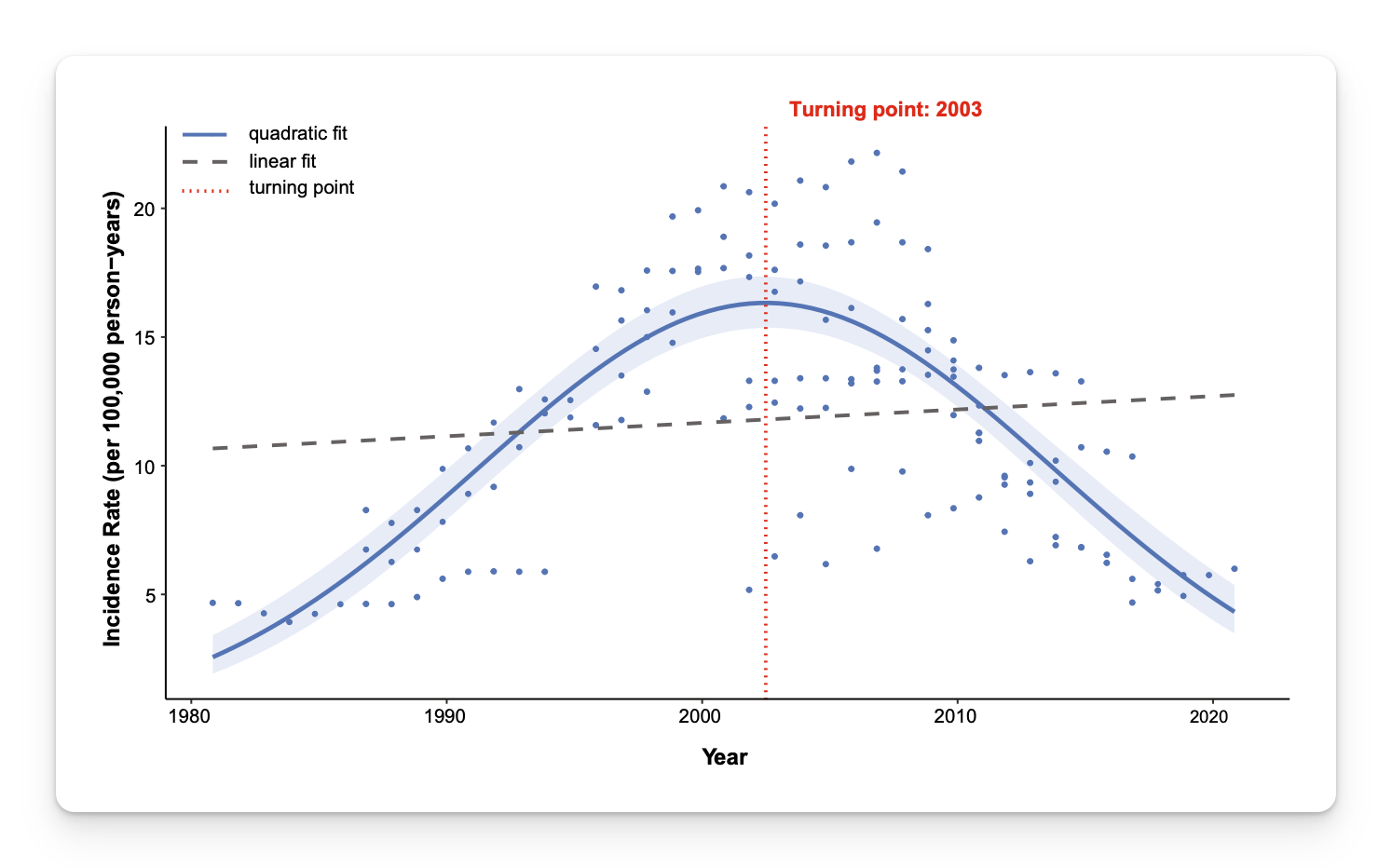
Surgical trends analyzed using quadratic regression.
The 5 Major Takeaways
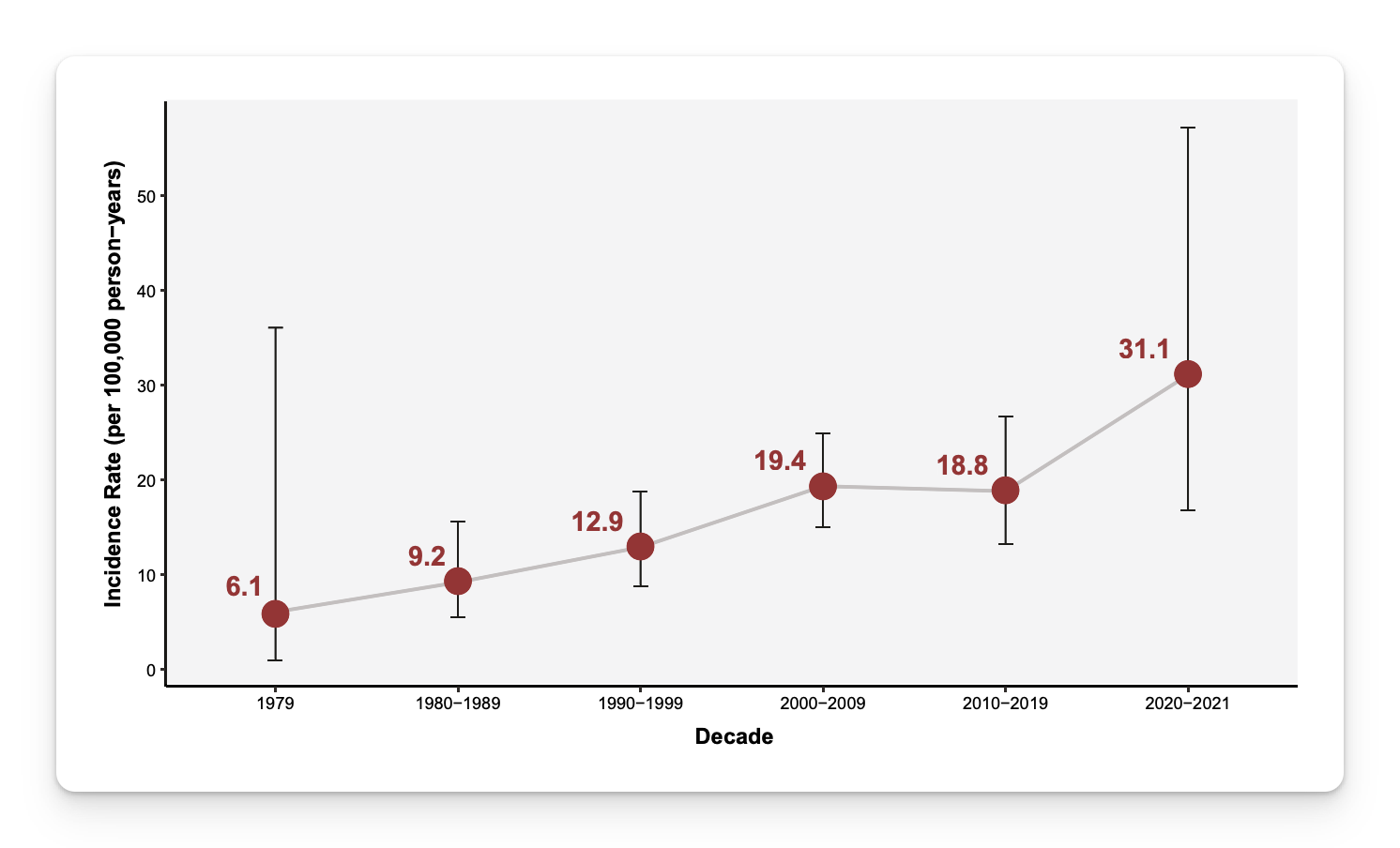
Achilles ruptures are rising significantly
- Global incidence: 15.7 per 100,000 person-years
- Increased from ~6 per 100k (1979) to ~31 per 100k (2020s)
- Annual increase of ~2.7% per year
This is nearly a 5x increase over time.
Males are at much higher risk
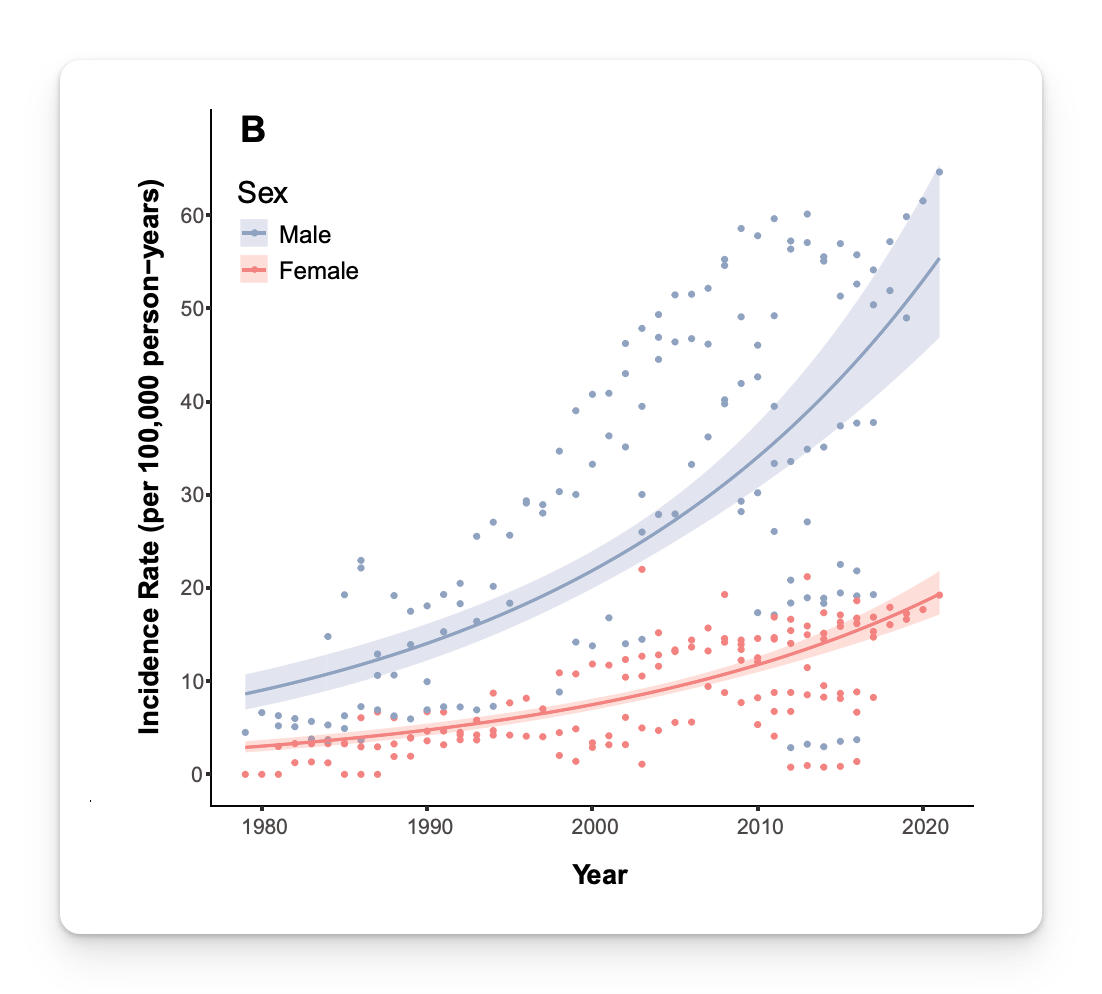
- Male-to-female ratio: 3.18x higher in men
- Peak risk for men is 30–49 years
- Peak rise for women: 40–49 years
Middle-aged, active males = highest risk group
Most ruptures are sport-related
- ~68% of all ruptures occur during sport
- Common sports are basketball, soccer, and racquet sports
This is not just a “degeneration problem”, it’s a loading and exposure problem.
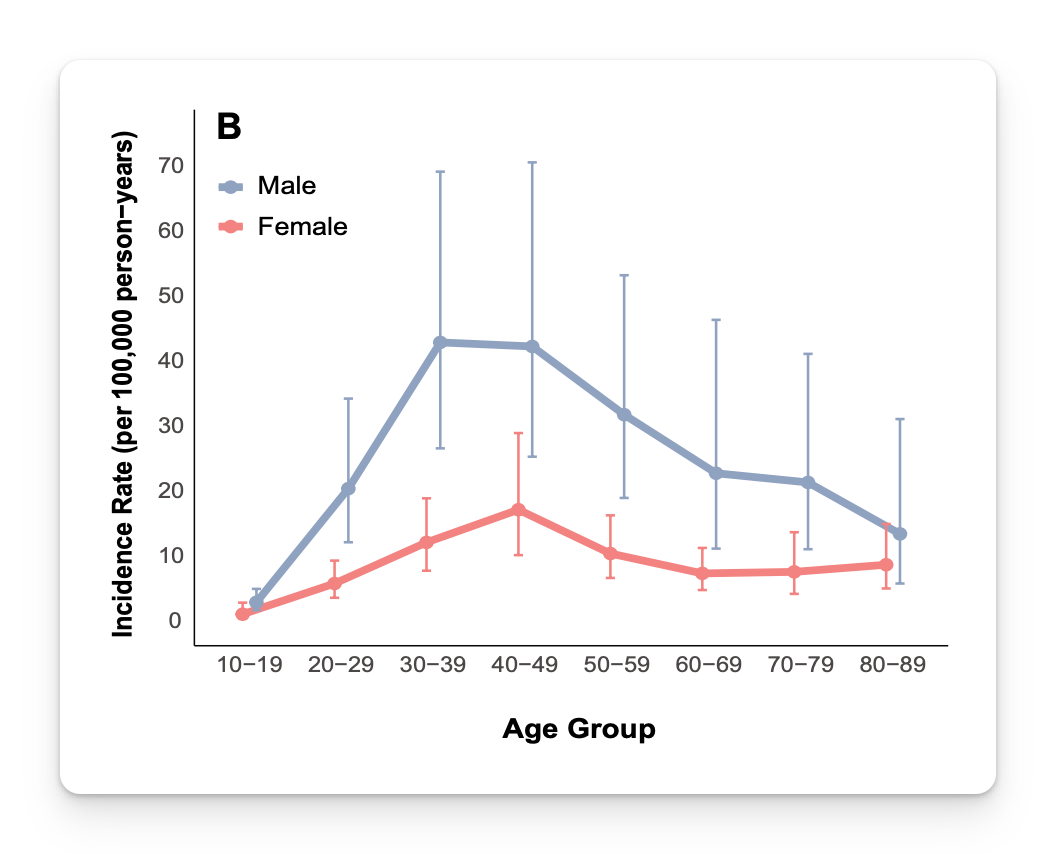
Age matters (and shifts risk profile)
- Peak incidence at 30–39 and 40–49 years
- Sport-related peaks earlier (30–49)
- Non-sport peaks later (50–69)
Two different athlete profiles are explosive sport rupture and degenerative rupture later in life.
Surgery trends have shifted
Surgical rates peaked around 2003 and have declined steadily after. Now more conservative management is used globally.
Noteworthy Limitations
- Most data from high-income countries
- High heterogeneity between studies
- Limited detail on training background and athlete level (elite vs recreational)
- “Sport vs non-sport” definitions inconsistent
- Some underreporting likely (missed diagnoses)
Coach’s Takeaway
- Achilles ruptures are increasing fast at ~2.7x annually.
- The highest-risk athlete is the middle-aged, recreational, explosive sport participant.
- This is largely a load and exposure mismatch problem, not just tissue weakness or degeneration.
I hope this helps,
Ramsey

Take Your Rehabs to the Next Level with Force Plate Analysis
Reference
Kotsifaki R, Malliaras P, Byron C, et al. (2026). Incidence, Temporal Trends, and Surgical Shift of Achilles Tendon Rupture: A Systematic Review and Meta-analysis. Sports Medicine.


